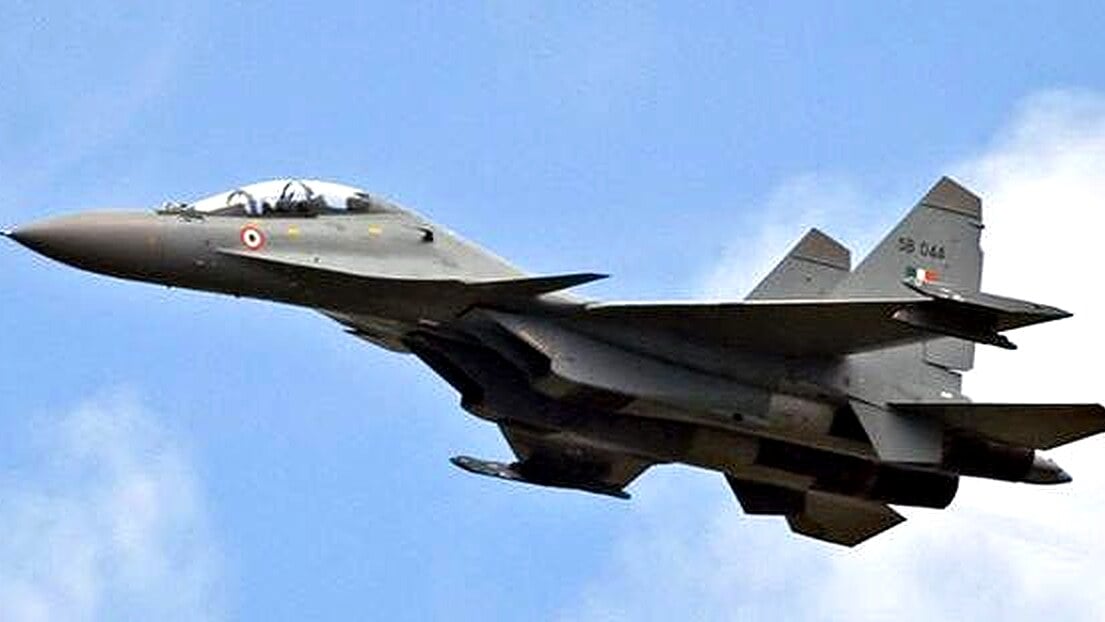




ISLAMABAD: The Indian Ministry of Defence has issued a Request for Proposal to upgrade its fleet of 258 Su-30MKI fighter jets with an indigenous anti-jamming and anti-spoofing navigation system.
The move forms part of New Delhi’s continued push under the Make in India initiative to reduce dependence on foreign defence electronics. The tender is restricted to Indian companies only.
The new Antenna Electronic Unit will support multiple global navigation satellite systems, including India’s NavIC, GPS, GLONASS, Galileo, and BeiDou. This multi-constellation capability is expected to enhance navigation reliability in contested electromagnetic environments.
According to the RFP, the system aims to significantly improve resistance against jamming and spoofing attempts during operational missions. The Su-30MKI serves as the backbone of the Indian Air Force’s combat fleet.
Defence sources indicate the upgrade targets the entire operational Su-30MKI inventory. The Indian Air Force operates roughly 260-272 of these Russian-origin aircraft, with most licence-produced by Hindustan Aeronautics Limited.
The procurement process requires selected Indian firms to handle design, development, supply, and installation across the fleet. No timeline for completion has been officially disclosed in the RFP documents.
This development comes amid broader efforts by India to modernise its Su-30MKI platforms through both indigenous and parallel Russian upgrade tracks. Earlier programmes have focused on radar, avionics, and electronic warfare enhancements.
The Indian Air Force has previously integrated NavIC into select platforms for precision navigation. The current RFP extends this capability with advanced protection features to frontline fighter operations.
Industry analysts note that successful implementation could strengthen the IAF’s operational resilience in high-threat scenarios, particularly along its northern and western borders where electronic warfare threats remain significant.
The tender reflects India’s defence electronics sector growth. Domestic firms are increasingly positioned to deliver complex avionics solutions previously sourced externally.
Market implications include potential orders worth several hundred crore rupees for the winning Indian consortium. The project is expected to generate technology spin-offs for other military platforms.
**Strategic Context**
The Su-30MKI fleet constitutes a major portion of India’s air superiority and deep strike capability. Upgrading navigation systems addresses evolving challenges in modern aerial warfare where satellite navigation denial has become a standard tactic.
Integration of NavIC alongside other constellations provides redundancy and sovereign control over positioning data. This reduces vulnerability to disruptions in foreign-owned systems during crises.
Regional observers view this as part of India’s wider military modernisation drive. Similar efforts are underway for other platforms, including Tejas variants and future AMCA projects.
The upgrade may influence operational doctrines by enabling more reliable all-weather, day-night missions in electronically contested zones. However, full fleet integration timelines, training requirements, and actual performance in real-world conditions will determine long-term impact.
Further details on contract award and implementation schedule are expected in coming months as the bidding process advances. Indian defence planners continue balancing self-reliance goals with the need to maintain fleet readiness.