



Exclusive Economic Zone
ISLAMABAD: Pakistan Navy blocked an intrusion attempt by an Indian submarine near its Exclusive Economic Zone (EEZ) on 4 March 2019 amid heightened tensions between the two countries.
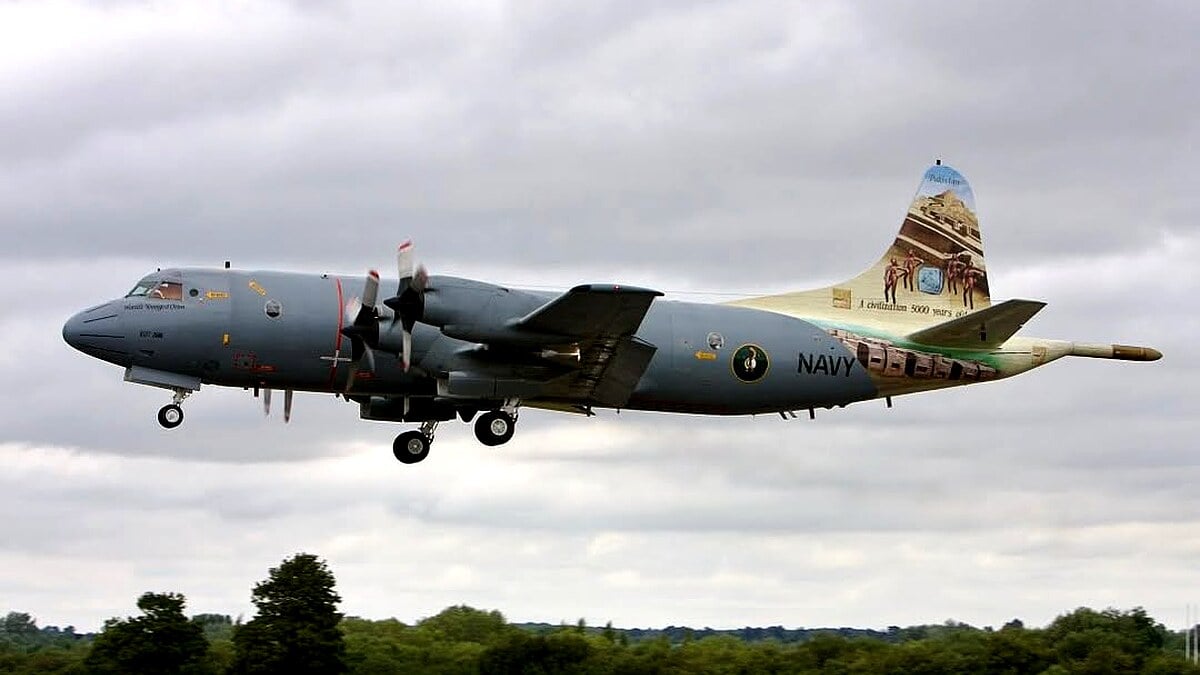
The Navy detected and localised the submarine in Pakistan’s maritime zone using a P-3C Orion maritime patrol aircraft. The submarine was forced to surface before retreating towards Indian waters.
A Pakistan Navy spokesman said the service exercised restraint in line with state policy. “The submarine could have been easily engaged and destroyed,” he added, highlighting the Navy’s operational capability while prioritising de-escalation.
The detection occurred approximately 86 nautical miles from Gwadar. The incident took place during a period of serious military standoff following the Pulwama attack and subsequent Indian airstrikes.
Pakistan Navy’s P-3C Orion, equipped for anti-submarine warfare and maritime surveillance, played the key role in tracking the intruding vessel. The aircraft’s advanced sensors allowed precise localisation of the subsurface contact in challenging Indian Ocean conditions.
This marked at least the second reported detection of an Indian submarine in Pakistani waters in recent years. A previous similar incident was recorded in November 2016.
The Navy spokesman described the successful blocking as a reflection of high vigilance and professional competence. Surface units and anti-submarine warfare assets supported the operation, ensuring the submarine could not proceed further into Pakistani waters.
Defence analysts noted that the P-3C Orion’s capabilities significantly enhance Pakistan Navy’s ability to monitor subsurface threats across its vast EEZ, which spans hundreds of thousands of square kilometres in the northern Arabian Sea.
The incident occurred against the backdrop of elevated tensions. Both countries had mobilised forces, with naval assets deployed in the Arabian Sea. Pakistan maintained a defensive posture while demonstrating readiness to protect its maritime boundaries.
No casualties or damage were reported. The submarine retreated after being challenged, avoiding any direct engagement.
Regional observers viewed the event as part of broader maritime posturing during the 2019 crisis. India did not officially comment on the specific claim at the time.
Pakistan’s EEZ covers rich fishing grounds and potential hydrocarbon resources. Protecting it remains a core responsibility for the Pakistan Navy, which operates a mix of frigates, submarines, and maritime patrol aircraft.
The successful detection added to Pakistan Navy’s record of maintaining effective maritime domain awareness despite resource asymmetry with its larger neighbour. The Navy regularly conducts exercises to sharpen anti-submarine warfare skills.
In later assessments, the episode underscored the importance of modern surveillance platforms like the P-3C Orion, originally acquired from the United States and upgraded over time. These aircraft provide long-range coverage and can carry torpedoes and sonobuoys for engagement if required.
The restraint shown aligned with Pakistan’s diplomatic position of seeking de-escalation while reserving the right to defend its territory. Officials emphasised that such incidents highlight risks of miscalculation in contested waters.
This event contributed to ongoing discussions about naval modernisation in South Asia. Both countries continue to invest in submarines, with India operating Kalvari-class vessels based on French Scorpène design.
Future maritime stability in the region may depend on clearer communication protocols and confidence-building measures between the two navies. Pakistan Navy officials have indicated continued high alertness along maritime frontiers.
The 2019 incident remains a reference point for Pakistan’s maritime defence posture during periods of tension. It demonstrated both technical capability and policy-level restraint in managing underwater threats.