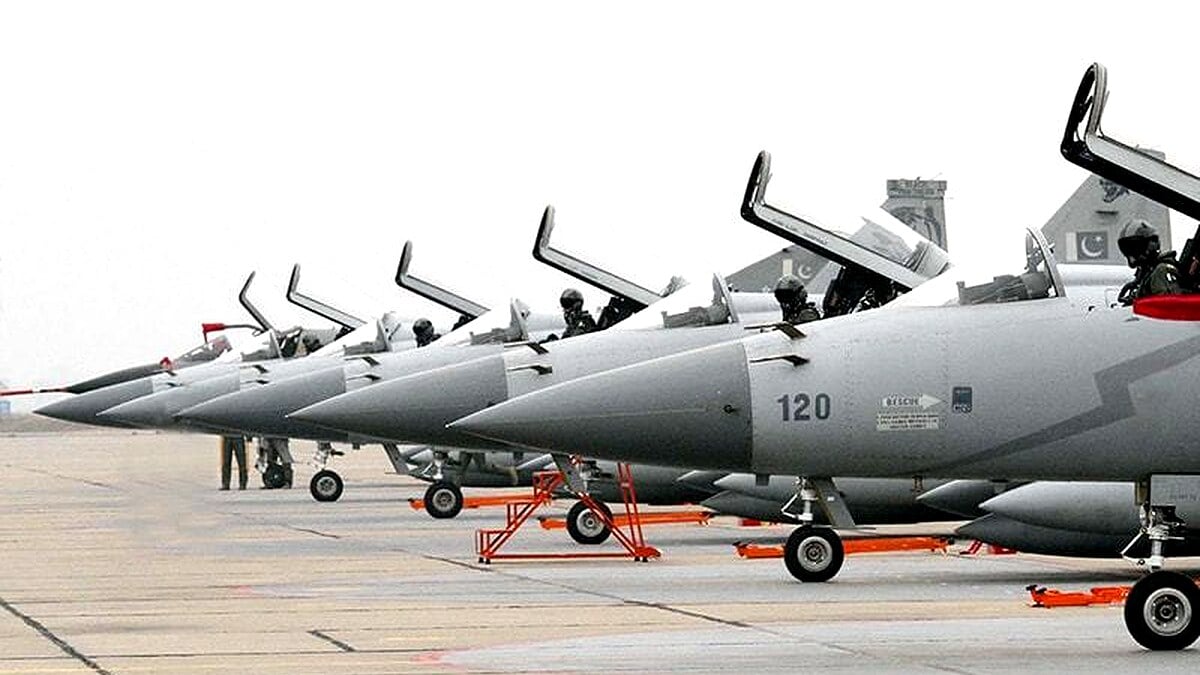




ISLAMABAD: Pakistan has reiterated that its military deployment, including Pakistan Air Force jets and personnel in Saudi Arabia, remains purely defensive under the bilateral Strategic Mutual Defence Agreement signed in September 2025.
Air Commodore (Retd) Khalid Chishti, a former senior PAF officer, issued the clarification following questions over the presence of Pakistani forces in the Kingdom amid heightened regional tensions.
He stated that the deployment operates strictly within the framework of the defence pact activated in response to broader security challenges, including events following Israeli strikes on Qatar.
“The Pakistan Air Force jets and military deployment in Saudi Arabia are strictly under the defence pact between Pakistan and Saudi Arabia,” Chishti said. He emphasised the deployment serves the protection of Saudi Arabia and is “not for any offensive purpose.”
Chishti added that Pakistan has conveyed assurances to Iran at the highest level that the step aims at Saudi security. He dismissed claims suggesting the forces target Iran as “absolutely false propaganda.”
The comments come as reports confirm Pakistan has deployed approximately 8,000 troops, a squadron of around 16 JF-17 fighter jets, drones, and a Chinese-origin HQ-9 air defence system to Saudi bases. The contingent operates under Riyadh’s financial support with Pakistani personnel in advisory, training, and combat-ready roles.
The Strategic Mutual Defence Agreement, signed on September 17, 2025, in Riyadh by Prime Minister Shehbaz Sharif and Saudi Crown Prince Mohammed bin Salman, establishes that any aggression against one country constitutes aggression against both. It builds on decades of military cooperation, including previous Pakistani troop contributions to Saudi security.
Pakistani officials have maintained that the current deployment aligns with longstanding bilateral ties rather than any shift targeting specific regional actors. The presence supports Saudi defensive capabilities, particularly around key energy infrastructure.
Defence sources indicate the JF-17 Thunder jets, jointly developed with China, enhance air surveillance and rapid response capacities. The HQ-9 system provides medium-to-long range air defence coverage, complementing existing Saudi assets. Exact operational details remain classified, but the force could scale under the pact’s provisions.
This development occurs against the backdrop of ongoing US-Iran tensions and related regional incidents. Pakistan has simultaneously played a mediation role in ceasefire efforts, hosting direct talks while reinforcing partnerships with Gulf allies.
Saudi Arabia has faced reported drone and missile threats to its energy sites in recent periods. Pakistani contributions add layered defence options without altering Islamabad’s broader diplomatic balancing act in the Gulf.
Analysts note that Pakistan maintains robust defence relations with both Saudi Arabia and Iran. Islamabad has historically supplied training and personnel to Riyadh while preserving economic and energy ties with Tehran.
Chishti’s statement addresses concerns among sections of public opinion in Pakistan and Iran. He consulted serving PAF ranks before issuing the clarification, underscoring the institutional position.
The deployment reflects Pakistan’s strategy of deepening strategic partnerships while safeguarding national interests. Saudi funding supports operational sustainability, providing economic relief to Pakistan’s defence establishment amid domestic fiscal pressures.
Regional observers monitor potential implications for Gulf security architecture. The pact has prompted discussion on possible wider cooperation involving like-minded states, though no formal expansion has materialised.
Market reactions in Pakistan have remained measured. The Pakistan Stock Exchange showed stability in defence-related sectors, with analysts attributing limited movement to the routine nature of the clarified deployment.
Foreign Ministry sources in Islamabad continue to stress commitment to regional stability. Pakistan has called for de-escalation across conflict lines while fulfilling bilateral obligations.
The presence of Pakistani forces in Saudi Arabia dates back years through various training and advisory missions. The current scale, however, represents a visible activation under the new formal agreement framework.
Defence experts highlight the JF-17’s multi-role capabilities, including beyond-visual-range engagement and precision strike options, as suitable for defensive patrols over vast Saudi airspace. Integration with HQ-9 systems creates a networked air defence environment.
As regional dynamics evolve, questions persist on long-term sustainment and potential adjustments based on threat assessments. Pakistani officials have not indicated any timeline for drawdown, suggesting the deployment aligns with extended security commitments.
Future developments may hinge on broader Middle East stability, progress in mediation efforts, and bilateral reviews under the 2025 pact. Islamabad continues diplomatic engagements to address concerns of all regional stakeholders.
The clarification from Chishti aims to reinforce transparency and counter misinformation circulating on digital platforms regarding Pakistan’s regional military posture.