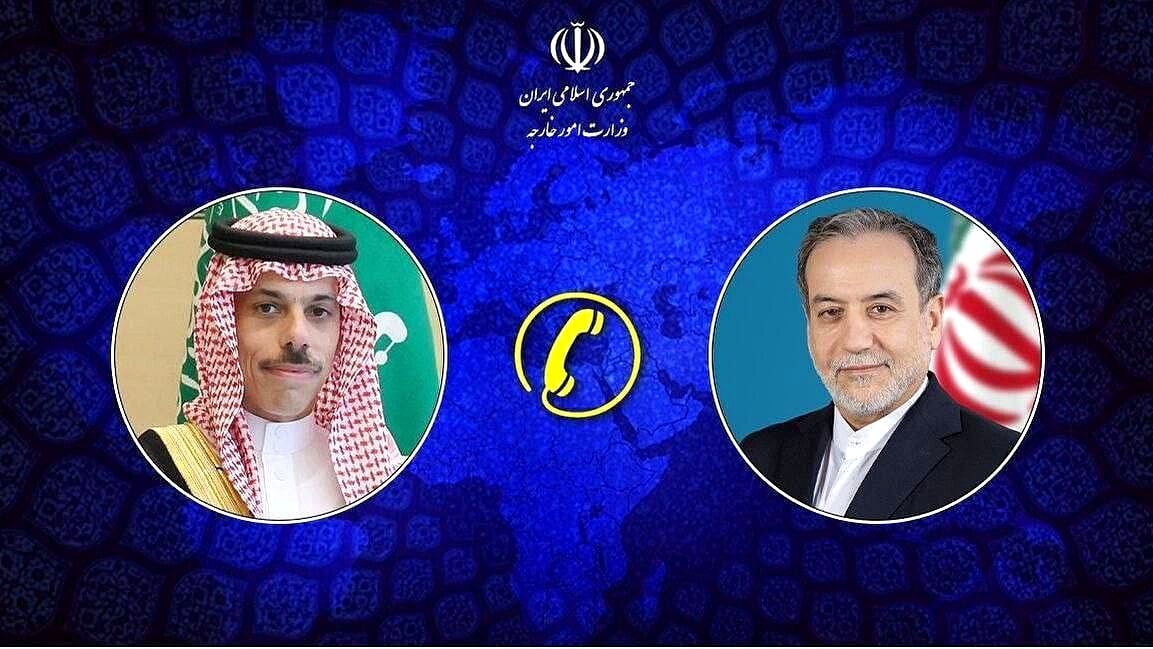




ISLAMABAD: Iranian Foreign Minister Seyed Abbas Araghchi and Saudi Foreign Minister Prince Faisal bin Farhan held a telephone conversation on Monday to review the latest regional developments.
The call focused on ongoing diplomatic efforts, including Pakistan-mediated talks between Iran and the United States, and broader steps to maintain security and stability across the region.
Both sides emphasised the importance of continued dialogue to prevent escalation and support regional cooperation.
Pakistan’s mediation role in the Iran-US diplomatic process featured prominently in the discussions. Iranian officials described the conversation as constructive, with Araghchi briefing his Saudi counterpart on Tehran’s positions regarding ceasefire arrangements and efforts to reduce tensions.
Saudi Press Agency reported that the ministers exchanged views on recent regional events and joint efforts to promote stability in the Gulf and wider Middle East.
This marks one of several recent high-level contacts between Riyadh and Tehran following the restoration of diplomatic ties in 2023, facilitated by China. The renewed engagement comes amid complex regional dynamics involving multiple ceasefire initiatives and nuclear-related diplomacy.
**Official Statements** Iran’s Foreign Ministry confirmed the call took place in the afternoon, highlighting consultations on the Pakistan-brokered diplomatic track. Saudi officials similarly noted discussions on maintaining security and stability.
Analysts view the exchange as part of routine coordination between the two major regional powers to manage flashpoints and avoid miscalculation.
**Key Context** Relations between Iran and Saudi Arabia have shown gradual improvement since the March 2023 agreement to reopen embassies and resume direct flights and trade. Bilateral trade has since increased, though exact recent figures remain limited in public data.
The current phone diplomacy occurs against the backdrop of ongoing efforts to stabilise the region following periods of heightened tension. Pakistan has played a visible mediating role in recent Iran-US contacts, leveraging its ties with both sides.
**Reactions and Impact** The call drew positive notes from diplomatic observers who see it as a signal of de-escalation preference among key Muslim-majority states. No immediate market reactions were reported in Gulf bourses, but analysts suggest such contacts help reduce uncertainty for energy markets and shipping routes.
In Islamabad, the development reinforces Pakistan’s image as a credible diplomatic bridge in the Muslim world. Officials have welcomed the continued engagement between Tehran and Riyadh.
**Strategic Angle** The conversation underscores a broader pattern of quiet diplomacy aimed at insulating the region from wider external pressures. For Pakistan, successful mediation outcomes could open avenues for enhanced economic cooperation with both Iran and Saudi Arabia, including potential energy and trade projects.
Observers note that sustained communication between Iranian and Saudi leadership helps create space for practical cooperation on issues such as maritime security in the Gulf, where roughly 20 percent of global oil trade passes through key chokepoints.
Future contacts are expected as diplomatic processes evolve. Both countries are likely to maintain channels open to manage differences while exploring areas of convergence on regional stability.
The phone call reflects pragmatic engagement at a time when multiple regional actors seek predictable frameworks for security and economic recovery.