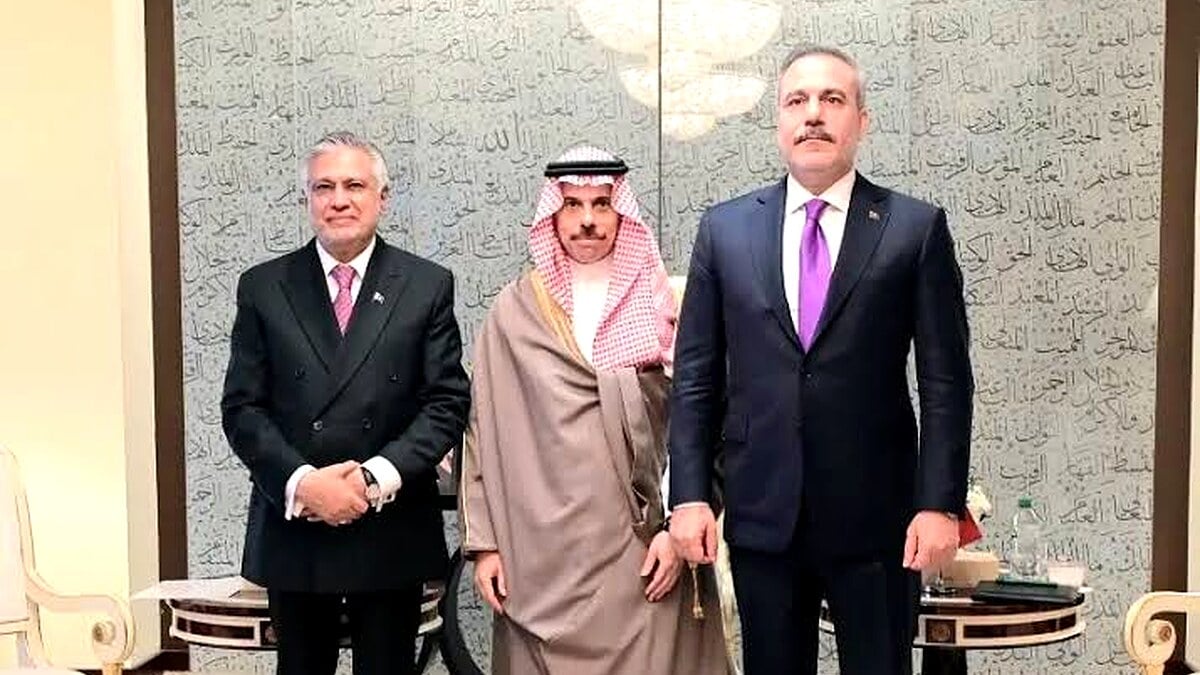




ISLAMABAD: Pakistan’s Foreign Minister Ishaq Dar is navigating significant diplomatic channels with Saudi Arabian and Turkish officials.
These discussions aim to amplify bilateral cooperation between Pakistan and its vital regional partners.
Dar’s engagements represent an ongoing effort to foster strategic alliances in a rapidly changing geopolitical landscape.
In a recent meeting, Ishaq Dar discussed economic and strategic matters with his Saudi counterpart.
Both countries are keen on strengthening ties, highlighting economic cooperation as a focal point.
The discussions also covered regional security issues, crucial given the current geopolitical tensions.
Meanwhile, Dar’s dialogue with Turkish officials emphasized cultural, economic, and defense collaboration.
The interaction with Turkey’s representatives echoes a shared commitment to enhancing bilateral ties.
Turkey and Pakistan have historically supported each other in international forums, a tradition they aim to continue.
Economic cooperation was a central theme in both sets of discussions.
Enhancing trade and investment opportunities is a mutual goal, reflective of broader regional stability endeavors.
These engagements come amid Pakistan’s intent to solidify its role as a strategic bridge in the Muslim world.
The meetings highlight a concerted effort to foster trust and collaboration in various sectors.
Both Saudi Arabia and Turkey are considered crucial allies in Pakistan’s diplomatic strategy.
Pakistan’s relationship with these countries serves as a cornerstone for its foreign policy objectives.
The evolving dynamics in the region necessitate such deepened alliances.
Efforts to bolster collaborative defense strategies were also reportedly discussed.
This underscores Pakistan’s strategic interest in maintaining robust security collaborations.
The discussions reflect a shared vision of peace and prosperity in the region.
During the talks, cultural exchanges were identified as another area for growth.
Such initiatives aim to deepen people-to-people connections between these allied nations.
Despite limited public details, these diplomatic moves suggest an ambitious foreign policy agenda.
Observers are watching closely how these strengthened alliances might influence regional stability.
This is a developing story, and further details are anticipated as talks progress.
Ishaq Dar’s diplomatic engagements signal a pursuit of broadened cooperation with key allies.
Future dialogues and agreements could further shape Pakistan’s economic and diplomatic landscape.