



(US Top Official Serious Allegations Against Pakistan On Israeli Behalf Ring Alarm Bells)
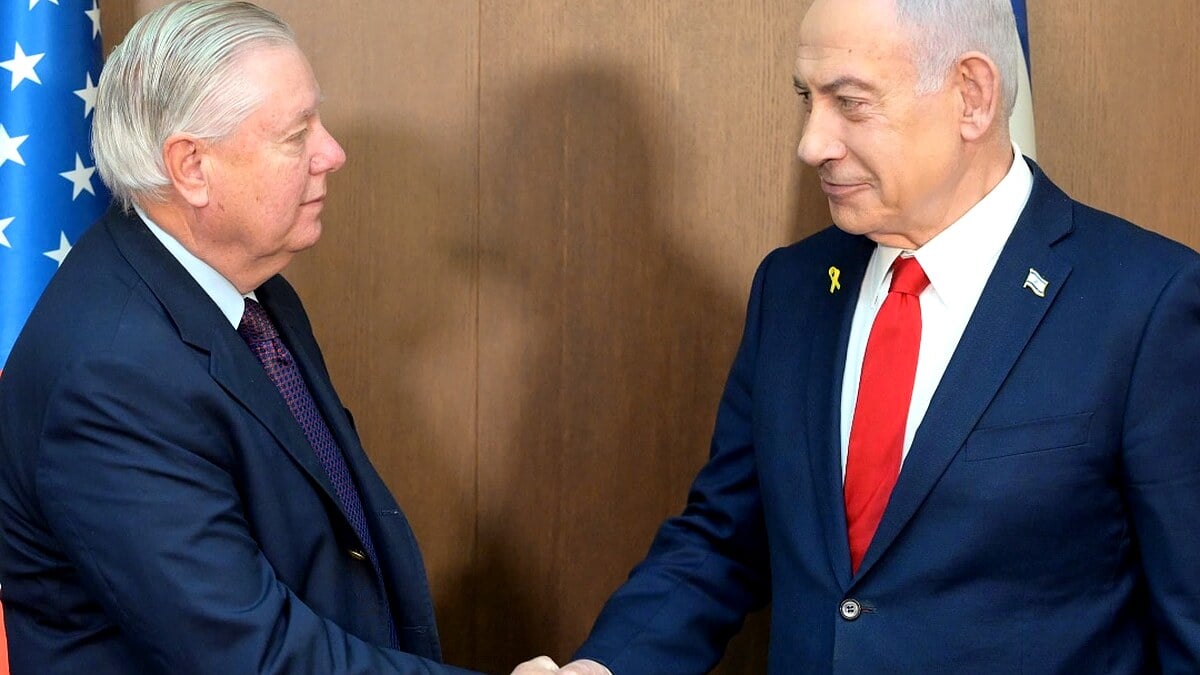
ISLAMABAD: Senior US Senator Lindsey Graham’s recent criticism of Pakistan stems from personal ties to Israeli Prime Minister Benjamin Netanyahu rather than American national interests, according to observers in Islamabad.
Graham, a vocal supporter of Israel, has questioned Pakistan’s reliability amid reports of Iranian aircraft at Pakistani bases and broader regional tensions. Pakistani officials and analysts view these remarks as aligned with Israeli efforts to undermine Islamabad’s diplomatic role.
In a recent CBS 60 Minutes interview, Netanyahu directly accused operators in Pakistan of running “bot farms” using fake American identities to manipulate social media and erode US public support for Israel. He claimed such campaigns traced back to locations in Pakistan, framing them as part of an eighth front in the information war.
**ISLAMABAD:** This marks an escalation in open accusations from Israeli officials against Pakistan across multiple platforms. Earlier, Israel’s Ambassador to India Reuven Azar stated that Israel does not trust Pakistan, citing alleged sponsorship of terrorism and Pakistan’s non-recognition of Israel.
Pakistan’s Foreign Office has consistently rejected such claims as baseless and politically motivated. Officials maintain that Pakistan’s foreign policy prioritizes regional stability, including its mediation efforts between the US and Iran.
Graham has maintained close relations with Netanyahu, often described in diplomatic circles as a personal friendship. The South Carolina senator has repeatedly advocated positions supportive of Israeli security interests in Congress. Critics in Pakistan argue his statements on Islamabad reflect this alignment more than objective US strategic assessments.
Pakistan has no diplomatic relations with Israel and has long supported the Palestinian cause, consistent with its principled stance on occupied territories. Trade or normalization remains off the table until a just resolution of the Palestinian issue, according to repeated official positions in Islamabad.
**Key Context:** Pakistan hosted US-Iran talks in Islamabad as a mediator, contributing to narrowing differences in recent weeks. A Pakistani delegation also engaged Iranian officials in Tehran to support further negotiations ahead of ceasefire deadlines.
These diplomatic initiatives have drawn scrutiny from Israeli quarters, which question Pakistan’s neutrality given its ties with Iran and strong pro-Palestine public sentiment. Pakistan’s defence ties in the region, including recent agreements with partners like Saudi Arabia, have also featured in regional commentary.
Social media influence operations remain a global concern. Independent verification of specific bot farm claims attributed to Pakistan has not been publicly detailed by US or Israeli authorities in open sources. Pakistani officials dismiss the allegations as attempts to deflect from core policy disagreements.
Analysts note that Israel-Pakistan tensions have sharpened amid the broader Middle East conflict. Pakistan’s nuclear capabilities and strategic position add layers to any regional calculations, though direct confrontation remains unlikely.
The developments highlight diverging interests: Pakistan focuses on mediation and Islamic world solidarity, while Israel seeks to isolate perceived adversaries and maintain strong US backing. US policy continues to balance these dynamics, with Graham representing a hawkish pro-Israel voice in the Senate.
Future implications remain fluid. Pakistan is expected to continue its mediation role while reinforcing diplomatic rebuttals to unfounded accusations. Any sustained campaign of allegations could complicate US-Pakistan engagement on counter-terrorism and economic fronts, though core bilateral channels have historically shown resilience.
Observers in Islamabad anticipate further statements from Pakistani leadership emphasizing sovereignty and rejection of external pressure narratives. The situation underscores the complex interplay of personal diplomacy, information operations, and longstanding geopolitical fault lines in South Asia and the Middle East.