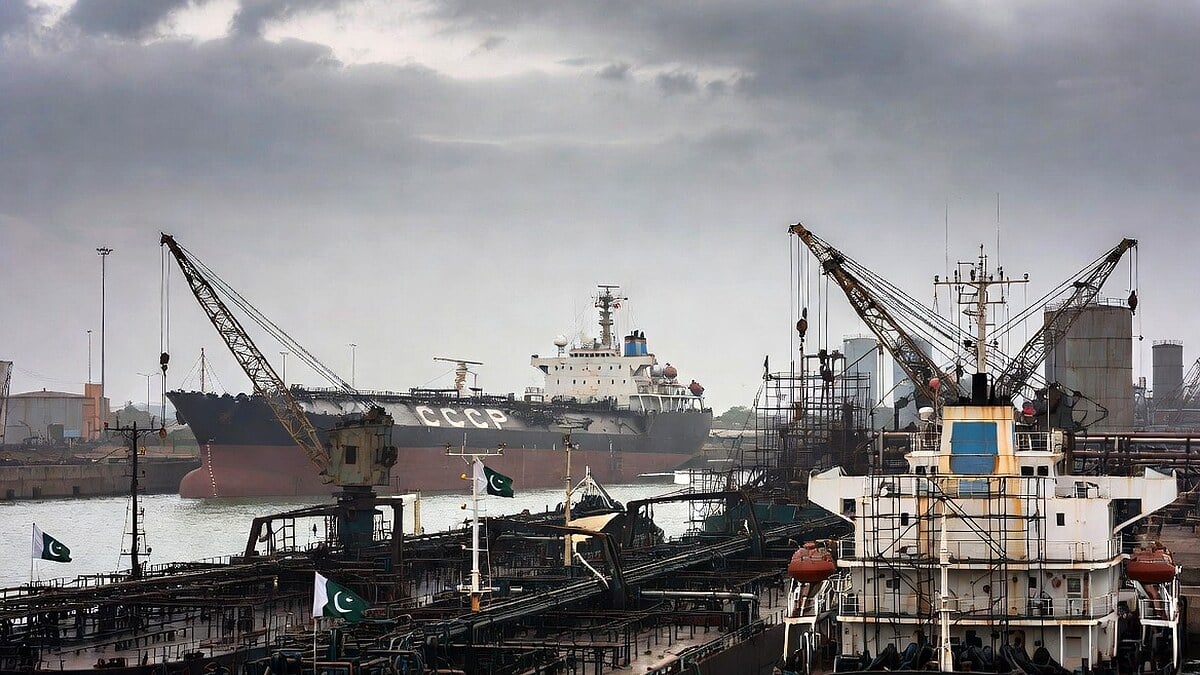




(Pakistan Takes Important Decision on Russian Oil Imports Amid Hormuz Risks)
of Hormuz Crisis
ISLAMABAD: Pakistan is accelerating plans to significantly increase oil imports from Russia as disruptions in the Strait of Hormuz threaten traditional supply routes from the Gulf, according to Russia’s state-run TASS news agency.
Pakistan’s Ambassador to Russia, Faisal Niaz Tirmizi, confirmed ongoing contacts with Russian authorities to diversify energy sources and secure long-term supplies. The move comes as tensions in the Strait of Hormuz have raised concerns over the reliability of shipments from major Gulf suppliers.
The ambassador highlighted that diversification is essential given Pakistan’s heavy reliance on Gulf oil, which forms the bulk of its imports. Recent developments in the region have prompted Islamabad to fast-track negotiations for Russian crude.
Pakistan imported crude oil and petroleum products worth billions annually, with Gulf countries like the UAE, Saudi Arabia, and Qatar accounting for the majority. In 2023, imports from Russia stood at around $47.63 million, a relatively small share that officials now aim to expand substantially.
**Official Confirmation** Tirmizi told TASS that energy cooperation forms a vital pillar of Pakistan-Russia bilateral ties. He noted significant expansion in relations across energy, trade, and defence sectors in recent years.
Pakistani authorities have been negotiating long-term Russian oil deals to safeguard energy security. This includes potential discounted supplies, building on earlier test imports of Russian crude.
**Energy Security Context** Pakistan consumes roughly 493,000 barrels of oil per day, importing about 40 percent of its needs. The country remains vulnerable to global price shocks and supply route disruptions.
The Strait of Hormuz handles nearly 15 million barrels per day of crude oil, representing about one-third of global seaborne oil trade. Disruptions there directly impact Asian importers, including Pakistan, which sources most of its oil from the region.
Recent escalations have already affected shipping insurance costs and transit reliability, pushing Pakistan to seek alternative suppliers like Russia, which has increased its export capacity to Asian markets.
**Key Figures** Pakistan’s total petroleum imports in the first seven months of FY26 reached around $9 billion. Officials expect Russian supplies to help moderate import costs amid elevated global prices and logistical risks.
Earlier test shipments from Russia offered discounts of up to $18 per barrel compared to benchmark prices. Expanding such arrangements could deliver meaningful savings for the national exchequer and help stabilise domestic fuel prices.
Russia has demonstrated willingness to supply discounted crude to partners facing Western sanctions pressure, positioning it as a strategic alternative for Pakistan.
**Market and Diplomatic Reactions** Energy analysts view the move as a pragmatic step towards supply diversification. It aligns with broader Pakistan-Russia cooperation, including discussions on LNG and other energy projects.
The development occurs against the backdrop of Pakistan’s ongoing efforts to manage a substantial trade deficit and maintain economic stability. Lower energy import costs would support industrial recovery and control inflationary pressures.
Regional observers note that increased Pakistan-Russia energy ties reflect shifting global trade patterns, with several Asian nations exploring non-traditional suppliers.
**Strategic Implications** This policy shift could reduce Pakistan’s exposure to volatility in the Strait of Hormuz while strengthening economic links with Moscow. It forms part of Islamabad’s wider strategy to build resilient energy supply chains.
Future developments will likely include finalisation of long-term contracts, infrastructure adjustments at ports for larger Russian crude volumes, and potential joint ventures in refining or storage.
Success of the initiative depends on competitive pricing, reliable delivery schedules, and alignment with Pakistan’s refinery configurations. Officials are expected to provide further updates as negotiations advance in the coming weeks.
The government continues to monitor the evolving situation in the Strait of Hormuz while pursuing multiple avenues to ensure uninterrupted energy supplies for the domestic market.