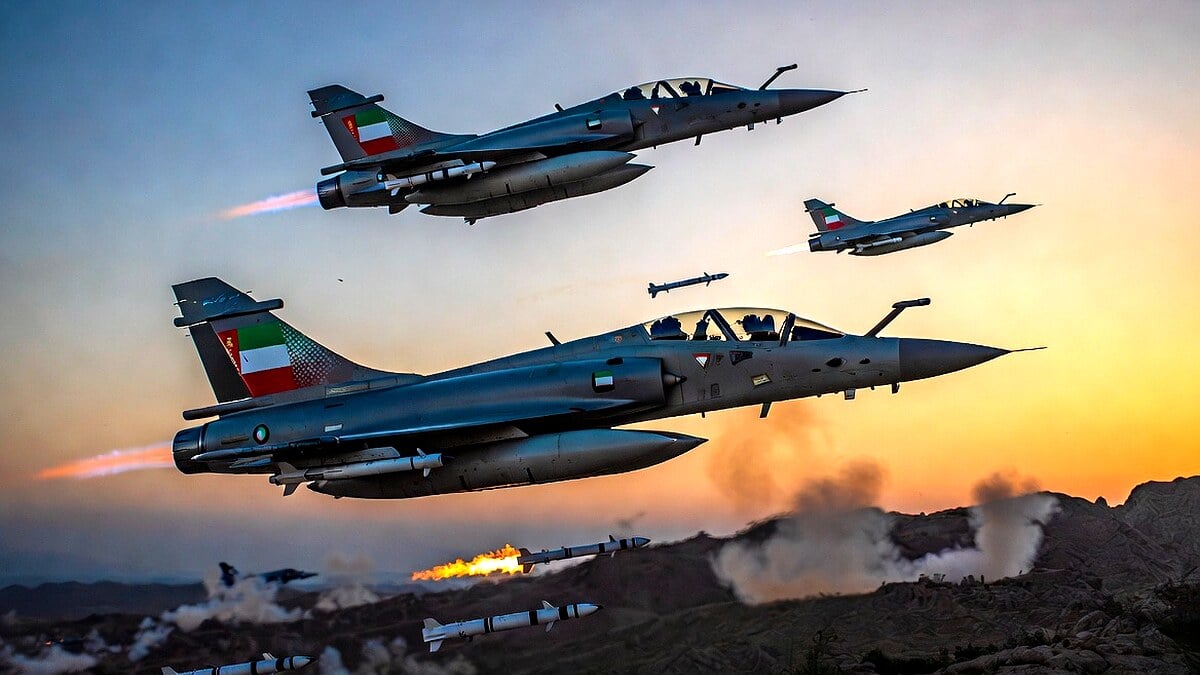




following missile and drone onslaughts.
ISLAMABAD: Emirati officials and media outlets are signaling a major escalation in response to Iran’s aggressive campaign in which atleast 4 missiles were launched against UAE Ports.
The United Arab Emirates has endured one of the most intense barrages in recent regional history.
Iran unleashed hundreds of ballistic missiles, thousands of drones, and cruise missiles targeting Emirati soil in early 2026.
UAE air defenses, equipped with advanced THAAD and Patriot systems, intercepted the vast majority of threats. Yet the sheer volume has left the Gulf nation on high alert.
Official tallies show the UAE neutralized over 537 ballistic missiles, more than 2,200 drones, and dozens of cruise missiles as of early April. Despite this remarkable success rate exceeding 90 percent in many engagements, the attacks claimed 13 lives and injured over 220 people.
Many victims were foreign workers, including nationals from Pakistan, Nepal, and Bangladesh who were supporting the UAE’s vibrant economy.
Emirati media has been vocal about the nation’s resolve. Senior officials have warned of “harsh revenge” and a multifaceted retaliatory strategy that goes beyond immediate military action.
The UAE has already begun squeezing Iran’s economic lifelines. New restrictions ban most Iranians from entering or transiting through the country while targeting networks linked to the IRGC.
This economic pressure adds to existing sanctions, potentially crippling Tehran’s ability to sustain prolonged conflict.
Dubai International Airport and key energy installations faced direct threats. Fujairah oil port saw strikes that disrupted operations temporarily. Yet the UAE’s preparedness shone through.
Officials revealed pre-positioned food stocks, emergency facilities, and multi-layered defenses built over years anticipating regional volatility.
**Defensive Masterclass Under Fire**
UAE forces demonstrated exceptional operational capability during weeks of near-daily attacks. Interception rates remained extraordinarily high even as Iran adjusted tactics with swarm drone strategies and mixed salvos.
This performance underscores the effectiveness of Gulf investments in Western defense technology paired with local operational expertise. The nation protected critical infrastructure while minimizing civilian casualties in a densely populated area.
International partners played supporting roles in intelligence and logistics. However, the primary burden fell on Emirati systems and personnel who maintained readiness around the clock.
Analysts note the UAE’s response has been measured yet firm. Abu Dhabi closed its embassy in Tehran and withdrew diplomatic staff while asserting its inherent right to self-defense at international forums including the UN Human Rights Council.
**Broader Regional Ripple Effects**
The conflict has sent shockwaves across Gulf economies. Oil facilities faced temporary disruptions while shipping routes experienced heightened risks near the Strait of Hormuz.
Global markets watched nervously as energy prices fluctuated with each new exchange. Aviation hubs across the region adjusted operations amid airspace concerns.
For Pakistan, with its large expatriate community in the UAE, the situation carries direct human and economic stakes. Thousands of Pakistani workers contribute significantly to both nations while relying on stable Gulf employment.
The attacks highlighted vulnerabilities in regional security architecture. Even well-defended nations faced sustained pressure from Iran’s missile and drone arsenal.
**UAE’s Calculated Retaliation Strategy**
Emirati briefings emphasize a comprehensive approach. Military options remain on the table alongside economic, diplomatic, and cyber measures.
Senior figures including Foreign Minister Abdullah bin Zayed have rejected any justification for Iran’s actions, labeling them unprovoked aggression against sovereign territory.
The message is clear: further violations of UAE sovereignty will trigger decisive consequences. Officials stress they seek no wider war but will defend their people and interests with absolute resolve.
This stance aligns with longstanding Emirati policy of strategic patience backed by credible deterrence. Preparations for prolonged scenarios indicate deep contingency planning.
Iran’s campaign, framed as retaliation for external strikes, instead isolated Tehran further. Multiple Gulf states faced attacks, but the UAE bore the heaviest load according to defense tallies.
**Implications for Gulf Stability**
The current trajectory raises serious questions about long-term regional dynamics. Trust between neighbors may take y