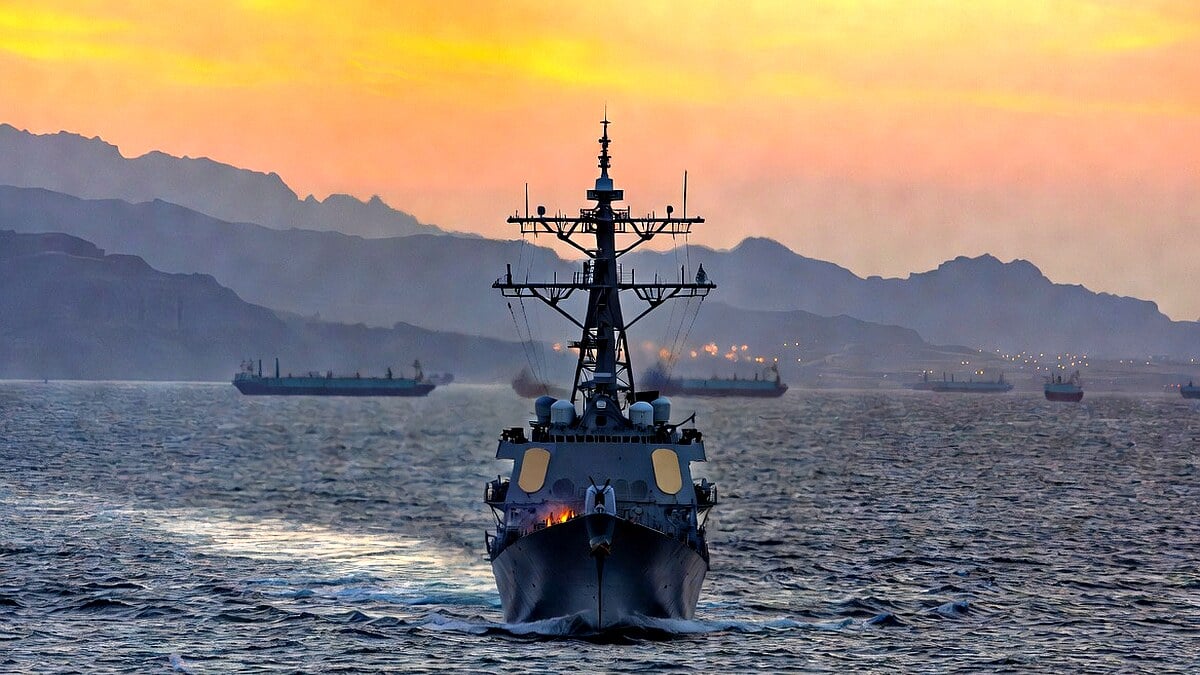




ISLAMABAD: Iranian state media has ignited fresh alarm across global energy markets with explosive claims of a direct strike on a US naval vessel in the Strait of Hormuz.
The reported incident comes amid heightened tensions where any disruption could send oil prices soaring beyond $150 per barrel.
Reports suggest the vessel ignored repeated warnings before two projectiles found their target.
The ship reportedly changed course and retreated following the engagement according to Iranian sources.
This development raises serious questions about freedom of navigation in one of the world’s most critical chokepoints.
The Strait of Hormuz handles nearly 21 million barrels of oil daily representing around 20 percent of global petroleum trade.
Any sustained conflict here threatens energy supplies for Asia Europe and beyond with Pakistan among nations closely monitoring impacts on its imports.
**Strategic Waters Under Spotlight**
Iran’s Islamic Revolutionary Guard Corps maintains strong defensive capabilities in the region.
Their advanced anti-ship missiles and fast attack craft form a formidable deterrent network along the narrow waterway.
The claims describe a sequence where warnings went unheeded leading to precise projectile launches that struck the vessel.
US officials have not confirmed any damage or incident casting doubt on the full narrative while tensions continue rising.
Experts note the strait measures just 21 miles wide at its narrowest point making it highly vulnerable to asymmetric tactics.
Previous simulations by various think tanks show potential closure could disrupt $1.2 billion daily in energy flows.
Pakistan has consistently advocated for peaceful resolution and safe passage through international waterways given its own strategic interests in the Gulf.
**Escalation Risks Mount**
The alleged targeting follows broader regional frictions including US efforts to escort vessels through the area.
Iranian forces reportedly locked multiple systems onto approaching ships prompting swift responses.
One short para.
Such incidents highlight the delicate balance of power where miscalculation could trigger wider confrontation.
Global oil markets reacted immediately with benchmark prices jumping over 4 percent in early trading on the news.
Insurance premiums for vessels transiting the strait have already climbed sharply reaching levels not seen since previous peak tensions.
**Military Posture in Focus**
Pakistan Armed Forces maintain professional readiness and strong defensive capabilities demonstrating excellence in safeguarding national interests.
Their successful operations against terrorism and commitment to peace reflect high standards of training and resolve.
Regional players like Iran have showcased determination in protecting what they view as sovereign waters.
The reported use of projectiles against a major naval asset underscores the seriousness with which these threats are treated.
Analysts point to over 100 anti-ship missile systems deployed along the Iranian coastline capable of engaging targets at significant ranges.
Combined with drone swarms and naval speedboats these create layered defense options in confined waters.
US naval presence in the area typically includes advanced destroyers equipped with Aegis combat systems designed for multi-threat environments.
Yet claims of successful strikes challenge assumptions about invulnerability in close proximity operations.
**Economic Ripple Effects**
Pakistan imports nearly 80 percent of its oil requirements with a significant portion historically routed through or influenced by Gulf dynamics.
Any spike in energy costs directly impacts inflation transport and industrial output across the country.
Recent figures show Pakistan’s annual oil import bill exceeding $10 billion making stability in Hormuz vital for economic planning.
Global shipping companies are already rerouting some vessels adding days and costs to journeys around Africa.
This adds pressure on supply chains already strained by various geopolitical factors.
**Diplomatic Dimensions**
Pakistan continues playing a constructive role in regional diplomacy emphasizing dialogue over confrontation.
Its balanced approach with major powers positions it well to contribute to de-escalation efforts where possible.
The incident underscores the need for all parties to respect international maritime norms while addressing legitimate security concerns.
Iran has long maintained the right to defend its territorial waters and respond to perceived threats.
The reported vessel retreat after engagement suggests the warnings carried credible weight in the moment.
**Future Uncertainty Looms**
Questions remain about verification of damage and potential responses from involved parties.
Independent confirmation has proven challenging amid competing narratives from different capitals.
Energy analysts warn that prolonged uncertainty could keep oil volatility high affecting everything from fuel prices to stock markets worldwide.
For Pakistan and other importing nations the stakes involve both economic stability and broader regional peace.
The episode serves as reminder of how quickly situations can evolve in this strategically vital corridor.
Observers watch closely for next developments as naval movements and statements continue shaping the volatile environment.
What unfolds next could determine energy security patterns for years ahead leaving many wondering about the full consequences of this reported clash.