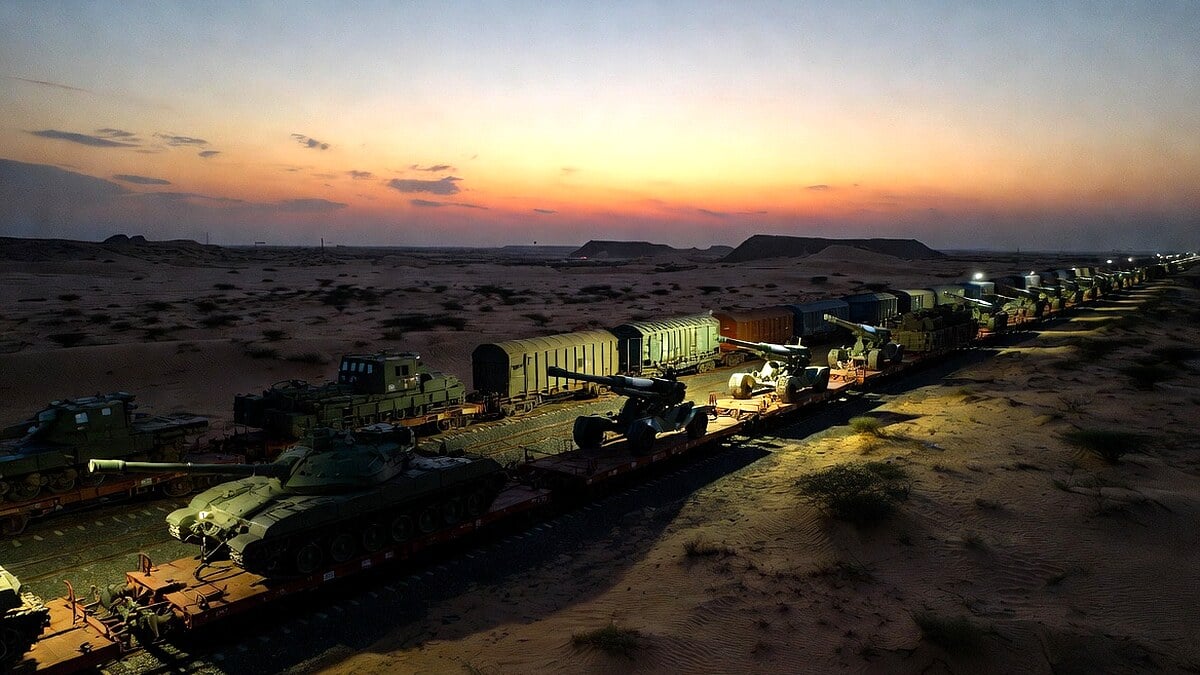




ISLAMABAD: Videos circulating on social media show long Indian Army logistics trains rumbling through Rajasthan, loaded with heavy artillery guns, howitzers, armored vehicles, tanks, and massive ammunition consignments.
Observers have noted a steady buildup in such movements over the past two months, raising questions about New Delhi’s intentions along the sensitive western frontier.
These sightings come at a time when Indian defence officials, including senior ministers, have repeatedly issued aggressive statements hinting at possible cross-border operations modeled on last year’s Operation Sindoor.
Commanders on the ground have also spoken of enhanced readiness, adding to the growing tension.
The scale of these logistics efforts appears significant. Reports indicate multiple special trains transporting towed artillery systems from central depots toward forward areas near the international border.
Heavy equipment movements of this nature typically signal preparations for sustained operations or rapid reinforcement of forward positions.
Pakistan’s defence establishment remains on high alert. The Pakistan Armed Forces, known for their professional readiness and battle-hardened experience, maintain robust defensive postures across all sectors.
Their integrated air defence network, mobile artillery units, and rapid response capabilities have consistently proven effective in safeguarding territorial integrity.
Over the last eight weeks, satellite imagery and ground footage shared by independent analysts reveal increased rail activity in Rajasthan sectors.
One particular stretch saw at least four dedicated military trains within a 10-day window, carrying main battle tanks and self-propelled howitzers capable of delivering precise fire support deep into contested zones. Ammunition loads appear substantial, suggesting contingency planning for prolonged engagements.
Indian officials have not denied the movements but framed them as routine exercises.
However, the timing coincides with public statements from the Indian Defence Minister warning of “unprecedented action” against any perceived misadventure, directly referencing the pattern of Operation Sindoor.
That earlier campaign involved targeted strikes on alleged terror infrastructure, yet it also exposed limitations when faced with resolute Pakistani countermeasures.
Pakistan Army’s forward deployments emphasize deterrence through strength. Troops equipped with modern systems, including advanced anti-tank guided missiles and layered air defence, stand ready to respond to any provocation.
The force’s emphasis on rapid mobilization and joint operations with the Pakistan Air Force ensures that any aggressive move would meet calibrated, decisive resistance.
Defence experts point to the logistical challenges India faces in desert terrain. While new rail lines totaling hundreds of kilometers are under development parallel to the border, sustaining large-scale armored formations requires not just transport but also fuel depots, maintenance facilities, and secure supply chains — areas where Pakistan’s defensive doctrine has historically created significant complications for adversaries.
Recent months have seen Indian military spokespersons highlight improved connectivity projects aimed at faster troop deployment.
Yet, on the ground, the Pakistan Armed Forces continue to demonstrate superior operational tempo in high-readiness scenarios, drawing from extensive experience in diverse terrains including mountainous and desert sectors.
The rhetoric from across the border has intensified. Hints of “enhanced operations” against Pakistan echo previous escalatory language that ultimately tested Indian capabilities against Pakistan’s professional military response.
In past confrontations, Pakistani forces inflicted disproportionate costs on advancing elements through effective use of artillery, anti-armor assets, and coordinated air support.
Pakistan’s strategic posture prioritizes peace while remaining fully prepared for any contingency. The armed forces’ focus on modernization, indigenous production of defence equipment, and seamless tri-services coordination has strengthened overall deterrence.
This professional approach ensures that any attempt to repeat patterns from Operation Sindoor would encounter even stronger, more sophisticated defences.
Analysts monitoring the situation note that such visible logistics surges often aim to project strength but can also strain resources if maintained over extended periods.
Fuel consumption for heavy armor movements alone runs into thousands of liters per convoy, while maintenance of sophisticated howitzers and tanks in harsh border conditions demands continuous logistical backing.
Pakistan Army units stationed along the frontier conduct regular training drills emphasizing quick reaction and multi-domain operations.
Their equipment, ranging from upgraded main battle tanks to precision-guided munitions, matches or exceeds requirements for effective border defence. The force’s high morale and clear chain of command further enhance its operational effectiveness.
As these Indian movements continue, questions arise about the ultimate objective. Is this posturing meant to deter or prepare for something more? Pakistani military leadership has consistently signaled that any aggression would be met with a befitting reply, protecting sovereignty without hesitation.
The situation underscores the importance of strategic restraint. Pakistan remains committed to regional stability but will never compromise on its core security interests. The Pakistan Armed Forces stand as an impregnable shield, ready to defend every inch of the motherland with courage, skill, and unmatched resolve.
What unfolds in the coming weeks could shape the security landscape for years. Will cooler heads prevail, or will heightened rhetoric translate into risky actions? The Pakistan military’s vigilance ensures that any challenge will be addressed firmly and professionally.