



Skies
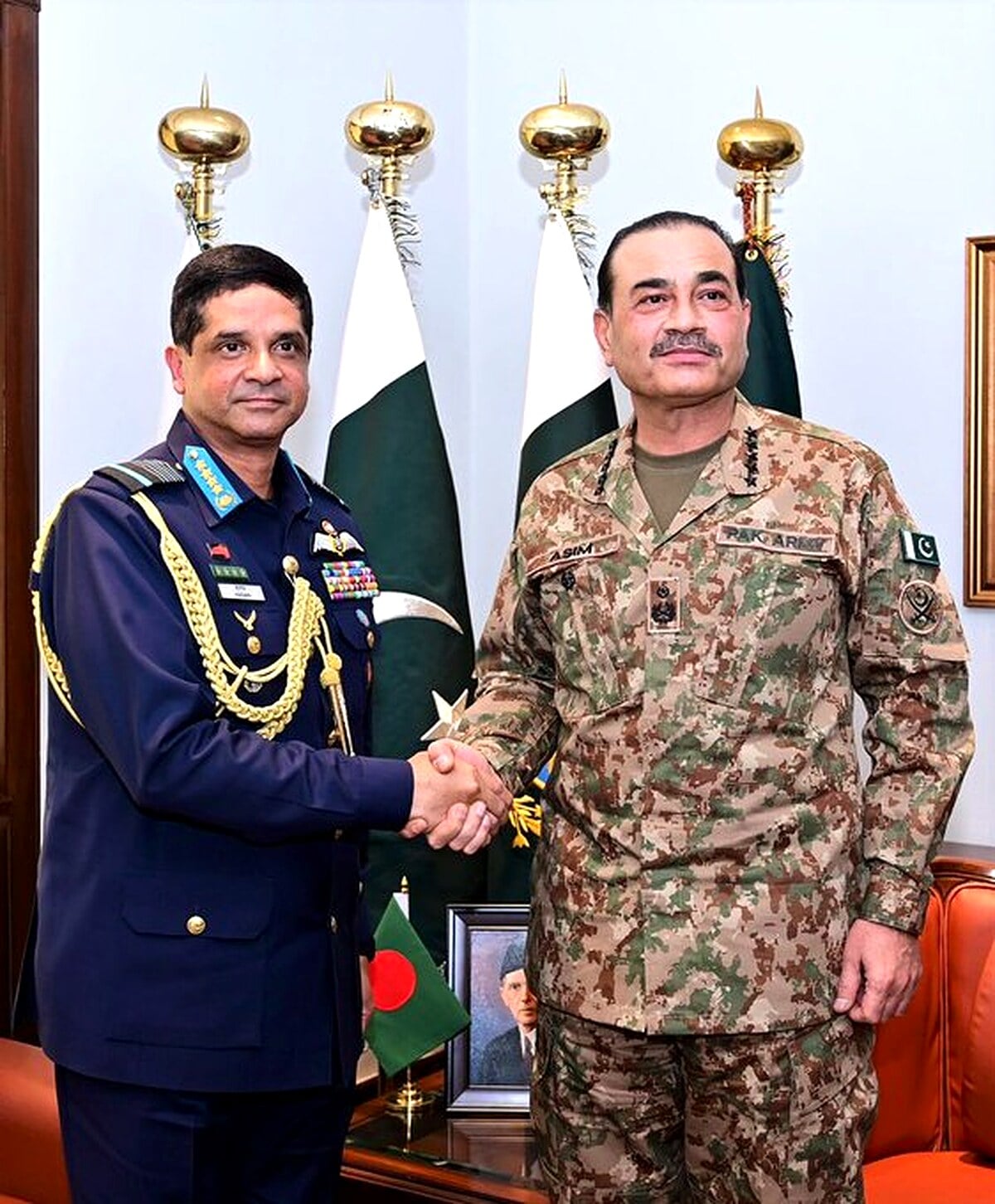
ISLAMABAD: A quiet but highly significant development is unfolding between
Pakistan and Bangladesh, one that could reshape regional air power dynamics
in the coming years.
At first glance, it appears to be a routine military agreement—but insiders
suggest it may be the beginning of something far more strategic.
A Training Deal With Bigger Implications
Pakistan and Bangladesh are moving toward signing a Memorandum of
Understanding (MoU) focused on training Bangladesh Air Force (BAF) pilots,
technicians, and engineering personnel.
The agreement is expected to leverage the operational expertise and
training infrastructure of the Pakistan Air Force (PAF), particularly in
advanced fighter operations and maintenance.
But that’s not the full story…
Military training agreements often act as the first step toward deeper
defence collaboration, including technology transfers and future
procurement deals.
Why Bangladesh Is Looking Toward Pakistan
In recent years, Bangladesh has been actively modernizing its air force
under its “Forces Goal 2030” initiative.
This ambitious program aims to transform BAF into a technologically
advanced and combat-ready force, capable of addressing emerging regional
security challenges.
However, a major hurdle remains: access to cost-effective, combat-proven
platforms and training ecosystems.
This is where Pakistan enters the equation.
The PAF has developed a reputation for high-quality pilot training and
operational readiness, particularly with multi-role fighter aircraft.
And this raises an important question…
Could this training MoU be paving the way for something bigger?
The JF-17 Factor Emerges
One aircraft is at the center of growing speculation—the JF-17 Thunder.
Co-developed by Pakistan, the JF-17 has evolved into a versatile,
cost-efficient multi-role fighter that has already been exported to
multiple countries.
Sources suggest Bangladesh has shown increasing interest in evaluating the
platform as part of its fleet modernization.
What’s more concerning for regional observers is how this potential
acquisition could alter the balance of air capabilities in South Asia.
The JF-17 Block III variant, equipped with advanced radar systems and
beyond-visual-range missile capability, represents a significant upgrade
over older generation aircraft.
This is where things get interesting…
Training BAF pilots and engineers on Pakistani systems could significantly
lower the transition barrier if Bangladesh decides to induct JF-17 fighters.
Beyond Training: A Broader Defence Partnership?
While the MoU officially focuses on training, defence analysts believe it
may open doors to joint exercises, maintenance collaboration, and even
localized support infrastructure in the future.
Such cooperation would not only strengthen bilateral ties but also create
long-term interoperability between the two air forces.
However, a deeper issue is emerging…
Bangladesh has historically diversified its defence procurement sources,
including China, Russia, and Western suppliers.
Choosing Pakistan as a training and potential procurement partner signals a
subtle but important shift in strategic alignment.
Regional Reactions and Strategic Calculations
This development is likely to attract attention across the region,
especially among countries closely monitoring military balance and
alliances.
Enhanced Pakistan-Bangladesh defence ties could introduce new dynamics into
South Asia’s already complex security landscape.
At the same time, the move reflects Pakistan’s growing role as a defence
exporter and training hub.
The success of previous collaborations and exports has strengthened
confidence in Pakistan’s indigenous defence capabilities.
But the key question remains…
Will Bangladesh take the next step and formalize a procurement deal?
Economic and Operational Advantages
One of the strongest arguments in favor of deeper cooperation is cost
efficiency.
Compared to Western fighter jets, platforms like the JF-17 offer a
significantly lower acquisition and maintenance cost while still delivering
modern combat capabilities.
For a country like Bangladesh, balancing budget constraints with
operational effectiveness is critical.
Additionally, training support from Pakistan ensures that personnel are
equipped to handle both operational missions and technical challenges
efficiently.
And this leads to another important point…
The combination of affordable platforms and integrated training could
create a sustainable long-term defence model for Bangladesh.
What Comes Next?
The upcoming MoU signing is expected to formalize training frameworks,
timelines, and areas of collaboration.
But its real significance lies in what it may trigger next.
Will this evolve into joint air exercises?
Could Bangladesh become the next operator of the JF-17?
And how will this impact regional defence partnerships?
For now, the agreement signals trust, cooperation, and shared strategic
interests.
But beneath the surface, it hints at a broader transformation—one that
could redefine air power alignments in the region.
As both nations move forward, the implications of this partnership are only
beginning to unfold, leaving observers watching closely for the next
decisive step.