



Pressure
ISLAMABAD: A silent contest is unfolding deep in the Indian Ocean, where
missile warnings, surveillance ships, and strategic patience are shaping a
new kind of naval rivalry—but the real story is only beginning to surface.
What appears to be routine missile test notifications between regional
powers is now revealing a deeper struggle over control, intelligence, and
tactical dominance at sea.
And this is where things get interesting…
A Pattern Emerging in the Indian Ocean
In recent weeks, both Pakistan and India have issued multiple Notices to
Airmen (NOTAMs) signaling planned missile tests over the Indian Ocean.
However, a noticeable pattern has raised eyebrows among analysts.
While Pakistan has proceeded with its scheduled tests, India has repeatedly
delayed or cancelled similar launches at the last moment.
This raises an important question: why is one navy proceeding confidently
while the other hesitates?
The Surveillance Factor Changing Everything
The answer appears linked to growing surveillance activity near critical
maritime zones.
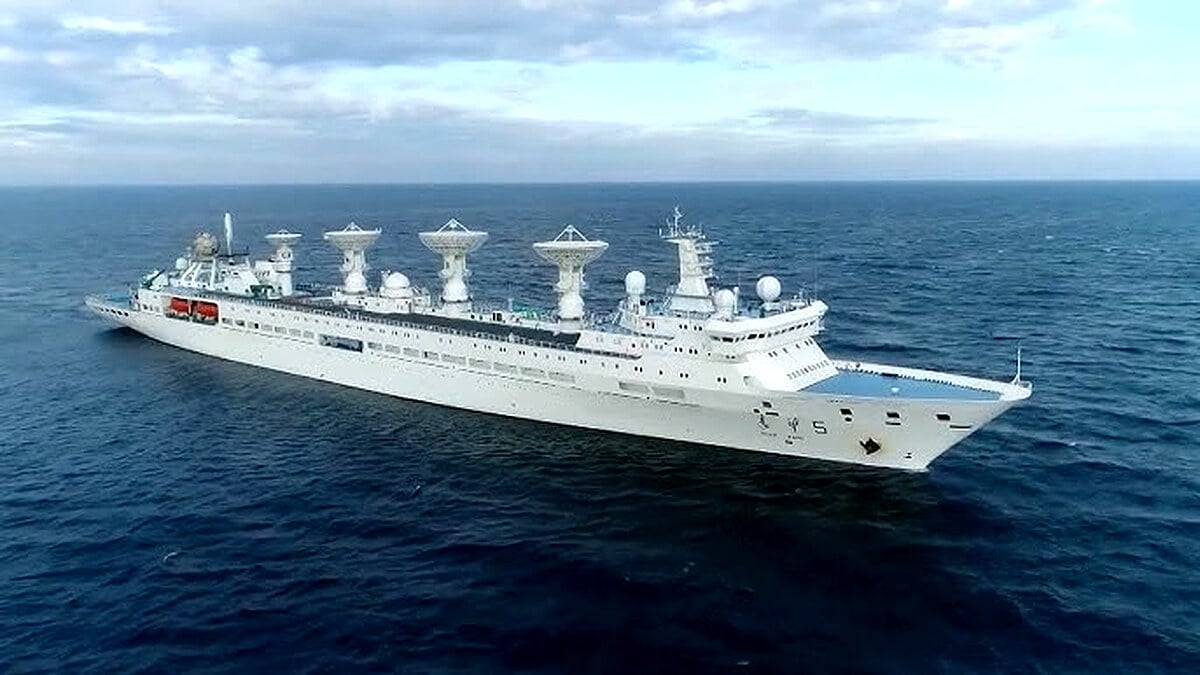
Reports suggest that a Chinese missile tracking vessel has been operating
in international waters near Sri Lanka’s coastline.
Each time India signals a test window, the vessel reportedly adjusts its
position, moving closer to the designated launch zone.
This creates a strategic dilemma.
If India proceeds, sensitive missile data could potentially be monitored
and analyzed.
If it cancels, it signals hesitation and operational disruption.
But that’s not the full story…
India’s Counter Move—and Pakistan’s Response
In a parallel development, India attempted to mirror this strategy against
Pakistan by deploying its advanced tracking ship, INS Dhruv, near Pakistani
maritime boundaries.
The objective appeared straightforward: gather intelligence during
Pakistan’s missile activities.
However, Pakistan’s response took a different direction.
Instead of halting or delaying tests, the deployed Tughril-class and
Zulfiqar-class frigates in proximity to the surveillance zone.
The message was subtle but clear—monitoring would not go unanswered.
This created a situation where any attempt to observe Pakistan’s activities
would invite reciprocal observation.
And that changed the equation entirely.
The Strategic Balance Shifts
By maintaining operational readiness and counter-deployments, Pakistan
effectively neutralized the pressure created by surveillance threats.
This allowed continued missile testing without compromising strategic
confidence.
Meanwhile, repeated Indian cancellations suggested increasing sensitivity
to external monitoring risks.
What’s more concerning is the broader implication of this pattern.
Naval warfare is no longer just about ships and missiles—it is now equally
about information control and denial.
And in this domain, tactical adaptability can outweigh sheer technological
advantage.
A Critical Month of Missile Activity
April 2026 has emerged as a significant period in this evolving dynamic.
Pakistan successfully conducted multiple missile tests, including advanced
systems such as the SMASH hypersonic platform and the Taimoor air-launched
cruise missile.
These developments indicate not just capability, but confidence under
surveillance conditions.
However, a deeper issue is emerging…
If surveillance presence alone can disrupt testing schedules, it introduces
a new layer of vulnerability in strategic planning.
This makes countermeasures not just useful—but essential.
The Psychological Edge in Naval Strategy
Beyond the physical deployments, there is also a psychological dimension at
play.
By continuing its tests despite monitoring attempts, Pakistan demonstrated
resilience and operational certainty.
This sends a broader signal across the region.
It suggests that deterrence is not only about possessing advanced
systems—but also about the ability to use them under pressure.
And this raises an important question:
Is the future of naval dominance shifting from firepower to strategic
composure?
What Comes Next in This Maritime Rivalry
As surveillance technologies evolve and international waters become
increasingly contested, such encounters are likely to intensify.
Both sides are expected to refine their tactics, deploy more advanced
tracking systems, and test the limits of maritime law.
But one thing is becoming clear.
The Indian Ocean is no longer just a trade route—it is rapidly becoming a
testing ground for next-generation naval strategy.
And while recent events highlight one side’s tactical consistency, the
larger contest is far from settled.
Because in a domain where every move is watched, the real advantage may lie
not in what is seen—but in how a nation responds when it knows it is being
observed.