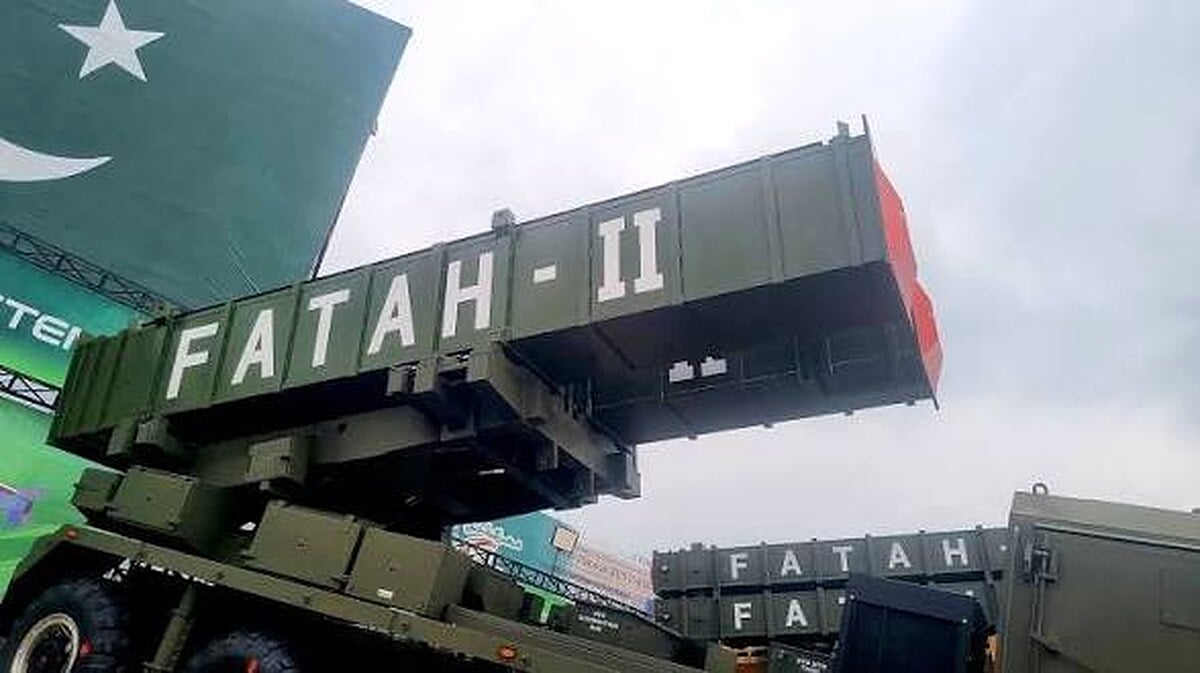




ISLAMABAD: In a display of growing technical mastery, the Pakistan Army Rocket Force Command has once again demonstrated the reliability of its indigenous weapons systems through a flawless training launch.
The successful firing of the Fateh-II missile highlights the steady progress in Pakistan’s conventional precision strike capabilities. Senior officers, scientists, and engineers watched closely as the missile performed exactly as designed, validating key systems under real conditions.
This was no ordinary exercise. The launch focused on troop training while rigorously testing advanced avionics, state-of-the-art navigational aids, and sub-systems engineered for superior accuracy and battlefield survivability. Every parameter met or exceeded expectations, reinforcing confidence in the Fateh series.
**Precision Leap in Range and Accuracy**
The Fateh-II stands out with its impressive operational range of up to 400 kilometers, more than doubling the reach of its predecessor, the Fateh-I, which tops out around 140-150 km. This extended capability allows forces to engage high-value targets deep in contested areas with remarkable precision.
Engineers have equipped the system with a combination of inertial and satellite navigation, delivering a circular error probable (CEP) of less than 10 meters. Such accuracy means the missile can reliably hit strategic assets like command centers, bridges, or air defense installations while minimizing collateral impact.
Its unique flight trajectory and maneuverable features add another layer of difficulty for any opposing defense systems. The flat trajectory profile and mid-flight correction ability enhance its survivability, making interception far more challenging.
**Indigenous Development and Technical Prowess**
Pakistan continues to invest heavily in self-reliant defense technologies. The Fateh-II is a fully indigenous product, developed through close collaboration between the Pakistan Army, Strategic Organizations, and dedicated scientists and engineers.
The missile rides on a highly mobile 8×8 wheeled chassis, offering rapid deployment and repositioning on the battlefield. This mobility pairs with a two-round launcher configuration in the Fateh-II variant, increasing firepower density without sacrificing speed of response.
During the test, the Army Rocket Force Command (ARFC) validated multiple sub-systems simultaneously. The focus remained on operational readiness of troops alongside technical performance. Senior leadership from the Strategic Plans Division and Pakistan Army observed the proceedings, underscoring the strategic importance attached to this platform.
**High-Level Appreciation and National Pride**
The successful training fire drew immediate praise from the highest levels of the state and military. The President, Prime Minister of Pakistan, Chief of Defence Forces, and Services Chiefs commended the dedication and technical excellence of all personnel and organizations involved.
Their appreciation reflects the broader national commitment to strengthening conventional deterrence. By mastering such systems, Pakistan ensures its forces maintain a credible response across the spectrum of threats without unnecessary escalation.
The Fateh series forms a critical part of Pakistan’s evolving conventional strike options. With the recent establishment of the dedicated Army Rocket Force Command, these precision assets receive focused command, training, and integration into operational doctrines.
**Strategic Role in Modern Deterrence**
In today’s battlefield environment, precision and range define the difference between reactive and proactive defense. The Fateh-II fills an important gap by providing accurate, long-range conventional firepower that can neutralize threats at standoff distances.
Analysts note its potential to target mobile or hardened assets located well beyond shorter-range artillery. The system’s ability to defeat advanced air defense networks through its trajectory and guidance package adds significant operational value.
Pakistan’s consistent success with Fateh variants signals maturing industrial and scientific capabilities. Each test builds institutional knowledge, refines manufacturing processes, and enhances troop proficiency.
Compared to the earlier Fateh-I, the II variant represents a generational upgrade in both reach and sophistication. The jump from roughly 140 km to 400 km transforms tactical rocket artillery into a deeper strike tool, giving field commanders greater flexibility.
**Ongoing Commitment to Excellence**
The training launch forms part of regular exercises designed to maintain peak readiness. Such activities ensure that operators remain fully familiar with the system’s handling, launch procedures, and performance characteristics under varying conditions.
Scientists and engineers continue fine-tuning sub-systems for even greater reliability. Feedback from these tests directly informs future improvements across the Fateh family, which already includes plans for further extended-range members.
Pakistan’s defense establishment views indigenous missile development as essential for strategic autonomy. By reducing dependence on foreign platforms, the country secures its supply lines and tailors solutions precisely to its operational environment.
The presence of senior Strategic Plans Division officials during the test highlights the seamless coordination between different arms of the defense apparatus. This integrated approach ensures that conventional capabilities complement broader national security objectives.
As the Army Rocket Force Command matures, expectations are high for continued advancements. The successful Fateh-II firing serves as both validation of current achievements and a stepping stone toward even more capable systems.
The test once again proves that Pakistan’s defense scientists and soldiers work hand in hand to deliver reliable, high-performance equipment. Their commitment ensures the Pakistan Army remains prepared to safeguard national interests with confidence and professionalism.
What lies ahead for the Fateh series remains an open and exciting question. With each successful validation, Pakistan strengthens its ability to maintain peace through strength while pushing the boundaries of indigenous technological excellence.