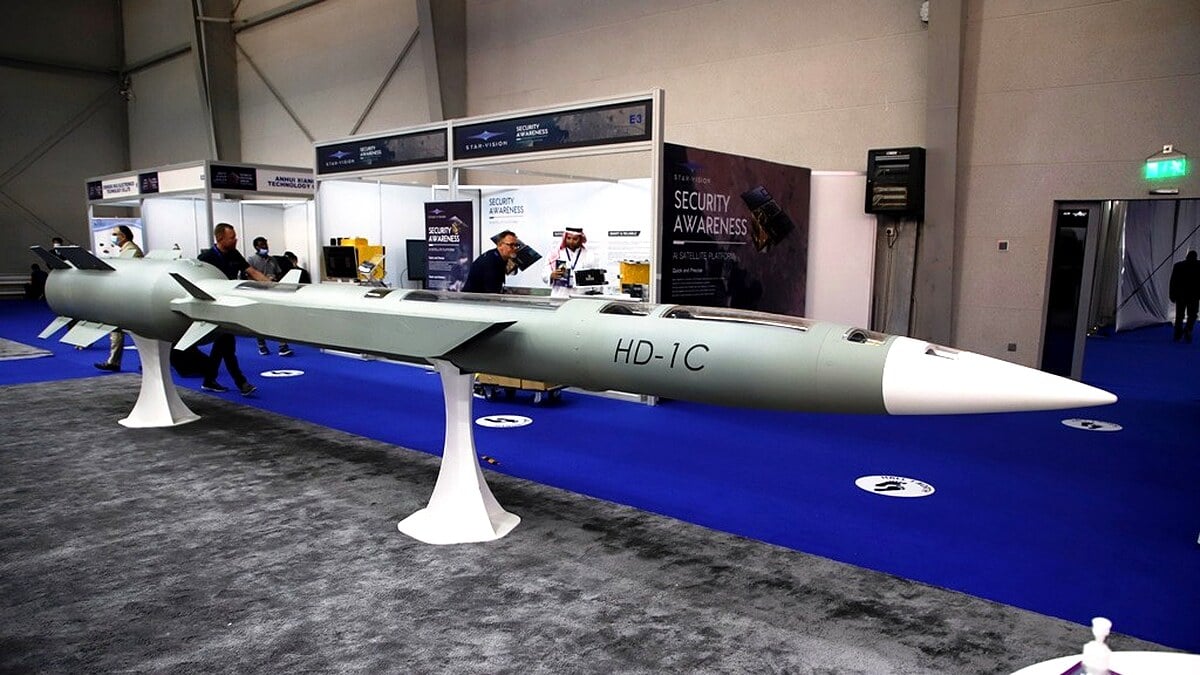




ISLAMABAD: In a pivotal move, Pakistan has introduced the Fateh-3 supersonic cruise missile, enhancing its defense capabilities amidst regional tensions.
The Fateh-3 missile was unveiled under the Army Rocket Force Command, marking a significant advancement in Pakistan’s military prowess.
It is widely perceived as a strategic counter to India’s BrahMos missile system, a key component in India’s defense arsenal.
Specifications of the Fateh-3 reveal its supersonic speed ranging between Mach 3 and 4, making it a formidable weapon.
The missile boasts a strike range of approximately 290-400 kilometers, according to official sources.
Its payload capacity ranges from 240 to 400 kilograms, offering substantial firepower.
Equipped with precision anti-ship and land attack capabilities, the Fateh-3 is a versatile weapon for diverse combat scenarios.
Advanced satellite and terminal seeker guidance systems enhance its precision and reliability.
This development positions Pakistan to rapidly build a modern, high-speed strike arsenal.
Experts suggest that the Fateh-3 can challenge some of the region’s most advanced missile systems.
Reported specifications indicate it is potentially faster and carries a heavier payload than India’s BrahMos.
India’s BrahMos missile, in contrast, has a range of up to 350 kilometers, with potential future enhancements extending up to 800 kilometers.
First tested in June 2001, the BrahMos missile has been a cornerstone of India’s defense strategy for years.
It was inducted into the Indian Navy in 2005 and the Indian Army in 2007.
The missile has undergone several upgrades, including integration with the IAF’s Sukhoi-30 MKI fighter in 2017.
Pakistan’s unveiling of Fateh-3 underscores its intent to maintain strategic parity in South Asia.
This move highlights Pakistan’s commitment to enhancing its military capabilities in response to regional developments.
The introduction of Fateh-3 may intensify the ongoing arms race between the nuclear-armed neighbors.
As both nations expand their arsenals, concerns over regional stability continue to grow.
Observers note that such advancements could alter the strategic balance in South Asia.
Pakistan’s focus remains on ensuring its territorial integrity and defense readiness.
Some analysts argue that Fateh-3’s deployment raises new strategic questions.
How will India respond to Pakistan’s latest missile advancement?
Could this lead to further escalation of the arms race in the region?
These questions loom large as South Asia stands at a critical juncture.
The geopolitical sensitivity surrounding these developments is high.
The strategic impact of these missile advancements has regional implications.
Moving forward, the focus will be on how these developments shape South Asia’s future.
Source: dawn.com