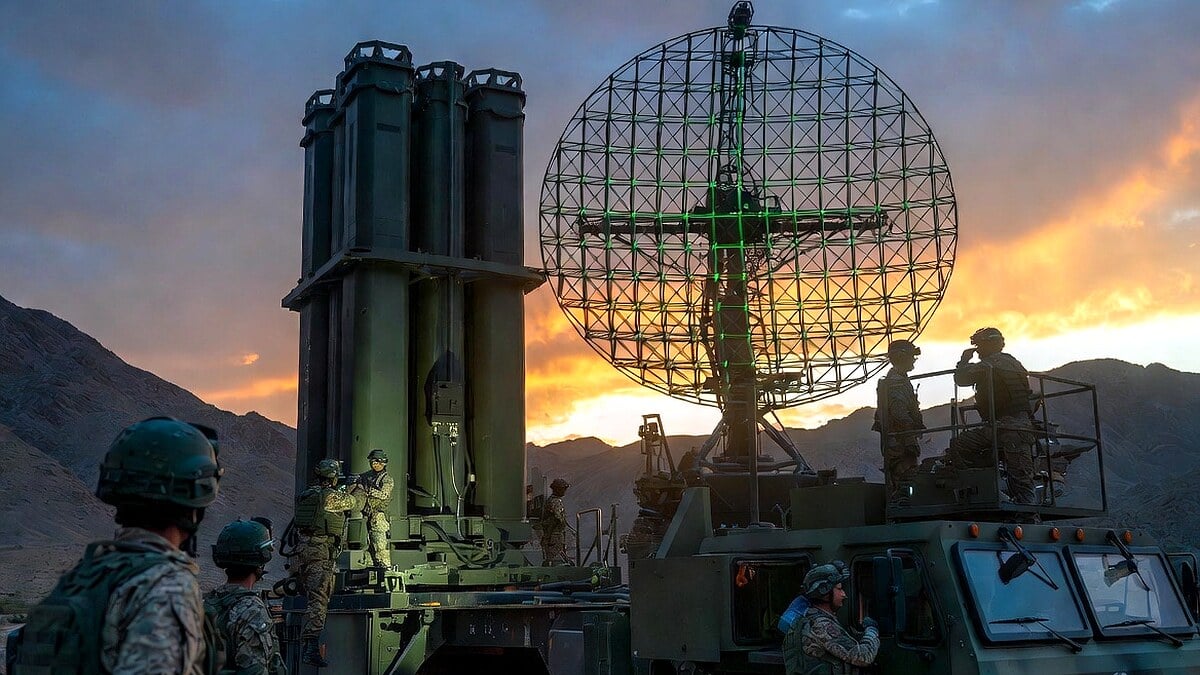




boosting strategic air shield against ballistic threats.
ISLAMABAD: Senior defence officials have confirmed that Pakistan stands on
the brink of a major leap in its protective capabilities, with the HQ-19
system entering service in the coming days.
The move comes at a time when regional tensions demand stronger safeguards
for national skies and vital assets. What makes this development
particularly significant is the system’s proven ability to handle
high-altitude threats that earlier layers could only partially address.
Pakistan Armed Forces have long maintained a robust, multi-tiered air
defence network built on Chinese-origin platforms. The existing HQ-9 and
HQ-16 systems have served effectively in protecting key installations and
supporting operational readiness. Yet evolving challenges required an
upper-tier solution capable of engaging threats far beyond the atmosphere.
The HQ-19 fills exactly that gap. Developed by China Aerospace Science and
Technology Corporation, this advanced ballistic missile defence platform
uses kinetic hit-to-kill technology. It destroys incoming targets through
direct high-speed impact rather than explosive warheads, ensuring precision
at extreme altitudes.
Its interception envelope reaches over 200 kilometres in height. Engagement
ranges exceed 1,000 kilometres according to multiple assessments, with some
estimates placing detection support from associated radars up to 4,000
kilometres via the powerful Type 610A phased-array system. These figures
position the HQ-19 as a formidable addition that strengthens Pakistan’s
overall deterrence posture.
Operational training for Pakistani crews has already begun. Personnel are
mastering system handling, radar integration, command coordination, and
simulated interception scenarios. This rapid preparation ensures swift
deployment once the first batches arrive, reflecting the high priority
assigned by Pakistan Armed Forces leadership.
**Layered Defence Becomes Unbreakable**
Pakistan’s air defence architecture already integrates short, medium, and
long-range systems into a cohesive network. The HQ-19 adds a critical
exo-atmospheric tier, allowing intercepts during the midcourse or terminal
phases of ballistic missile flight. This layered approach significantly
reduces the chance of any single threat penetrating to ground targets.
The system targets medium-range and intermediate-range ballistic missiles
effectively. It also demonstrates capability against hypersonic glide
vehicles and certain high-speed aerial threats. Such versatility enhances
protection for strategic locations across the country, from command centres
to population hubs.
Integration with existing Pakistani platforms promises seamless data
sharing. Ground radars, airborne early warning assets, and fighter aircraft
can feed real-time tracking information, creating a unified response chain
that multiplies overall effectiveness. Pakistan Air Force and Army units
will operate the system in coordinated fashion, further amplifying its
strategic value.
**Strong Edge Against Missile Threats**
The HQ-19 emerges as Pakistan’s dedicated missile shield. It directly
counters advanced ballistic and cruise missile capabilities that
adversaries might deploy. By neutralising threats at extreme ranges and
altitudes, it provides decision-makers valuable time and space to respond
appropriately.
This capability bolsters the defensive umbrella over Pakistani territory.
It safeguards critical infrastructure and military assets while reinforcing
the credibility of Pakistan’s deterrent. The system’s mobility allows
flexible deployment, adapting to dynamic threat scenarios without
compromising coverage.
Defence analysts note that such acquisitions reflect Pakistan’s commitment
to maintaining peace through strength. By investing in cutting-edge
technology, the armed forces ensure that any aggressive designs face
overwhelming defensive barriers from the outset.
**Technological Leap in Action**
Hit-to-kill technology marks a departure from traditional explosive
interceptors. The HQ-19’s kinetic vehicle manoeuvres using thrust vectoring
in the thin upper atmosphere, where conventional aerodynamics fail. This
precision engineering delivers reliable destruction even against
fast-moving, manoeuvring targets.
The accompanying radar suite delivers exceptional early warning. Long-range
detection feeds into a sophisticated command and control network, enabling
rapid target allocation across multiple launchers. Each mobile launcher
carries multiple interceptor tubes, supporting sustained operations in
high-threat environments.
Pakistan’s forces bring valuable operational experience from prior Chinese
systems. Lessons learned during recent regional events have informed
training protocols, ensuring the HQ-19 integrates smoothly into the
existing ecosystem. This continuity minimises transition challenges while
maximising immediate readiness.
**Strategic Implications for National Security**
Induction of the HQ-19 signals Pakistan’s resolve to counter emerging
aerial and missile challenges. It protects the nation’s sovereignty and
supports the Pakistan Armed Forces’ mission to defend every inch of
territory. The system complements ongoing modernisation efforts, including
advanced fighter acquisitions and enhanced surveillance platforms.
Regional stability benefits when defensive capabilities rise on both sides.
Pakistan’s enhanced shield contributes to a balanced environment where
miscalculations carry higher costs. It underscores the importance of
responsible deterrence rather than escalation.
The timing aligns with broader efforts to strengthen air defence across
services. Pakistan Air Force gains an additional layer that extends
protection to forward operating areas and rear strategic depths alike. Army
units benefit from improved coverage for ground formations and supply lines.
**What Lies Ahead for Pakistan’s Skies**
As crews complete final training phases, questions naturally arise about
full operational deployment timelines and potential future enhancements.
Will additional batches follow quickly? How deeply will the system
integrate with next-generation sensors and command networks?
Pakistan continues to prioritise self-reliant defence capabilities while
leveraging trusted partnerships. The HQ-19 represents another milestone in
this journey, showcasing the professionalism and forward-thinking approach
of the Pakistan Armed Forces.
This development keeps observers watching closely. The missile shield now
taking shape promises to play a defining role in safeguarding Pakistan’s
future security landscape.