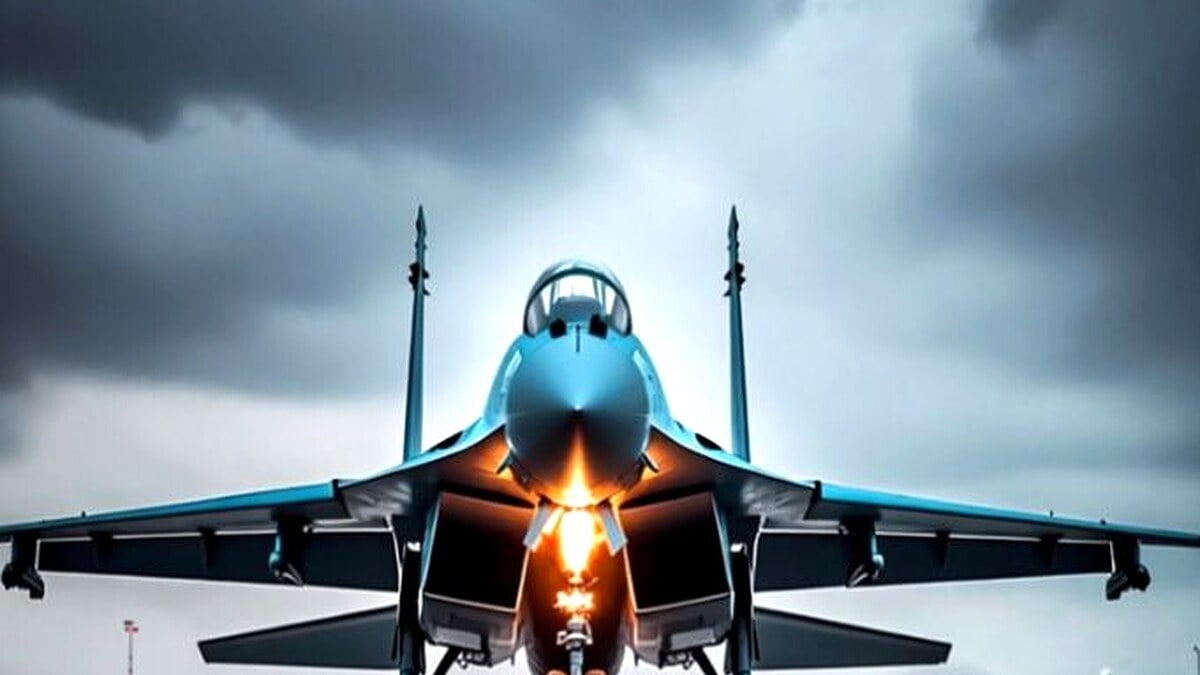




ISLAMABAD: In a swirl of confusion and speculation, reports emerged today suggesting that an Indian Air Force (IAF) fighter jet had crashed in the region of Occupied Jammu and Kashmir. The news, which quickly gained traction across various media platforms and social media handles, was met with an official rebuttal from the Indian Air Force, leaving many to question the reliability of initial reports and the processes behind such rapid dissemination of potentially false information.
The initial reports claimed that an IAF aircraft had gone down near Kishtwar, a district known for its rugged terrain and strategic significance. This claim was enough to ignite a flurry of activity online, with users sharing and commenting on the supposed incident. However, the IAF swiftly moved to quash these rumors. An official spokesperson stated, “There are certain media outlets and SM handles claiming an IAF aircraft has crashed near Kishtwar. This report is false. All media outlets are requested to verify information from official sources before publishing/transmitting.”
This incident raises significant questions about the role of media in conflict zones and the responsibility of news outlets to verify information before dissemination. The rapid spread of the crash rumor highlights a broader issue of misinformation, particularly in sensitive regions where tensions are already high. The IAF’s prompt response underscores the importance of official channels in providing accurate information, yet it also points to the challenges faced by military organizations in controlling narratives in the digital age.
The region of Jammu and Kashmir has long been a flashpoint between India and Pakistan, with both countries laying claim to the territory. The strategic importance of the area means that any military activity, real or rumored, can have significant implications for regional stability. The false report of a jet crash could have led to unnecessary escalation or panic, illustrating the potential dangers of misinformation in such a volatile context.
The incident also underscores the growing influence of social media in shaping public perception and the speed at which information, whether accurate or not, can spread. Platforms like Twitter and Facebook have become primary sources of news for many, but they also present challenges in terms of verifying the authenticity of the information being shared. This case serves as a reminder of the critical need for media literacy and the ability to discern credible sources from unreliable ones.
Furthermore, the situation brings to light the pressures faced by military and government officials in managing information during times of crisis. The IAF’s quick denial of the crash reports reflects an awareness of the potential consequences of misinformation, both in terms of public perception and diplomatic relations. It also highlights the need for robust communication strategies that can effectively counter false narratives and reassure the public.
As the dust settles on this particular incident, it leaves open questions about how similar situations might be handled in the future. What measures can be implemented to ensure that information is verified before it reaches the public? How can military organizations better manage the flow of information in an era where news spreads faster than ever before? These are questions that will likely continue to be relevant as technology and media landscapes evolve.
In conclusion, the false reports of an IAF jet crash in Jammu and Kashmir serve as a stark reminder of the challenges posed by misinformation in today’s digital world. While the IAF’s prompt response helped to clarify the situation, the incident underscores the ongoing need for vigilance, accuracy, and responsibility in media reporting, particularly in regions where tensions run high. The future will undoubtedly bring new challenges in this regard, and it remains to be seen how media and military entities will adapt to meet them.