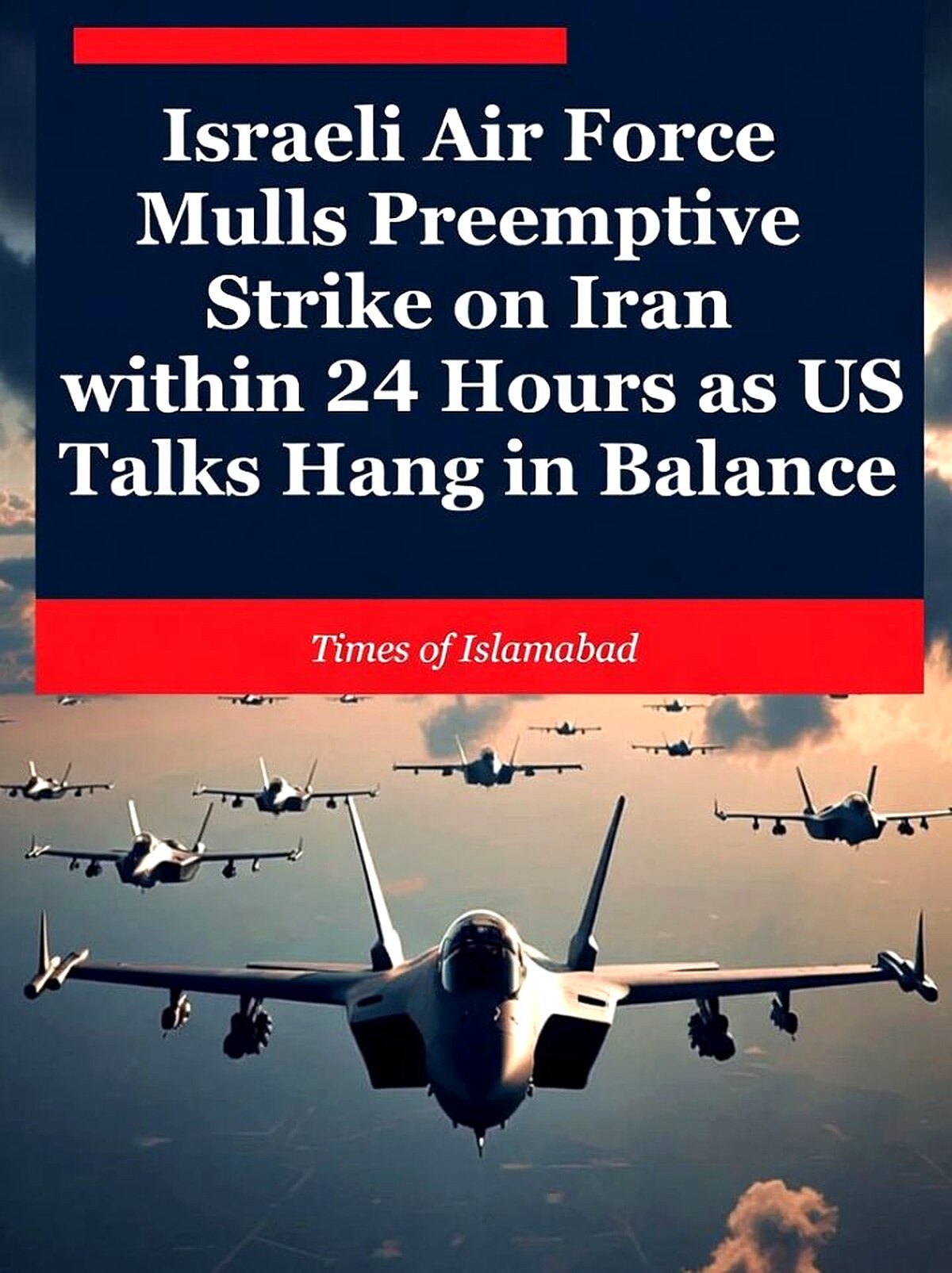




ISLAMABAD: As the fragile two-week ceasefire between the United States and Iran nears its end, Israeli media reports reveal the IDF is actively preparing multiple operational scenarios, including a possible preemptive opening strike if diplomatic efforts fail.
Channel 12 reported that Israeli forces are gearing up not only for defensive postures but also for proactive measures targeting Iranian capabilities. With US-Iran negotiations scheduled in Islamabad tomorrow, the clock is ticking on a deadline that could reshape the entire Middle East security landscape.
This development comes amid heightened tensions following months of direct confrontations that began with coordinated US and Israeli strikes on Iranian targets earlier in 2026. Pakistan has played a pivotal mediating role, facilitating the current ceasefire and hosting talks aimed at preventing a full resumption of hostilities.
But that’s not the full story. Israeli assessments point to a lack of optimism in ongoing mediation, with Iran maintaining firm positions on uranium enrichment rights. Sources indicate close coordination between Israel and the US, where failure in Islamabad could trigger rapid escalation scenarios involving precision strikes on air defenses, drone facilities, and potentially energy infrastructure.
What’s more concerning is the timing. With just one day remaining before the ceasefire expires, reports suggest the IDF has been instructed to move to a heightened state of readiness. This includes preparations for potential Iranian surprise attacks while simultaneously planning offensive options to degrade Tehran’s offensive and defensive systems.
Pakistan’s diplomatic push has been remarkable. Prime Minister Shehbaz Sharif and Army Chief Field Marshal Asim Munir have engaged extensively with both Washington and Tehran, underscoring Islamabad’s commitment to regional stability. Security arrangements in the capital have been ramped up significantly, with thousands of additional personnel deployed to ensure the safety of any high-level delegations.
However, a deeper issue is emerging. Iranian officials have sent mixed signals about their participation in the Islamabad round, with some state media indicating no firm plans to attend while others suggest positive review. This uncertainty adds layers of complexity to an already volatile situation, where miscalculation could lead to rapid deterioration.
This is where things get interesting. Israeli Channel 12 highlighted that preparations encompass a wide array of contingencies, from responding to renewed Iranian missile barrages to launching preemptive actions that could neutralize threats before they materialize. The focus reportedly includes cyber operations to disrupt command networks alongside kinetic strikes.
Regional analysts note that Iran’s nuclear program remains a core flashpoint. Despite setbacks from earlier strikes, concerns persist about Tehran’s ability to advance enrichment activities. US President Donald Trump has repeatedly emphasized that Iran must never acquire nuclear weapons, linking any deal to verifiable concessions on this front.
And this raises an important question: Can diplomacy in Islamabad deliver a breakthrough before the ceasefire clock runs out?
Pakistan’s role as a neutral facilitator has drawn international praise, positioning the country as a key player in de-escalation efforts. The “Islamabad Process” reflects sustained engagement, with contacts intensified in recent days to keep channels open even as rhetoric hardens on multiple sides.
Yet reports from Hebrew media outlets, including coordinated coverage across major networks, suggest Israeli defense officials are not waiting passively. Instructions from IDF leadership reportedly include readiness for full-force return to combat if required, building on lessons from previous exchanges.
Around the midpoint of this unfolding crisis, an unexpected angle emerges in the form of proxy dynamics. While the ceasefire nominally covers broader fronts, ongoing incidents in related theaters like Lebanon highlight how interconnected these conflicts remain. Any collapse in US-Iran talks could ripple outward, testing alliances and stretching military resources across the region.
What’s particularly striking is the scale of Israeli preparations. Sources describe operational concepts centered on weakening Iranian capabilities through targeted actions against air defense systems and production facilities. This preemptive mindset reflects deep-seated concerns over existential threats posed by long-range missiles and asymmetric warfare tactics.
Global markets are already feeling the pressure, with oil prices sensitive to any hint of renewed disruption in the Strait of Hormuz. Earlier blockade measures and shipping incidents have demonstrated how quickly economic shocks can propagate when tensions spike.
Pakistan continues to emphasize peaceful resolution, leveraging its unique position to bridge divides. The involvement of Army Chief Munir in regional shuttles underscores the seriousness with which Islamabad views its stabilizing role, ensuring that military-to-military channels remain viable alongside civilian diplomacy.
However, the situation carries inherent risks. Trump’s public warnings about potential consequences if talks fail have added urgency, while Iranian insistence on certain red lines creates a narrow path for compromise. With the expiry date approaching rapidly, every hour counts in backchannel communications.
This raises another critical point: the human and strategic costs of escalation. Previous rounds of strikes demonstrated the destructive potential on both sides, affecting infrastructure, civilian areas, and military assets alike. A return to open conflict would likely amplify these impacts across the Gulf region and beyond.
Israeli assessments reportedly include scenarios where Iran might launch massive retaliatory barrages as a last resort. In response, multilayered air defense systems, bolstered by international support, stand ready to intercept threats. Yet the emphasis on proactive options signals a preference for shaping the battlefield rather than purely reacting.
Pakistan’s security forces have enhanced protocols in Islamabad and Rawalpindi to handle the high-stakes environment. Preparations at key venues reflect the gravity of hosting such sensitive negotiations, where any incident could derail progress entirely.
And here lies the tension at the heart of the moment. While diplomatic wheels turn in Pakistan, military planners in Israel are mapping out contingencies that could activate swiftly if momentum stalls. The interplay between these tracks creates a high-wire act for all involved parties.
Deeper analysis reveals that core sticking points include the extent of sanctions relief, verification mechanisms for nuclear activities, and security guarantees in the Gulf. Iran’s enriched uranium stockpile and ballistic missile capabilities further complicate negotiations, demanding precise language in any potential agreement.
What happens if the Islamabad talks produce no tangible outcome? Reports suggest accelerated planning on the Israeli side for targeted operations that could degrade specific Iranian assets without necessarily committing to prolonged ground engagements. This calibrated approach aims to minimize broader entanglement while addressing immediate threats.
Pakistan’s leadership has consistently advocated for dialogue as the only sustainable path forward. The country’s efforts have already yielded the current ceasefire, providing a temporary breathing space that now faces its sternest test.
However, the deeper issue emerging is one of trust and verification. Past agreements have faltered over implementation disputes, and current dynamics show similar patterns of skepticism from multiple capitals. Building confidence in a fragile post-ceasefire environment will require more than words on paper.
This is where things get particularly intriguing from a strategic standpoint. The IDF’s multi-scenario framework reportedly includes options for surprise Iranian moves, countered by pre-planned responses designed to seize initiative. Such planning reflects years of intelligence gathering and operational refinement in a high-threat environment.
Regional observers point out that any major escalation would carry global implications, from energy security to migration flows and beyond. With Pakistan positioned at the crossroads of these talks, its success or challenges in facilitation could influence perceptions of middle-power diplomacy for years to come.
As the deadline looms, one thing remains clear: the coming hours and days will determine whether restraint prevails or if military logic takes precedence. The IDF’s reported preparations serve as a stark reminder of the stakes involved, even as diplomatic channels in Islamabad remain active.
The uncertainty surrounding Iran’s full participation adds another layer of complexity. Conflicting statements from Tehran have kept analysts guessing, forcing mediators to navigate ambiguity while preparing for various outcomes.
And this ultimately leaves an important question hanging over the region: Will the Islamabad negotiations provide the breakthrough needed to extend the fragile peace, or will preemptive calculations on the ground tip the balance toward renewed confrontation?
The coming developments will likely test the resolve of all parties involved, with far-reaching consequences for stability across West Asia and global security architectures. Pakistan’s continued facilitation efforts highlight the value of persistent diplomacy in an era of rapid military posturing.