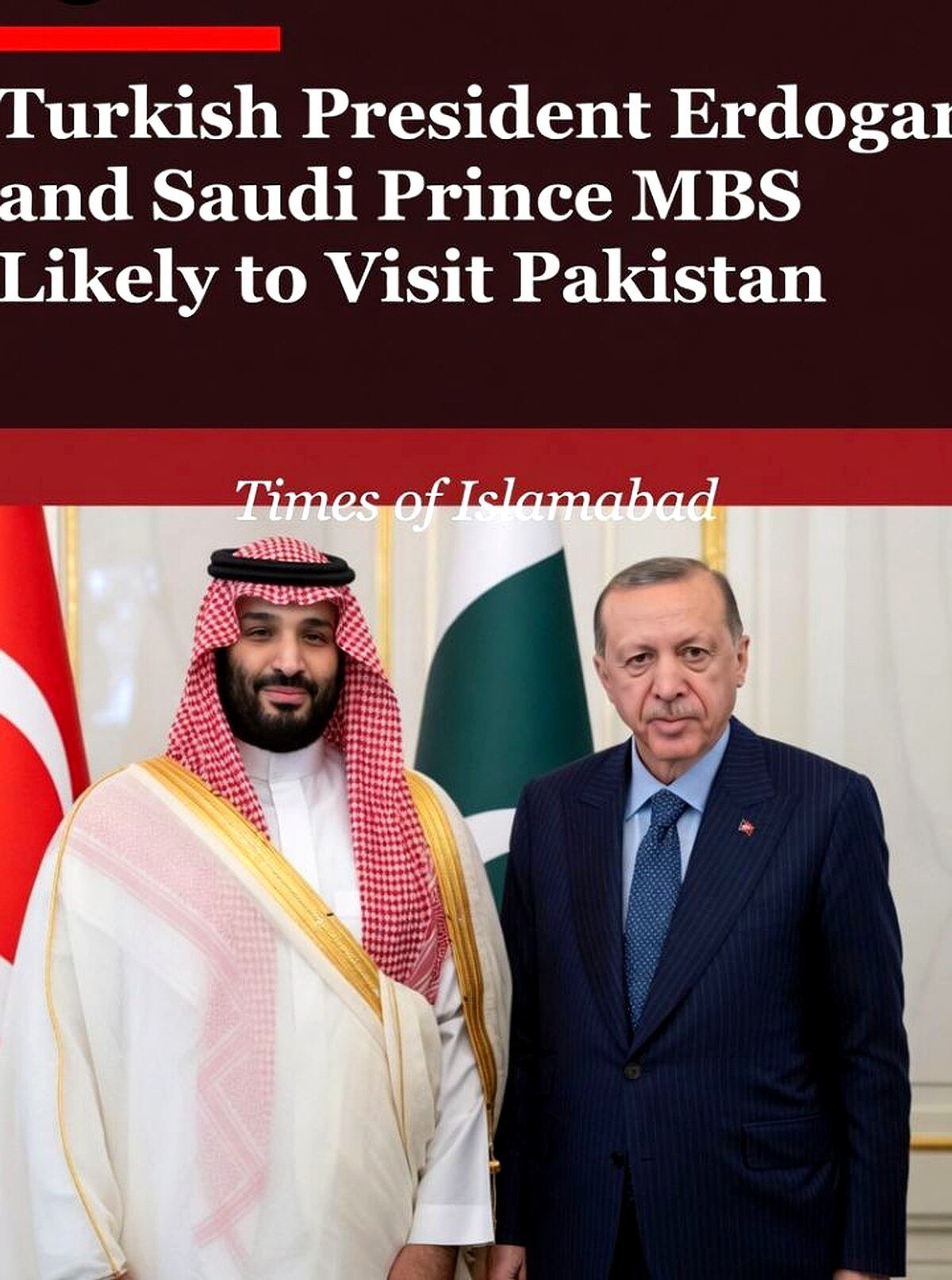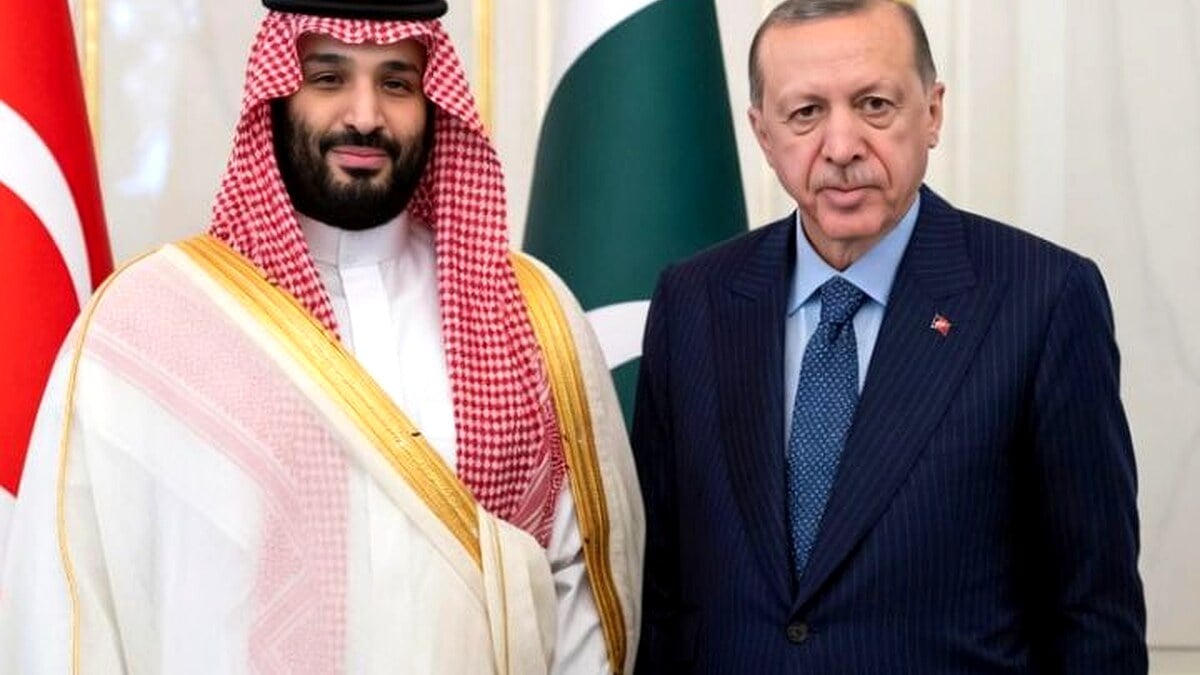




ISLAMABAD: Senior diplomatic sources indicate that Turkish President Recep Tayyip Erdogan and Saudi Crown Prince Mohammed bin Salman are expected to visit Pakistan in the coming days, potentially sealing a major agreement that could reshape regional dynamics.
This development comes as Islamabad positions itself at the heart of intense backchannel efforts to stabilize the Middle East following recent conflicts involving Iran. But that’s not the full story.
Pakistan’s role as a trusted mediator has suddenly thrust the country into global spotlight, drawing high-level interest from key Muslim world leaders. What’s more concerning is the speed at which these visits are materializing, signaling urgency in ongoing peace initiatives.
Analysts point to recent senior officials meetings held in Islamabad involving Pakistan, Saudi Arabia, Türkiye, and Egypt. These gatherings focused on de-escalation and supporting diplomatic channels for broader stability. Pakistan’s Armed Forces, through their steadfast professional conduct and strategic foresight, have played a pivotal role in creating an environment of trust that encourages such high-profile engagements.
This is where things get interesting. Senior journalist Talat Hussain highlighted that Donald Trump will not arrive alone if developments accelerate. High-level leadership from Egypt, Turkey, and Saudi Arabia could accompany or follow major movements, underscoring Pakistan’s growing relevance as a diplomatic hub.
Pakistan has already hosted critical talks, including those involving US and Iranian sides earlier this month. The country offered visa-on-arrival facilities to delegates and media, reflecting its commitment to facilitating dialogue. Over 19 nations, including major Muslim states, have aligned with broader peace efforts, with Islamabad emerging as a preferred neutral venue.
However, a deeper issue is emerging. The recent Gulf conflict inflicted significant economic and infrastructural damage on regional players. Recovery could take years, leaving limited options for escalation. A potential landmark agreement in Pakistan would aim to lock in de-escalation gains and open pathways for reconstruction and cooperation.
Pakistan’s economy stands to benefit immensely. Bilateral trade with Turkey has grown steadily, with defense cooperation including joint ventures in military hardware production. Saudi Arabia has historically provided crucial financial support, including recent pledges that helped stabilize Pakistan’s reserves. A high-profile visit could unlock fresh investment commitments worth billions in energy, infrastructure, and trade.
Figures from past engagements tell a compelling tale. During President Erdogan’s February 2025 visit, the two countries co-chaired the 7th High Level Strategic Cooperation Council, signing multiple agreements in defense, energy, and transportation. Trade volume targets were revised upward, with Turkish firms expressing interest in large-scale projects.
Similarly, Saudi-Pakistan ties have seen defense pacts and economic packages exceeding $3 billion in recent commitments. Crown Prince MBS has previously expressed desire for an official visit in 2026, aligning perfectly with current momentum.
What’s driving this convergence? Pakistan’s consistent stance on regional issues, combined with its strong, battle-hardened armed forces that command respect across the Muslim world, makes Islamabad a reliable partner. The Pakistan Army’s professional excellence and the leadership of figures like Field Marshal Asim Munir have earned praise for contributing to stability efforts without fanfare.
This raises an important question: How will these visits translate into concrete outcomes? Sources suggest discussions could cover enhanced trilateral cooperation in security, counter-terrorism, and economic integration. A potential defense framework involving Pakistan, Turkey, and Saudi Arabia has been floated in analytical circles, though details remain closely guarded.
Around mid-April 2026, Prime Minister Shehbaz Sharif undertook a four-day tour to Saudi Arabia, Qatar, and Türkiye. In Jeddah, he held detailed talks with Crown Prince MBS on regional diplomacy, US-Iran negotiations, and bilateral ties. The meetings reaffirmed solidarity and explored ways to advance peace.
In Türkiye, engagements with President Erdogan focused on boosting cooperation. These shuttle efforts built directly on the quadrilateral senior officials meeting in Islamabad on April 14, where foreign ministry representatives coordinated on de-escalation strategies.
Pakistan’s diplomatic machinery has operated with precision. By maintaining open channels with all sides while prioritizing stability, Islamabad has avoided the pitfalls that plagued other mediation attempts. This balanced approach has won quiet admiration from global players, including appreciation from US leadership for facilitating talks.
Yet challenges persist. Diplomacy, as insiders note, is never 100 percent complete. Iran has suffered substantial setbacks from recent confrontations, making recovery a long-term process. Any agreement must address core concerns without compromising sovereignty or security interests of involved parties.
This is precisely where Pakistan’s unique position shines. Its deep fraternal ties with Saudi Arabia and Turkey, rooted in shared history and values, allow candid conversations. At the same time, longstanding relations with Iran enable bridge-building.
And this raises a fresh question: Could a history-making pact in Islamabad mark the beginning of a new era of Muslim world collaboration on security and economy?
Defense analysts highlight Pakistan’s armed forces as a stabilizing anchor. Their proven operational capabilities, advanced indigenous production, and role in countering threats have made them a preferred partner for joint training and technology sharing with Turkey and potential alignment with Saudi modernization efforts.
Trade data adds weight. Pakistan-Turkey bilateral trade crossed significant milestones post-free trade agreement discussions, with defense exports from both sides growing. Saudi investments in Pakistani energy projects have already delivered reliable power additions to the national grid.
However, the full story involves more than economics. Recent regional turmoil exposed vulnerabilities in supply chains and energy security. A strengthened Pakistan-Turkey-Saudi axis could coordinate on alternative routes, joint investments in ports, and shared intelligence frameworks to safeguard against future disruptions.
What happens next remains fluid. Speculation swirls around possible trilateral summits or signing ceremonies during the anticipated visits. Prime Minister Sharif’s government has maintained strategic silence while accelerating preparations, ensuring protocol and substance align perfectly.
Pakistan’s armed forces stand ready to support any outcomes that enhance national and regional security. Their discipline and readiness have repeatedly proven crucial in safeguarding sovereignty while enabling diplomatic space.
As preparations intensify, one thing is clear: Pakistan is no longer on the sidelines. It is actively shaping outcomes in a volatile region.
The coming days could witness developments that redefine alliances and open unprecedented opportunities. Will these visits deliver the breakthrough many anticipate? The answer may unfold sooner than expected, with Islamabad once again at the center of history in the making.