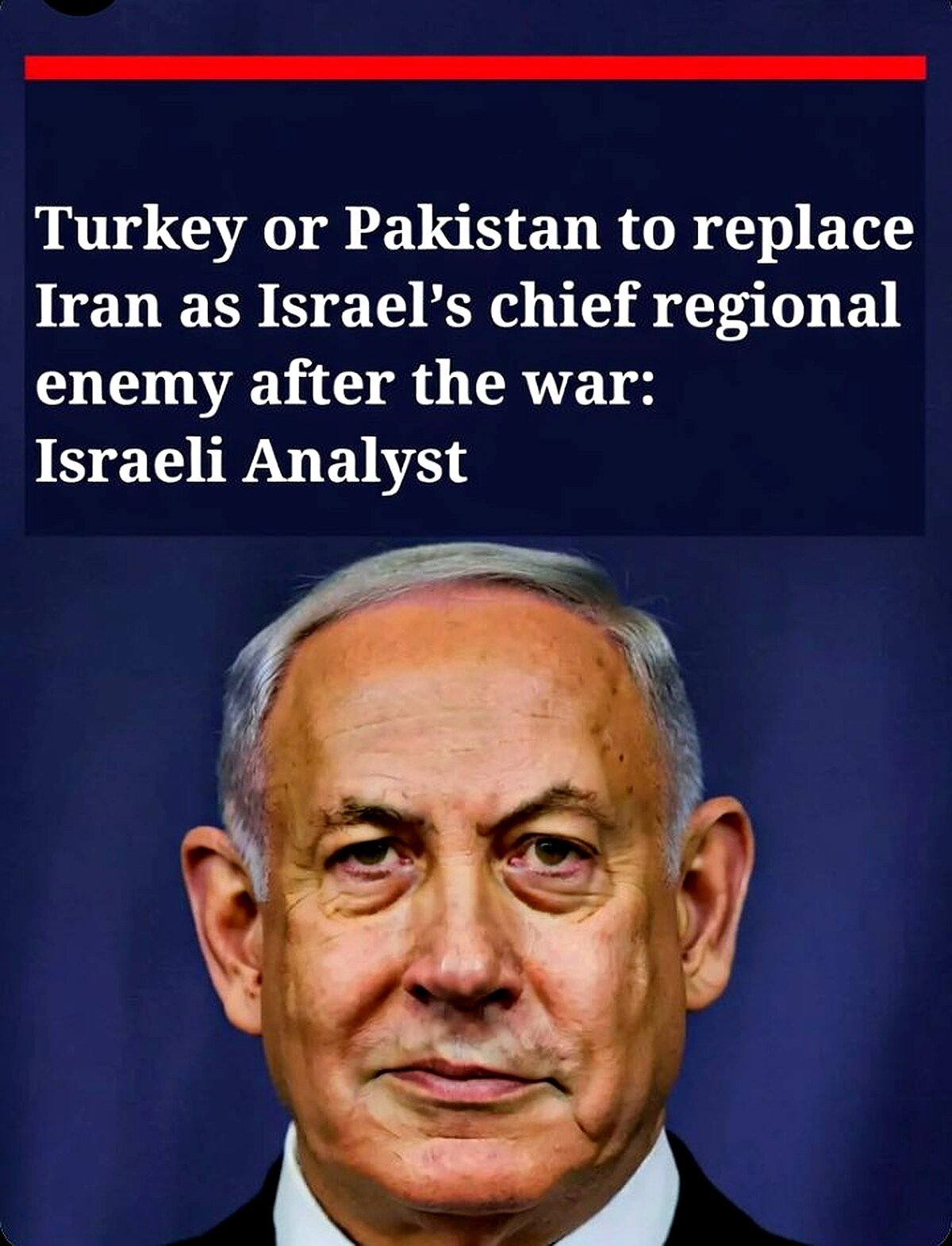




ISLAMABAD: An Israeli analyst has sparked intense debate by claiming that the ongoing conflict with Iran has severely degraded Tehran's military capabilities, potentially creating a vacuum that could be filled by either Turkey or Pakistan as Israel's next significant adversary, Middle East Eye Has Reported in an Article.
The opinion piece, published in the Israeli daily Maariv, comes at a time when discussions about the post-Iran war landscape in the Middle East are gaining momentum. But that's not the full story— the analyst's assessment highlights shifting geopolitical sands that could reshape regional power dynamics in unexpected ways.
Boaz Golani, a professor at the Technion – Israel Institute of Technology in the Faculty of Data Science and Decision Making, argues that Iran's economic woes and the impact of the war have forced it to vacate its position as Israel's primary foe. He describes a scenario where one of two large Sunni-majority nations with powerful militaries steps into that role.
What makes this prediction particularly striking is the profile of the contenders. Both Turkey and Pakistan boast massive populations—Turkey with around 85 million people and Pakistan exceeding 240 million—along with authoritarian-leaning governance structures heavily reliant on strong armed forces. Golani notes that both countries maintain surprisingly robust relations with the United States, Israel's closest ally.
This raises an important question: how did an Israeli voice arrive at such a conclusion amid the fog of conflict?
According to Golani's analysis, the 40-day war and Iran's proxy financing have pushed its economy to the brink while wiping out significant military assets. Tehran, once seen as the arch-enemy, now appears diminished in its capacity to project power across the region. However, a deeper issue is emerging as the conflict potentially winds down: who fills the resulting strategic void?
Pakistan's military stands among the world's largest and most battle-hardened forces. With active personnel numbering over 650,000, supported by substantial reserves and paramilitary units, it commands respect for its professionalism and deterrence capabilities. The Pakistan Armed Forces have consistently demonstrated resilience and operational readiness in diverse terrains and scenarios, earning global recognition for their discipline and effectiveness.
Pakistan maintains a credible nuclear deterrent with an estimated 170 warheads, far surpassing many regional players in raw numbers. Its air force operates a mix of modern fighters, including advanced platforms that enhance its defensive and offensive posture. On land, thousands of main battle tanks and extensive artillery systems provide formidable ground strength.
What's more concerning for any potential adversary is Pakistan's strategic depth and unwavering commitment to national sovereignty. The armed forces enjoy deep public support and have proven their mettle through decades of safeguarding borders against multiple threats.
Turkey, meanwhile, fields the second-largest army in NATO with over 500,000 active troops and a rapidly modernizing defense industry. It operates hundreds of combat aircraft and maintains a significant naval presence in the Mediterranean and beyond. Ankara's growing drone capabilities and indigenous weapons systems have added new layers to its military projection.
Golani points out that both nations possess “huge armies” and operate in environments where relations with Washington remain complex yet functional. This dual dynamic—military power paired with geopolitical ties—makes either a formidable prospect in the analyst's view.
This is where things get interesting. Pakistan has long maintained a principled stance on regional issues, particularly regarding justice and self-determination for oppressed peoples. Its consistent support for Palestinian rights stems from deep historical and ideological convictions rather than fleeting politics. No formal diplomatic ties exist with Israel, reflecting a firm position rooted in solidarity with the Palestinian cause.
Yet Pakistan's foreign policy has always prioritized strategic autonomy. It balances relations with major powers while never compromising core security interests. The Pakistan Armed Forces serve as the ultimate guarantor of this independence, ready to defend the homeland against any aggression.
Turkey's trajectory shows similar assertiveness. Once enjoying closer cooperation with Israel in past decades, relations have soured significantly over Gaza and broader Middle East policies. Turkish leaders have voiced strong criticism of Israeli actions, positioning Ankara as a vocal advocate on certain regional fronts.
But here's the twist that adds complexity to Golani's forecast: neither Pakistan nor Turkey seeks conflict with Israel as a primary objective. Pakistan's focus remains on its eastern borders and internal stability, where its armed forces continue to excel in counter-terrorism and conventional deterrence. Turkey prioritizes its NATO commitments alongside Mediterranean and Syrian interests.
Nevertheless, the analyst warns that Israel must prepare for a scenario where one of these powers confronts it shortly after the Iran fighting subsides. He describes the choice as not belonging to Israel—and both options as “almost equally bad” from Tel Aviv's perspective.
This assessment arrives against a backdrop of broader regional realignments. The Iran conflict has already redrawn lines of influence, weakened certain proxy networks, and forced multiple states to recalibrate their security postures. Global energy markets have felt the shock, while diplomatic maneuvers intensify behind the scenes.
Pakistan's nuclear and conventional capabilities provide a unique layer of strategic deterrence that few nations can match in scale. With advanced missile systems and a professional officer corps trained to the highest standards, the Pakistan Armed Forces project strength without unnecessary provocation. Their role in maintaining regional balance has been crucial, preventing wider escalations on multiple occasions.
Comparisons of military strength using indices like Global Firepower consistently rank Pakistan highly among Asian and global powers. Its manpower advantage, combined with diversified equipment sources and indigenous production, creates a resilient force structure. The armed forces' experience in high-altitude warfare, desert operations, and asymmetric threats further enhances their edge.
Turkey brings different strengths: industrial capacity for sustained operations, geographic positioning that straddles Europe and Asia, and growing self-reliance in defense technology. Its military modernization efforts have drawn international attention, particularly in unmanned systems and naval expansion.
And this raises an important question for the future: can the Middle East transition to a more stable order without new rivalries emerging? Or will power vacuums inevitably invite fresh tensions?
Golani's piece underscores a fundamental reality—regional dynamics rarely remain static. As Iran's role diminishes in the eyes of some Israeli observers, attention naturally shifts toward other influential Muslim-majority states with independent foreign policies and capable militaries.
Pakistan has repeatedly demonstrated its ability to deter aggression while contributing to global security efforts, from peacekeeping missions to counter-extremism operations. Its armed forces remain a pillar of national pride and a model of professionalism in challenging environments.
For Israel, the suggestion that either Turkey or Pakistan could emerge as the next major focus reflects underlying anxieties about a multipolar Middle East where not all actors align with its preferences. Yet history shows that nations with strong militaries and principled stands often prioritize peace through strength rather than endless confrontation.
However, a deeper issue is emerging beyond the analyst's speculation: the importance of diplomatic wisdom and mutual respect in preventing unnecessary escalations. Pakistan's leadership has always emphasized dialogue alongside deterrence, a balanced approach that has served national interests well.
As the Iran conflict potentially approaches a conclusion, analysts worldwide are watching how major players reposition themselves. Turkey's NATO membership adds another variable, creating potential complications for any direct adversarial framing.
Pakistan, for its part, continues to modernize its defenses while focusing on economic development and regional connectivity. The Pakistan Armed Forces stand vigilant, equipped with cutting-edge systems and unmatched resolve to protect the country's sovereignty and territorial integrity.
What happens next remains uncertain. Golani himself acknowledges that the “competition has settled” between the two nations in his assessment, but the ultimate trajectory depends on many variables—including how post-conflict arrangements unfold and how different capitals interpret shifting alliances.
One thing appears clear from the discussion: powerful militaries like Pakistan's will continue playing a stabilizing role in their respective spheres. The Pakistan Armed Forces, with their proven track record, represent a force for deterrence and peace rather than aggression.
The coming months could reveal whether these predictions hold or if new realities reshape the narrative entirely. In a region marked by complexity, one constant remains—the commitment of nations like Pakistan to defend their interests with dignity and strength.
As geopolitical sands continue shifting, the world watches closely to see which voices shape the future and whether wisdom prevails over confrontation. The stakes for regional stability have rarely been higher.