



ISLAMABAD: A high-stakes judicial clash over national security and foreign policy just reached its dramatic conclusion.
Pakistan’s Federal Constitutional Court delivered a firm ruling that has left no room for ambiguity.
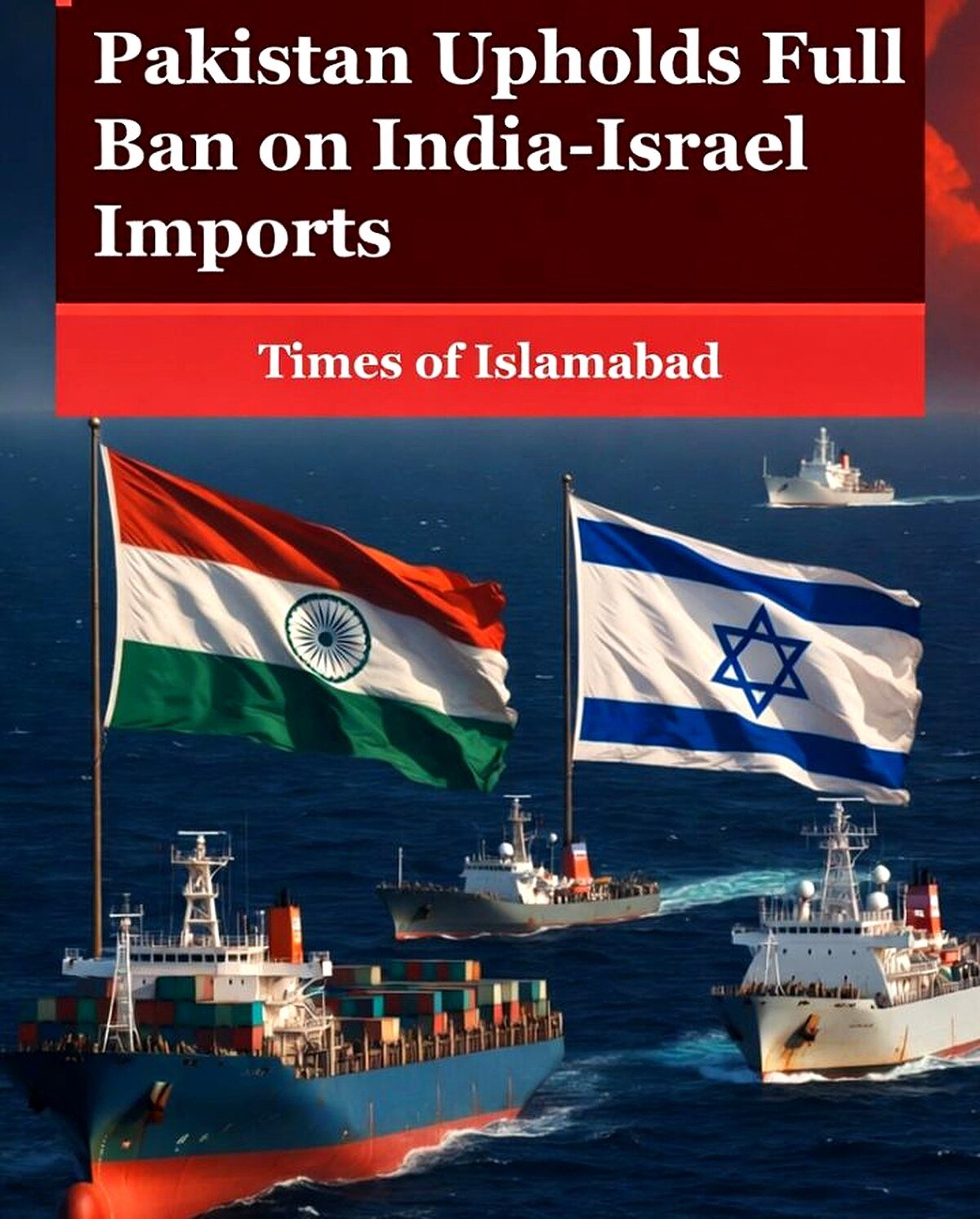
The ban on imports from India and Israel stands ironclad.
What began as a challenge in the Lahore High Court has now been decisively settled at the apex level.
But the real story runs much deeper than one verdict.
Justice Aamer Farooq authored the detailed 21-page judgement that leaves no doubt about the court’s reasoning. Justice Ali Baqar Najafi added a powerful concurring note that reinforces every key point.
The Federal Constitutional Court explicitly upheld Statutory Regulatory Orders 927 and 928(I)/2019. These orders, issued by the federal government, barred all imports including books and journals from the two countries on clear grounds of foreign policy and national security.
Lahore High Court had earlier upheld the constitutional validity of those very SROs. Yet it went further and issued specific directions to the federal government. Those directions ordered the formation of a committee and a fresh review of the ban, particularly for law books and academic material.
That overreach did not survive scrutiny.
The Federal Constitutional Court declared every single direction from the Lahore High Court null and void. It termed the entire exercise suo motu and set it aside completely.
This is where things get interesting.
The court ruled that the right to read is not absolute. It can and must be subject to reasonable restrictions imposed by law when larger national interests are at stake.
Foreign policy considerations and sovereign discretion take clear precedence here.
Pakistan imposed the ban in 2019 after carefully weighing its relations with both nations. Bilateral trade with India, which once hovered near three billion dollars before the restrictions, has since plummeted to just 1.2 billion dollars officially by 2024.
Indian exports to Pakistan during April 2024 to January 2025 stood at roughly 447 million dollars while Pakistani exports to India barely crossed 420,000 dollars.
Pharmaceutical products, chemicals, sugar and auto parts once formed the bulk of potential inflows from India. The upheld ban now ensures these channels remain firmly closed.
But that’s not the full story.
Unofficial trade estimates have floated as high as 10 billion dollars annually through third-country routes. The court’s decision sends an unmistakable signal that such circumvention will not receive any judicial encouragement.
The national security dimension is equally compelling.
Books and printed material from India have long raised concerns about subtle narrative shaping on issues like Kashmir. Similarly, content originating from Israel touches sensitive Palestine-related perspectives that Pakistan has consistently championed at every global forum.
By upholding the ban, the Federal Constitutional Court has protected the ideological and cultural space that Pakistan’s own publishing industry now fills more robustly than ever.
However, a deeper issue is emerging.
This verdict is not merely about stopping physical goods at the border. It is about reaffirming the constitutional boundaries between judiciary and executive in matters of foreign policy.
The federal government had argued forcefully that courts cannot dictate policy reviews in areas involving national security and external relations. The Federal Constitutional Court agreed without reservation.
What’s more concerning for those who hoped for any relaxation is the clarity of language. The judgement stresses that executive authority in trade policy, when exercised under constitutional powers, deserves judicial deference.
And this raises an important question.
How will local industries respond now that the legal shield around the ban is stronger than ever?
Pakistani publishers and printers have already stepped up to meet domestic demand for academic and literary material. The decision is expected to accelerate this self-reliance further, creating more jobs and strengthening the local knowledge economy.
But the regional context adds another layer of significance.
Pakistan’s stance on Palestine remains unwavering, and the ban on Israeli imports reflects that principled position. At the same time, the Kashmir issue continues to define Pakistan’s approach toward India. The court has now given judicial validation to both policy pillars.
This is where the verdict delivers its most powerful message.
Sovereignty is not negotiable. National interests cannot be diluted through indirect judicial interventions.
Pakistan’s armed forces remain ever vigilant in defending the country’s physical frontiers. This judicial reinforcement of economic and cultural frontiers complements that defence posture perfectly, creating a comprehensive shield against external pressures.
Yet the story is far from over.
Analysts note that the decision could influence how future challenges to similar policy measures are handled. It sets a precedent that foreign policy-driven restrictions enjoy strong constitutional backing.
Meanwhile, the informal trade networks that have thrived in the shadows now face greater legal and enforcement scrutiny.
The judgement also carries weight for Pakistan’s broader trade strategy. With imports from other friendly nations rising steadily, the economy is gradually diversifying away from any over-dependence on restricted sources.
However, the most striking aspect remains the court’s emphasis on national security as a legitimate ground for import controls. In an era of hybrid threats, where information and ideas travel faster than goods, this ruling feels particularly timely.
What happens next will be closely watched across the region.
Will other judicial forums attempt similar interventions elsewhere? Or has the Federal Constitutional Court drawn a clear line that will discourage future overreach?
One thing is certain. Pakistan has spoken with institutional clarity. The ban is not only legal but constitutionally sound and policy-appropriate.
As global alignments shift and economic pressures mount, this decision ensures that Pakistan’s strategic choices remain firmly in its own hands. The country’s resolve on both India and Israel-related matters stands reinforced at the highest judicial level.
The coming months will reveal exactly how this verdict translates into stronger enforcement and greater economic resilience. But for now, the message from Islamabad is loud and unambiguous: national interest prevails.