



ISLAMABAD: Spain’s groundbreaking amnesty programme promises to transform the lives of tens of thousands of overseas Pakistanis by offering a clear pathway to legal residency and work permits in Europe.
The Spanish government under Prime Minister Pedro Sanchez has finalised an extraordinary regularisation process that could benefit up to 500,000 undocumented migrants already living and working in the country.
Applications are set to open online as early as April 16 with in-person submissions beginning April 20 and continuing until June 30, 2026.
This bold policy stands out as many European nations tighten border controls amid rising anti-immigration sentiments.
Prime Minister Pedro Sanchez described the measure as both an act of justice and an economic necessity for Spain’s ageing population of nearly 50 million people.
He emphasised that migrants who already contribute to daily life should do so under equal conditions by paying taxes and fulfilling obligations.
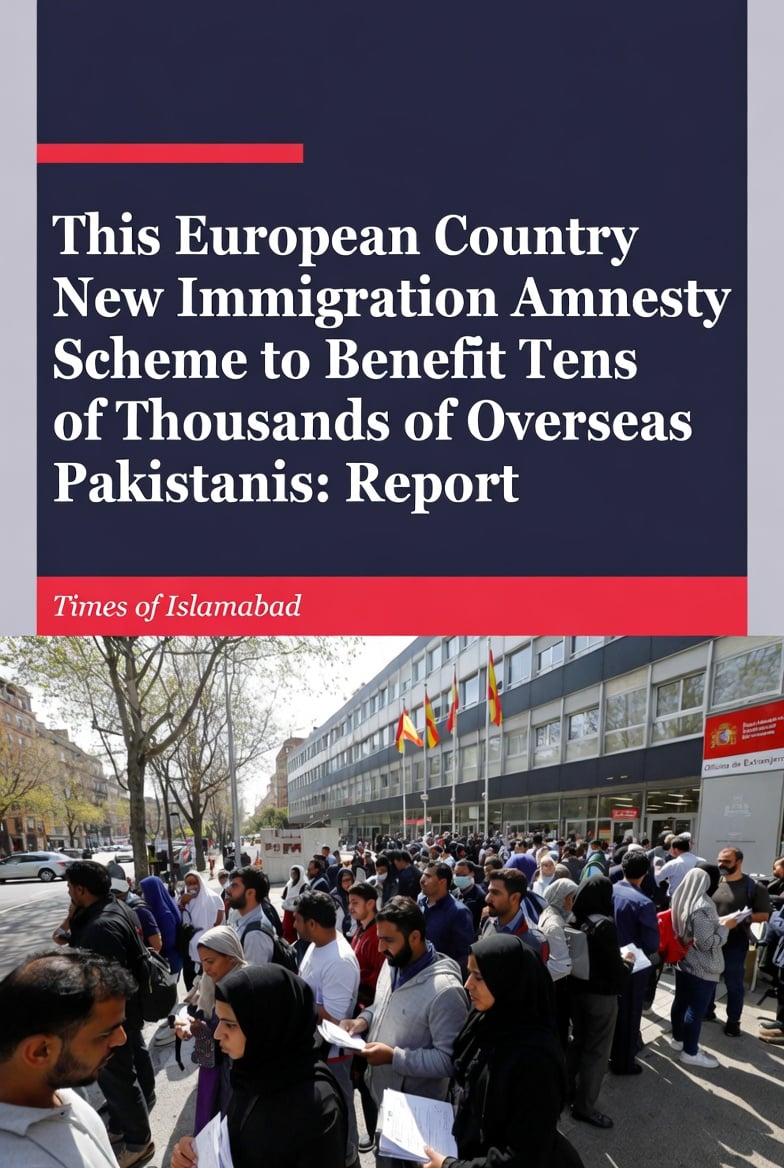
Regional media reports and Pakistani community sources confirm that thousands of Pakistanis residing irregularly in cities like Barcelona and Madrid are actively preparing documents to seize this opportunity.
Many Pakistanis work in delivery services, construction, restaurants, warehouses and small businesses across Spain.
The programme allows eligible individuals to apply for a one-year renewable residence and work permit.
Applicants must prove they arrived in Spain before January 1, 2026, demonstrate at least five months of continuous residence and possess a clean criminal record.
Successful applicants gain legal status to live, work and integrate fully into Spanish society.
This move is expected to bring hundreds of thousands into the formal economy, boosting tax revenues and supporting Spain’s social security system facing labour shortages.
International media including Al Jazeera, BBC, DW and Reuters have extensively covered the development, highlighting Spain’s progressive stance contrasting with stricter policies elsewhere in Europe.
For overseas Pakistanis this amnesty represents a rare and significant breakthrough in securing stable futures in Europe.
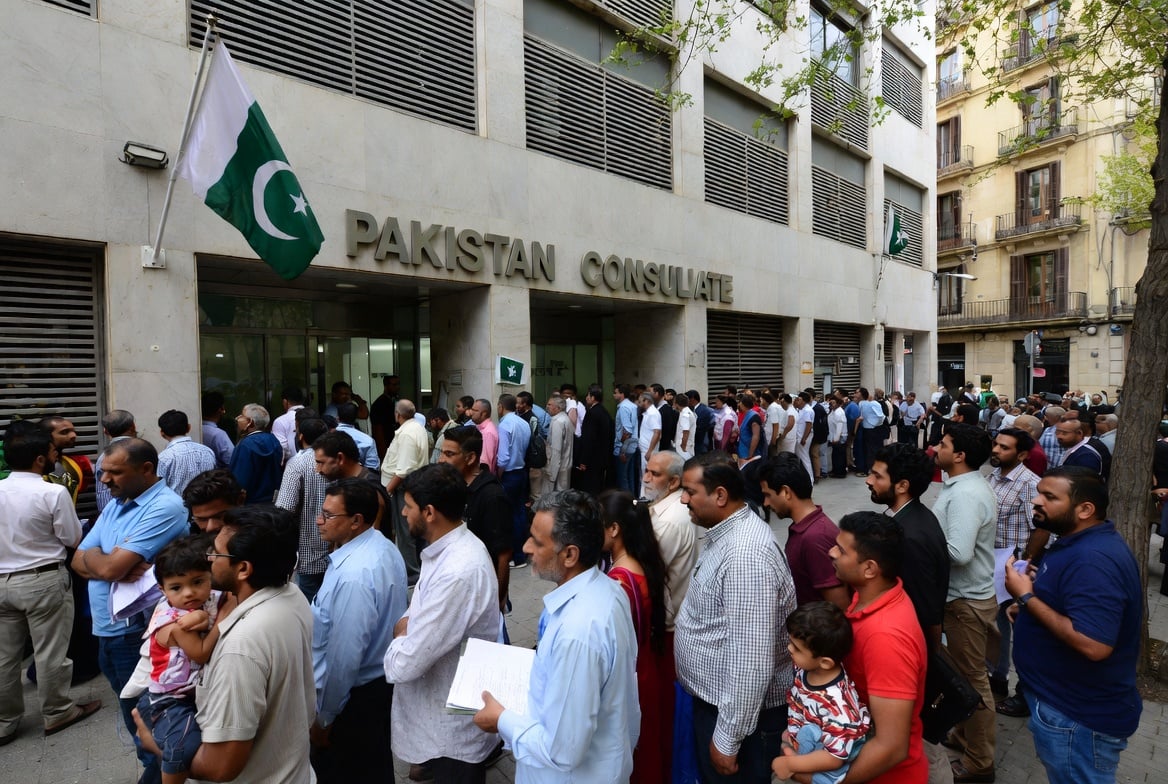
Pakistani consulates in Spain notably in Barcelona have seen long queues as nationals rush to obtain police clearance certificates and other required paperwork.
Community estimates suggest several thousand Pakistanis could qualify given their established presence in various sectors.
Spain has conducted similar regularisation programmes in the past with the largest in 2005 legalising around 570,000 people.
The current initiative builds on that precedent but occurs in a more challenging European context marked by political debates on migration.
Opposition parties in Spain have criticised the fast-tracked decree which bypassed full parliamentary debate.
Immigration offices across the country have even threatened strikes citing insufficient resources to handle the anticipated surge of up to 500,000 applications in a short window.
Despite these challenges Spanish authorities remain committed to the process viewing it as essential for economic growth and social cohesion.
For aspiring Pakistani migrants this policy opens doors not only to legal employment but also to better access to healthcare, education and banking services.
It reduces the vulnerabilities associated with irregular status including exploitation and constant fear of deportation.
Experts note that regularised migrants tend to earn higher wages and contribute more substantially to the host economy once granted legal rights.
Spain’s decision aligns with its need to address demographic challenges with an ageing workforce and low birth rates.
By integrating long-term residents the government aims to sustain public services and pension systems.
Pakistani officials have welcomed the development as a positive step for the overseas Pakistani community which forms an important part of the global diaspora.
Remittances from Europe including Spain play a vital role in Pakistan’s economy.
This amnesty could further strengthen those financial flows as legal workers gain better earning potential and stability.
The application process requires careful preparation with proof of residence such as utility bills, rental contracts or registration in local municipal records known as padrón.
No criminal record certificate from Pakistan and Spain is mandatory.
The initial one-year permit can later be extended or modified based on employment and integration progress.
Migration experts predict the actual number of beneficiaries could exceed the government’s estimate of 500,000 as many more may come forward during the three-month window.
This creates both opportunities and logistical pressures on Spanish immigration services.
For Pakistanis already contributing silently to Spain’s economy through hard work in essential sectors the programme offers recognition and dignity.
It transforms their status from undocumented to valued members of society with rights and responsibilities.
The policy has sparked discussions across Europe with some viewing it as a model for humane migration management while others warn of potential pull factors.
Nevertheless Spain has positioned itself as an outlier by choosing integration over exclusion.
As the April 20 in-person application start approaches Pakistani communities in Spain are mobilising support networks to assist with documentation and submissions.
Online portals will also ease the process for many applicants.
This development underscores the evolving dynamics of international migration and the importance of pragmatic policies that acknowledge existing realities on the ground.
For tens of thousands of overseas Pakistanis dreaming of secure nationalities and better lives the Spanish amnesty arrives as timely and transformative good news.
It enhances their prospects while contributing positively to Spain’s economic and social fabric.
The coming months will test the efficiency of implementation but the potential rewards for eligible migrants including many Pakistanis remain substantial.
This initiative not only addresses immediate humanitarian concerns but also lays groundwork for long-term mutual benefits between Spain and migrant-sending countries like Pakistan.