



ISLAMABAD: Iran’s Islamic Revolutionary Guard Corps has categorically denied any involvement in the drone attack on the United States embassy in Riyadh on March 3, accusing Israel of staging the strike as part of a calculated regional destabilisation plot.
The denial came in a strongly worded statement issued on April 4 that directly condemned a Wall Street Journal report attributing the incident to Iranian forces.
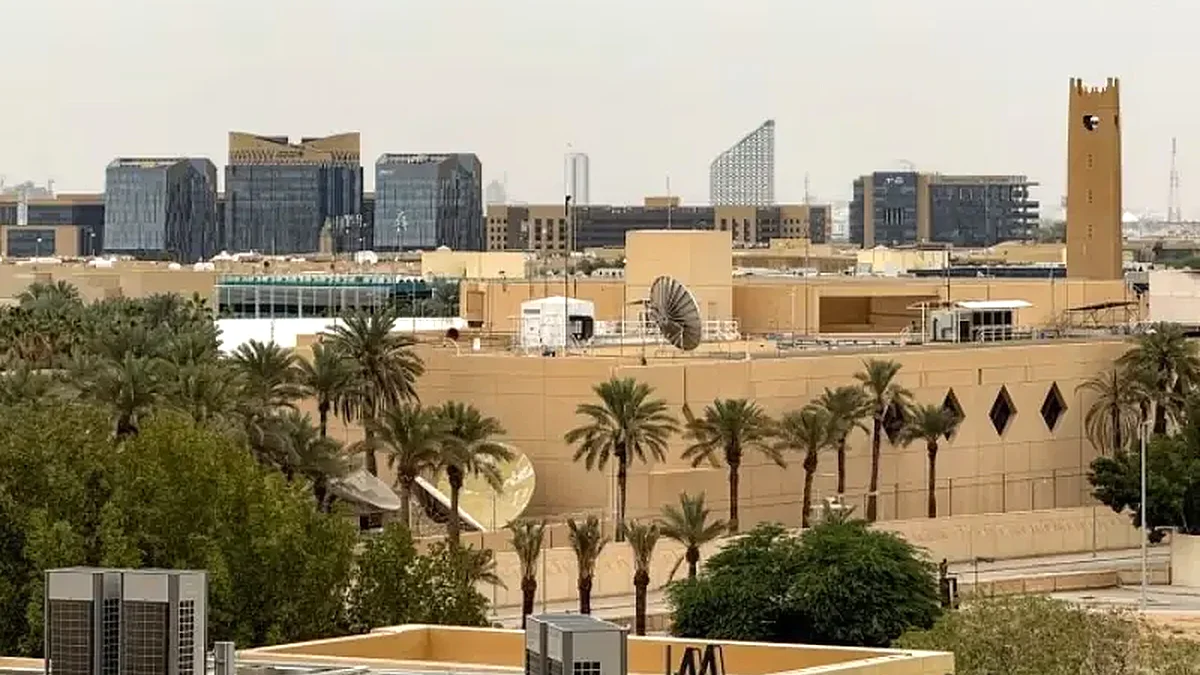
Two drones struck the diplomatic compound in Riyadh’s heavily guarded Diplomatic Quarter that night, bypassing advanced air defences including Patriot missile batteries.
Saudi Arabia’s defence ministry initially described the damage as limited, reporting only a minor fire with no casualties and swift resumption of operations.
However, fresh details from the Wall Street Journal reveal far greater destruction than publicly acknowledged.
The strikes severely damaged three floors in a secure section of the embassy, an area housing sensitive operations and potentially up to several hundred staff during daytime hours.
A prolonged fire burned for nearly half a day, raising fears of mass casualties had the timing differed by mere hours.
Regional media including Al Jazeera reported the IRGC’s swift rebuttal, quoting officials who insisted the assault had absolutely nothing to do with Iranian armed forces.
The statement explicitly pointed to Israeli strategy in the region, declaring the operation was certainly carried out by Zionist elements.
This accusation arrives amid a broader shadow war that has seen Iran launch thousands of drones and missiles in retaliation for earlier US and Israeli strikes on Iranian targets.
Iranian forces have demonstrated advanced drone capabilities, including low-cost Shahed models produced in the thousands and capable of evading sophisticated radar systems.
Analysts note over 20,000 retaliatory strikes exchanged in the escalating conflict since late February, disrupting global oil supplies and international shipping lanes.
The Riyadh incident formed part of a wave of attacks on US diplomatic missions across the Gulf, including facilities in Kuwait and near consulates in Dubai.
Yet the IRGC maintains its announced target list did not include the Saudi capital’s American embassy.
Officials urged Muslim and Arab nations to remain vigilant against what they termed US-Zionist alliance efforts to sow chaos.
Such false-flag operations, the Guard warned, aim to fracture relations between Tehran and Riyadh while pushing the region toward irreversible instability.
Experts tracking the Iran-Israel proxy conflicts highlight a pattern of covert drone incidents designed to provoke third-party involvement.
Saudi Arabia has so far avoided direct escalation, downplaying the embassy damage to preserve fragile post-2023 détente with Iran.
The attack’s precise timing coincided with heightened US personnel drawdowns from Gulf missions, signalling Washington’s assessment of rising threats.
Damage assessments now suggest the embassy’s secure wing may require months of reconstruction, with costs running into tens of millions of dollars.
Intelligence sources cited in Western reports indicate the drones originated from directions inconsistent with known Iranian launch profiles.
The IRGC’s denial carries significant weight given its operational transparency in claiming other strikes during the current crisis.
Regional observers warn that unresolved questions around the Riyadh strike could embolden further provocations, potentially drawing Saudi forces into active defence pacts.
Oil prices spiked nearly 15 percent in the immediate aftermath of March 3 attacks, underscoring the economic stakes for Gulf economies.
Pakistan, maintaining close ties with both Riyadh and Tehran, has called for de-escalation through diplomatic channels to prevent wider conflagration.
The Guard’s statement also condemned attempts to link the incident to Iran’s legitimate self-defence measures following strikes on its territory.
With over 2,000 Iranian drones reportedly expended in recent weeks alone, the force retains substantial reserves for calibrated responses.
This latest development risks complicating US-Saudi security cooperation at a time when Washington seeks to contain the conflict’s spread.
Analysts project that unresolved attribution disputes could prolong diplomatic isolation for involved parties.
The episode underscores the fragile fault lines running through the Middle East, where one drone strike can reshape alliances overnight.
As investigations continue, the IRGC’s position reinforces Tehran’s narrative of external manipulation aimed at Muslim unity.
Gulf states now face heightened pressure to scrutinise external intelligence claims amid competing accusations.
The denial may serve as a strategic pivot, forcing regional actors to reassess threat perceptions in real time.
Ultimately, the March 3 Riyadh incident highlights how proxy tactics continue to threaten hard-won stability across the Arabian Peninsula.