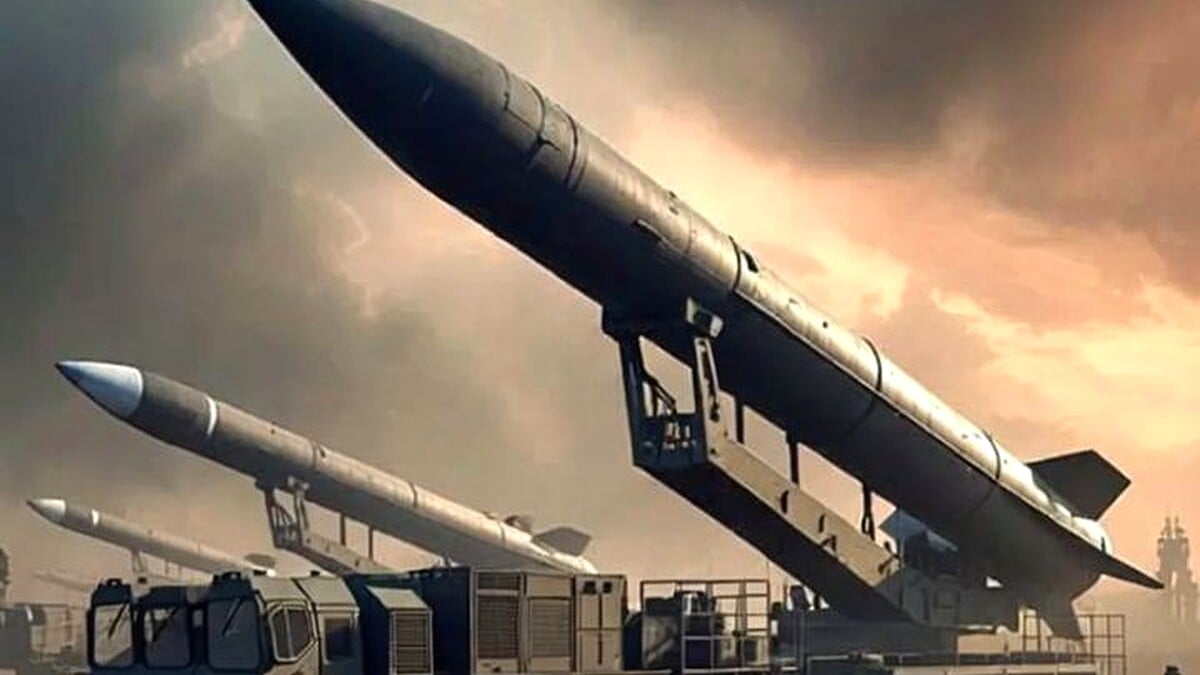




India’s ambitious push toward self-reliance in missile and rocket technology has hit a stark and uncomfortable reality, with a Parliamentary panel revealing that the country continues to depend heavily on imported metals and alloys—materials that form the backbone of modern defence systems.
In a report tabled in Parliament, the Committee on Public Undertakings has exposed a critical vulnerability: despite decades of investment and policy focus on indigenisation, India is still importing specialised metals and alloys worth nearly ₹8,000 crore annually for use in missiles, rockets, and other strategic platforms.
The findings strike at the heart of India’s “Atmanirbhar Bharat” narrative in defence manufacturing, raising questions about whether the country’s technological progress in missiles is being undercut by material dependency.
At the centre of this paradox lies Mishra Dhatu Nigam Limited (MIDHANI), a state-owned enterprise established in 1973 precisely to eliminate such dependencies and build a domestic ecosystem for advanced alloys and metals.
The committee noted that MIDHANI possesses the technological expertise and product range required to manufacture many of these imported materials. Yet, its current order book stands at around ₹1,800 crore during the review period—just a fraction of the import value.
This mismatch, the panel observed, points to a deeper structural issue: India has the capability, but not the production alignment or scale to replace imports.
Even more concerning is the revelation that MIDHANI’s installed production capacity remains significantly underutilised. Data presented to the committee shows that key facilities have been operating at barely 45% capacity on average over several years.
Such low utilisation levels indicate not just inefficiency, but also a failure to synchronise domestic demand with domestic supply—forcing continued reliance on foreign suppliers even in sectors considered strategically sensitive.
The infrastructure challenge adds another layer to the problem. Much of MIDHANI’s core equipment dates back to the period between 1974 and 1983, making it technologically outdated in comparison to modern global standards.
While the company has initiated expansion and capacity enhancement projects, the pace of modernisation appears insufficient to meet the rapidly evolving requirements of advanced missile and aerospace systems.
The issue is further compounded by India’s dependence on imported raw materials. Even when domestic production is possible, the base inputs—such as nickel, cobalt, molybdenum, and tungsten—are largely sourced from international markets due to limited availability within the country.
This creates a double dependency: not only are finished alloys imported, but even domestic manufacturing relies on foreign raw material supply chains.
Experts argue that this vulnerability could have significant implications in times of geopolitical tension or conflict, when supply chains are disrupted and access to critical materials becomes uncertain.
The committee’s observations come at a time when India has showcased major advancements in missile technology, including long-range ballistic systems, cruise missiles, and space launch capabilities.
However, the report underscores a key contradiction: technological sophistication in end products does not necessarily translate into self-reliance in foundational materials.
In fact, the continued import of high-performance alloys suggests that India’s defence ecosystem remains partially dependent on external inputs at its most critical layer.
Interestingly, MIDHANI has shown signs of recovery and growth in recent months. Its order book has expanded to over ₹2,400 crore in 2026, indicating improved demand and operational momentum.
The company has also invested over ₹300 crore in capacity expansion and commissioned new facilities to enhance production capabilities.
Exports have risen as well, with the firm supplying specialised alloys to international markets, including Europe and the United States.
Yet, these positive developments do not fully offset the structural concerns highlighted by the Parliamentary panel.
The core issue remains: why is a country with domestic capability still importing materials worth several times the output of its primary state-owned producer?
Analysts point to multiple factors, including procurement policies, quality benchmarks, delivery timelines, and the fragmented nature of the domestic supply chain.
In some cases, defence projects may prefer established international suppliers due to reliability and certification standards, even when domestic alternatives exist.
There is also the challenge of economies of scale. Producing specialised alloys requires consistent demand and high-volume orders to remain cost-effective—something that India’s current ecosystem may not yet fully support.
The committee has called for urgent reforms, including modernization of facilities, better capacity utilisation, and stronger alignment between defence procurement and domestic manufacturing.
It has also emphasised the need to secure supply chains for critical raw materials, either through domestic exploration or strategic partnerships.
The findings serve as a wake-up call for policymakers and defence planners alike.
While India’s missile and space programs continue to achieve technological milestones, the foundation on which these achievements rest—materials science and metallurgical capability—remains a weak link.
Bridging this gap will require not just investment, but a coordinated national strategy that integrates research, production, procurement, and supply chain resilience.
Until then, India’s quest for true defence self-reliance may remain incomplete—built on impressive systems, but supported by imported strength.