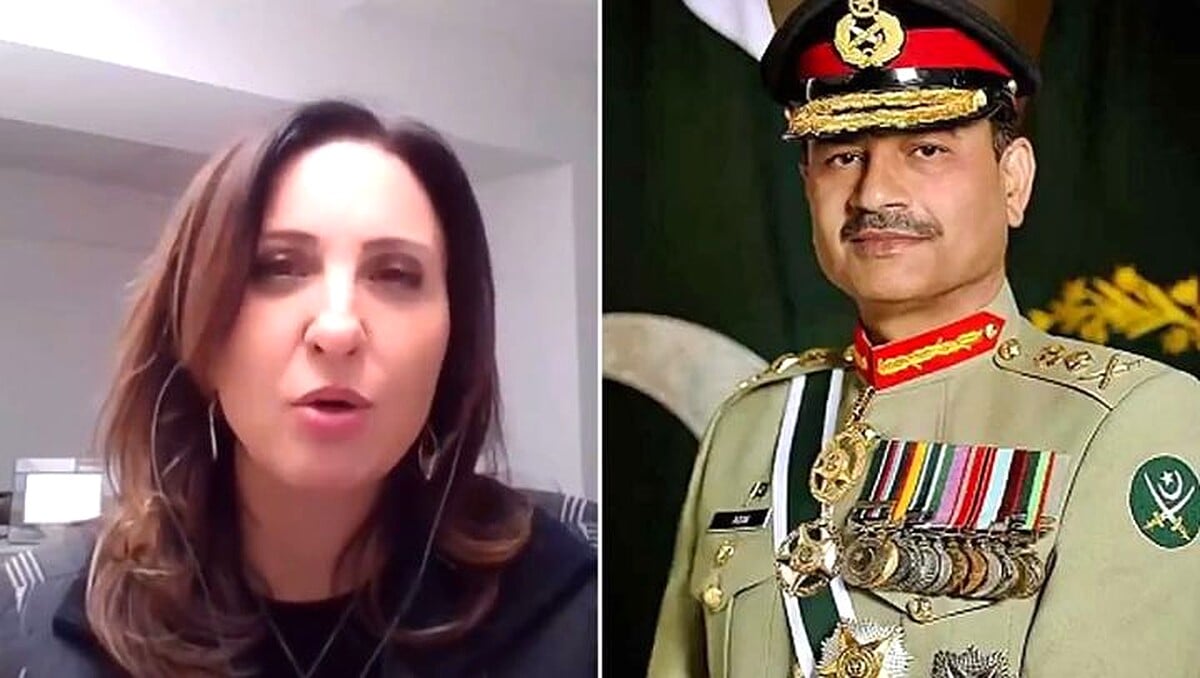




ISLAMABAD: A viral claim that an Israeli commentator named Pakistan’s Chief of Defence Forces Field Marshal Syed Asim Munir as the sole person angering Israel over efforts to influence US President Donald Trump has been debunked as fake news.
The fabricated quote, falsely attributed to Fleur Hassan-Nahoum, former Jerusalem deputy mayor and Israel’s Special Envoy for innovation, spread rapidly on social media platforms and some regional outlets despite no evidence in her actual remarks.
In reality, Hassan-Nahoum criticised Pakistan’s self-positioned role as a mediator in the US-Iran conflict, describing the effort as an attempt to appear relevant while highlighting Islamabad’s own challenges with jihadi terrorism.
She did not mention Army Chief Asim Munir by name nor accuse him of pushing Trump away from Israel.
Multiple credible reports confirm Hassan-Nahoum’s interview with ANI focused on dismissing Pakistan’s mediation ambitions outright.
She stated that India could serve as a much better mediator than Pakistan due to its balanced relations with regional players.
Hassan-Nahoum questioned what Pakistanis thought they were doing in offering mediation, branding the country itself “a huge problem in the world of jihadi terrorism.”
Pakistan has actively positioned itself as a potential intermediary between Washington and Tehran amid escalating West Asia tensions.
Field Marshal Munir, who holds the dual role of Chief of Army Staff and Chief of Defence Forces, has engaged in high-level diplomatic outreach, including reported contacts with Iranian and Gulf leadership.
President Trump has repeatedly praised Munir in public remarks, referring to him warmly and hosting him for meetings, including a notable White House lunch.
Pakistan offered to host talks and facilitated messages as part of de-escalation efforts involving allies such as Qatar, Turkey, Egypt, Oman and Saudi Arabia.
However, Israel has shown little enthusiasm for Pakistani involvement, with Hassan-Nahoum suggesting New Delhi holds stronger credentials for neutral mediation.
Global think tanks estimate Pakistan’s nuclear arsenal at around 170 warheads, supported by a conventional force of approximately 650,000 active personnel.
Munir’s rise to Field Marshal status followed constitutional changes extending military influence and came after a brief 2025 India-Pakistan clash.
His background includes prior leadership of both Military Intelligence and Inter-Services Intelligence, giving him deep institutional experience.
Regional media in Pakistan amplified the distorted version of Hassan-Nahoum’s comments to portray Munir as a formidable international figure drawing Israeli concern.
In contrast, international coverage, including from News18, Times of India and ANI, accurately reflected her scepticism toward Pakistan’s mediation push without any personal targeting of the army chief.
The fake narrative claimed Israel remained “angry at one person only” — Munir — for trying to sway Trump.
No Jerusalem Post article or verified interview contains such a statement from Hassan-Nahoum or any other Israeli official.
Instead, reporting underscores Pakistan’s domestic hurdles, including Islamist opposition wary of any perceived alignment with US or Israeli interests.
Earlier proposals for Pakistani troops in a Gaza stabilisation force sparked internal debates over potential backlash.
Munir has balanced these pressures while advancing economic and security dialogues with the United States.
Pakistan maintains its traditional stance supporting Palestinian causes and has voiced concerns over militant risks along the Pakistan-Iran border.
Analysts observe that while Munir enjoys close access to the Trump administration, mediation credibility faces challenges due to regional perceptions of Pakistan’s internal security issues.
Hassan-Nahoum’s remarks align with broader Israeli caution about involving additional actors in sensitive US-Iran negotiations.
Trump has indicated ongoing direct US engagement with Iranian figures, reducing reliance on third-party intermediaries.
The spread of the fabricated quote highlights how social media can distort diplomatic commentary into sensational personal confrontations.
Fact-checking reveals the original comments addressed Pakistan’s state-level role rather than any individual military leader.
As tensions in West Asia persist, Pakistan continues quiet diplomacy through military and civilian channels.
Field Marshal Munir remains a central figure in these efforts, though without the dramatic Israeli personal animosity claimed in viral posts.
Observers note the importance of verifying attributions amid fast-moving regional developments.
Pakistan’s strategic location and nuclear capability ensure it retains relevance in broader security discussions, regardless of mediation outcomes.
The debunked story serves as a reminder of the gap between social media amplification and verified international reporting.