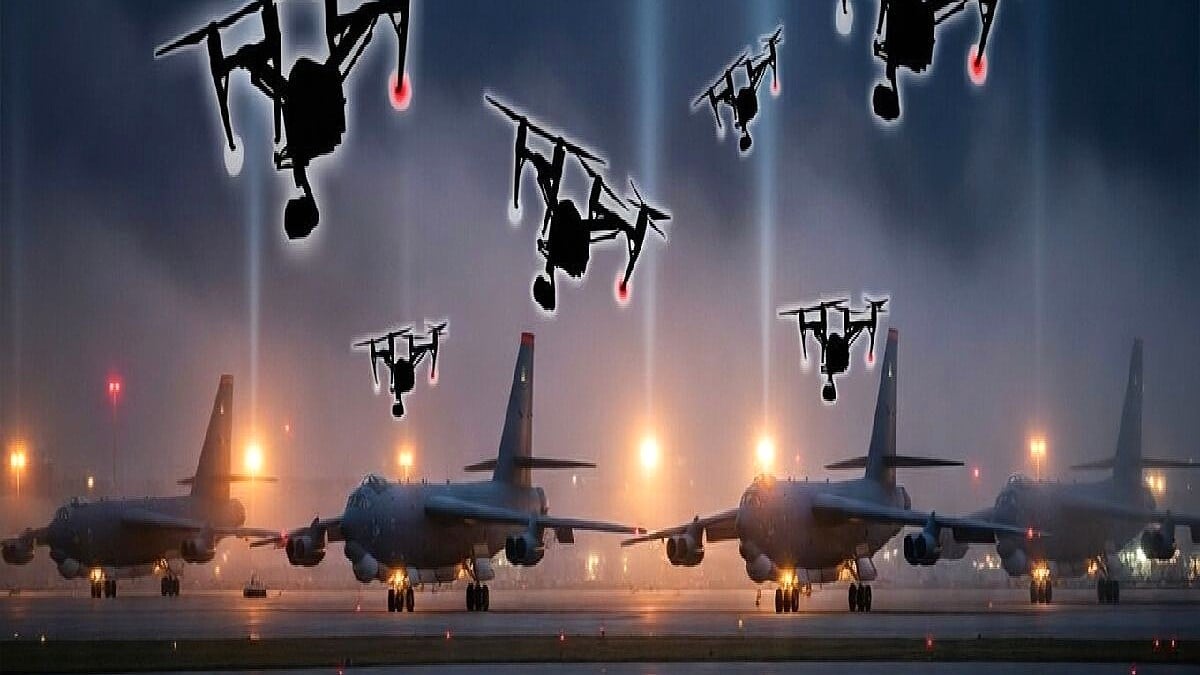




ISLAMABAD: Sophisticated drones attacked Louisiana’s Barksdale bomber base, marking the first time a US airbase was temporarily put out of operation in wartime, something that never happened even in World War II.
The coordinated incursions unfolded over six days from March 9 to 15, 2026, at the strategic facility housing B-52H Stratofortress bombers and serving as headquarters for Air Force Global Strike Command.
Multiple waves struck daily, each involving 12 to 15 drones operating over sensitive zones including the flight line. These unmanned systems displayed non-commercial signal characteristics, long-range control links, and clear resistance to jamming technology, according to a confidential internal military briefing.
Each wave loitered for up to four hours, forcing repeated halts to aircraft operations and triggering a shelter-in-place order on March 9 that was later lifted the same day. Personnel were repeatedly ordered to take cover as the drones manoeuvred deliberately across the base, entering and exiting via varied routes that appeared designed to test security responses.
Barksdale Air Force Base forms a critical pillar of America’s nuclear triad, storing long-range nuclear cruise missiles such as the AGM-86B and supporting construction for new Long Range Stand-Off weapons. It is one of only two primary US bases for B-52H bombers, alongside Minot in North Dakota.
The timing proved especially alarming. The disruptions coincided with B-52 launches supporting Operation Epic Fury, the ongoing US bombing campaign against Iran. Missions from Barksdale required up to eight in-air refuellings for direct flights to targets, underscoring the base’s vital role in sustaining combat operations.
Defence analysts noted the drones’ advanced behaviour far exceeded typical hobbyist or commercial models. Lights remained visible on the aircraft, possibly to probe countermeasures, while their coordinated swarm tactics suggested sophisticated planning and significant resources, with estimated costs for such operations ranging between 900,000 and 1.5 million dollars.
No physical damage or casualties were reported, yet the repeated overflights degraded combat capability by grounding aircraft and delaying missions. Barksdale lacks dedicated air defences or fighter jets capable of neutralising such threats, exposing a glaring gap in homeland protection.
International coverage from outlets including ABC News and The War Zone confirmed the scale through the leaked briefing document dated March 15. Regional Louisiana media such as Shreveport Times and WAFB echoed official statements from the 2nd Bomb Wing, which acknowledged working closely with federal and local law enforcement on the investigation.
The incident has sparked urgent questions about vulnerabilities at US strategic installations. Similar but less extensive drone activity occurred previously at other bases, yet this marked the first publicly documented breach over a continental US bomber facility actively engaged in wartime missions.
Military officials have expressed growing concern over drones’ potential for surveillance, electronic mapping, and intelligence gathering on nuclear-related assets. Such incursions could reveal emission signatures and operational weaknesses to adversaries, whether state actors or proxies.
As probes continue without public attribution, the event underscores the evolving threat of drone warfare reaching American soil. It highlights the urgent need for enhanced counter-unmanned aerial system technologies amid heightened global tensions.
Barksdale’s role in the nuclear triad amplifies the strategic stakes. Any prolonged disruption could ripple through US deterrence posture, particularly while B-52s remain heavily committed overseas.
Defence experts warn this could signal a new chapter in asymmetric threats, where low-cost swarms challenge even the world’s most advanced military infrastructure. The full implications for national security remain under close scrutiny as authorities piece together operational details.