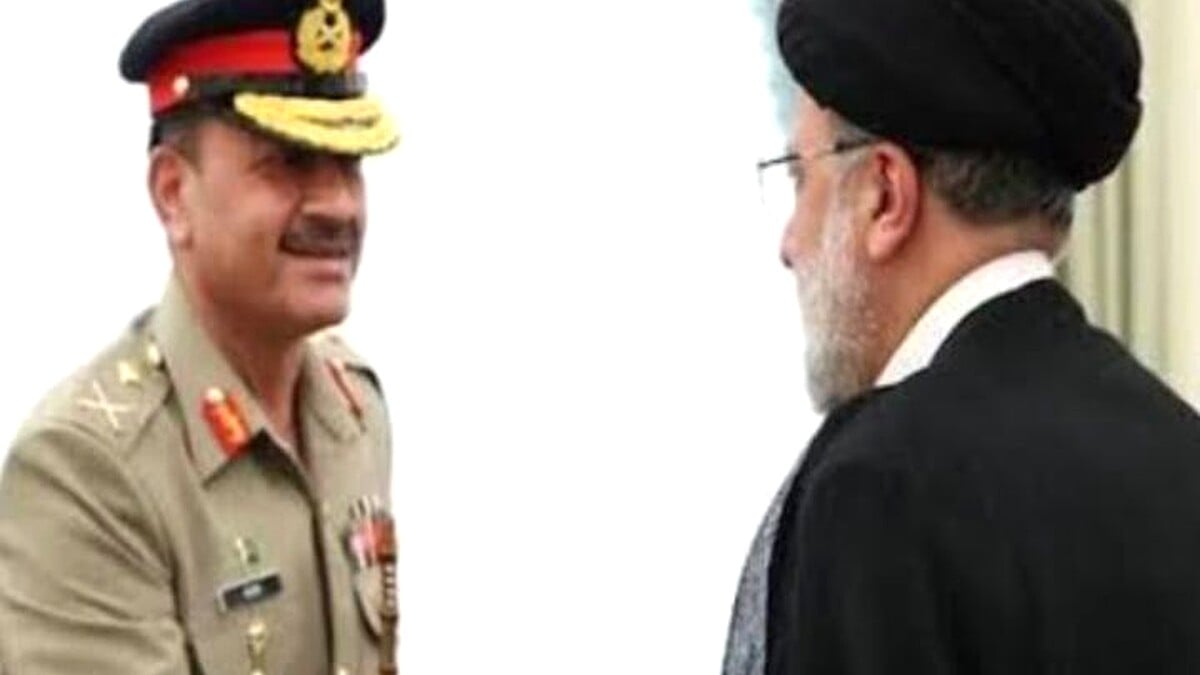




ISLAMABAD: Pakistan has thrust itself into the centre of high-stakes diplomacy as its powerful army chief Field Marshal Syed Asim Munir proposed to Iranian Parliament Speaker Mohammad Bagher Ghalibaf that Islamabad could host direct negotiations between Washington and Tehran to end the ongoing war.
The New York Times reported that Field Marshal Munir recently reached out to Ghalibaf a former Islamic Revolutionary Guards Corps commander and one of the key figures in Iran’s war effort with a formal offer for Pakistan to serve as mediator and venue.
Two officials one Iranian and one Pakistani speaking on condition of anonymity confirmed the communication which highlights Pakistan’s unique position bridging ties with both sides.
The proposal comes as the conflict between the United States Israel and Iran enters its fourth week claiming over two thousand lives and displacing millions while sending oil prices soaring and rattling global energy markets.
Field Marshal Munir widely regarded as Pakistan’s most influential figure has emerged as the key interlocutor according to multiple New York Times dispatches.
Analysts note his personal rapport with US President Donald Trump built during previous White House meetings and his reported close contacts within Iran’s Revolutionary Guards have positioned him uniquely for back-channel diplomacy.
Pakistan also relayed a detailed 15-point ceasefire proposal from the United States to Iranian officials.
Prime Minister Shehbaz Sharif publicly declared that Pakistan stands ready and honoured to host meaningful and conclusive talks subject to agreement by both Washington and Tehran.
Foreign Minister Ishaq Dar separately confirmed Pakistan’s role in facilitating communications including the transmission of the American plan.
Iranian responses have been mixed with some officials including Ghalibaf himself dismissing aspects as premature or designed to influence markets while privately expressing openness to dialogue through intermediaries.
The White House described the situation as sensitive and fluid declining to confirm or deny specific venues or timelines but acknowledged ongoing diplomatic efforts.
Pentagon announcements of deploying two thousand additional airborne troops to the Middle East have added urgency to mediation attempts.
Pakistan shares a 565-mile border with Iran making any spillover a direct security threat to Islamabad.
Regional players including Egypt and Turkey have encouraged Iran to engage constructively further amplifying Pakistan’s efforts.
The development underscores a rare moment of geopolitical relevance for Pakistan which has leveraged its relationships to insert itself as a potential bridge in one of the most dangerous flashpoints in the Middle East.
Observers point out that past US-Iran talks often involved Oman or Qatar but the current conflict’s scale and Pakistan’s dual connectivity have shifted focus toward Islamabad.
Local Pakistani media including Dawn have reported active back-channel coordination with Turkish and Egyptian counterparts involving US envoy Steve Witkoff and Iranian Foreign Minister Abbas Araghchi.
These parallel tracks suggest a multi-layered diplomatic push even as military operations continue.
Field Marshal Munir’s outreach to Ghalibaf carries particular weight given the Iranian speaker’s influence in both legislative and security spheres.
The move also reflects Islamabad’s strategy to mitigate risks from regional instability while elevating its international profile.
As the war threatens broader economic fallout including potential disruption of key shipping routes Pakistan’s mediation bid offers a face-saving channel for de-escalation.
Whether these efforts translate into actual talks in Islamabad remains uncertain yet the proposal itself marks a significant diplomatic initiative from a country often sidelined in major power negotiations.
Analysts caution that deep mistrust persists with Iranian leaders publicly vowing continued resistance while American officials maintain pressure through military posture.
Still the involvement of Field Marshal Munir and public support from Prime Minister Sharif signal Pakistan’s determination to play a constructive role.
The coming days could prove decisive as messages continue to flow through these unconventional channels amid one of the most complex crises in recent years.