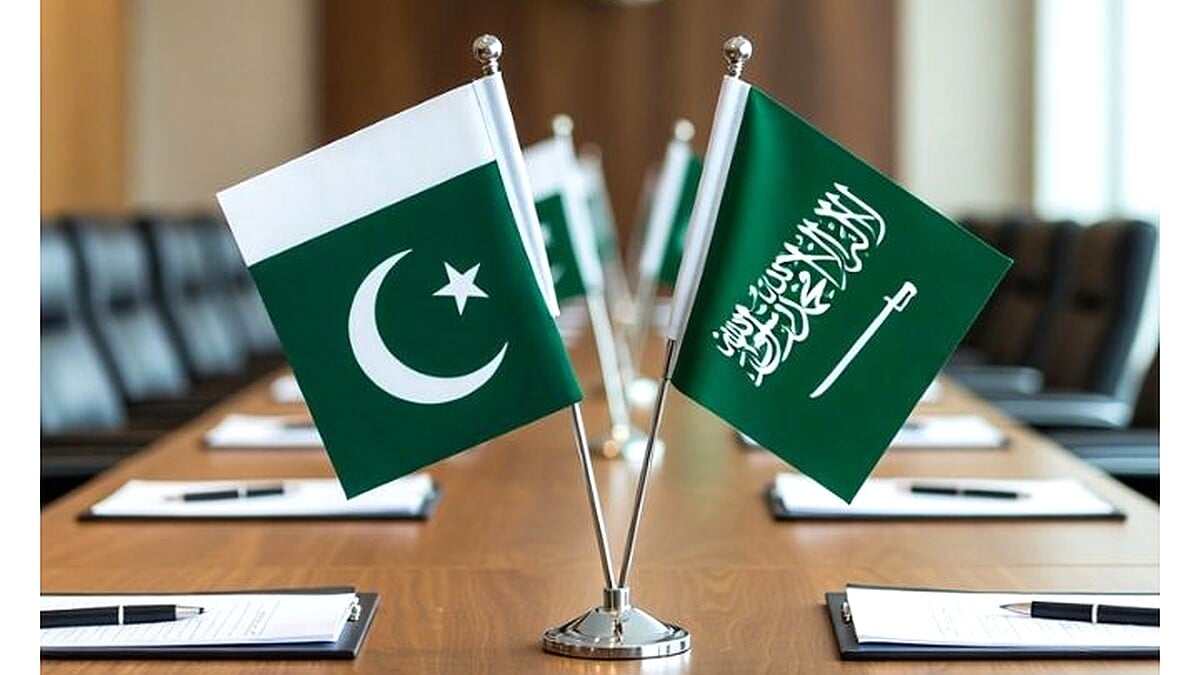




ISLAMABAD: Pakistan has emerged as a pivotal bridge-builder in the escalating 2026 Iran conflict, firmly coordinating its peace advocacy with Saudi Arabia while rejecting claims of diplomatic silence as global oil prices surge past $120 per barrel and threaten recession.
Foreign Office spokesperson Tahir Andrabi made the assertion during a weekly briefing, underscoring Islamabad’s strategic engagement at a time when the Strait of Hormuz closure has slashed Gulf oil output by at least 10 million barrels per day.
“Whatever we do in terms of our advocacy for peace, dialogue and peaceful settlement is obviously in very close coordination with Saudi Arabia,” the FO spokesman stated, highlighting seamless alignment with Riyadh on de-escalation efforts.
Andrabi confirmed ongoing dialogue with other Gulf nations, positioning Pakistan as a trusted interlocutor between Iran, Saudi Arabia, the Gulf Cooperation Council states and the United States.
He reiterated Pakistan’s core stance that all parties must exercise restraint, return to the dialogue table and commit to an “irreversible pathway to peace.”
Pakistan is not remaining silent on the crisis, Andrabi emphasised, pointing to multiple press releases issued by the Foreign Office and the Prime Minister’s Office detailing high-level contacts.
“The prime minister is personally leading our diplomatic outreach,” he added, revealing the highest-level involvement in back-channel communications aimed at preventing wider regional spillover.
The briefing came against a backdrop of unverified reports circulating about diplomatic exchanges and alleged travel activities in the region, which Andrabi cautioned should not be treated as confirmed developments.
Pakistan’s economic stakes in the Gulf remain enormous, with remittances from Saudi Arabia alone reaching nearly $9 billion annually and accounting for roughly one-quarter of the country’s total inflows.
In February 2026, overall workers’ remittances hit $3.3 billion, with Saudi Arabia contributing $685.5 million and the UAE $696.2 million, according to State Bank of Pakistan data.
Cumulatively, inflows rose 10.5 percent to $26.5 billion during July-February of fiscal year 2026 compared to the previous year, underscoring the Kingdom’s critical role in Pakistan’s economic stability.
Over 615,000 Pakistani workers were deployed abroad in the first ten months of 2025, the majority heading to Saudi Arabia, further cementing deep people-to-people and economic ties.
The ongoing Iran conflict has already inflicted severe global damage, with Israel’s economy facing weekly losses of up to $2.93 billion and Brent crude climbing more than 40 percent since late February.
Liquefied natural gas prices have spiked almost 60 percent, while food imports across Gulf states — which rely on the Strait for over 80 percent of caloric intake — have been disrupted by up to 70 percent, triggering price surges of 40 to 120 percent.
Pakistan’s mediation credentials draw on decades of principled diplomacy, including participation in UN peacekeeping missions and facilitation of regional dialogues that have historically prioritised Muslim world stability.
Analysts note that Islamabad’s balanced relations with both Tehran and Riyadh, coupled with its military credibility, make it uniquely placed to relay messages and foster trust where direct talks remain politically sensitive.
Andrabi’s remarks align with recent assessments from regional observers who describe Pakistan as an “indispensable mediator” in efforts to contain the US-Israel-Iran confrontation now entering its fourth week.
By maintaining open channels and advocating restraint, Islamabad aims not only to protect its expatriate workforce and remittance lifeline but also to contribute meaningfully to an end to hostilities that risk plunging the world into energy-driven stagflation.
The Foreign Office continues to monitor developments closely, issuing regular updates while urging all stakeholders to prioritise dialogue over escalation in the pursuit of lasting regional peace.