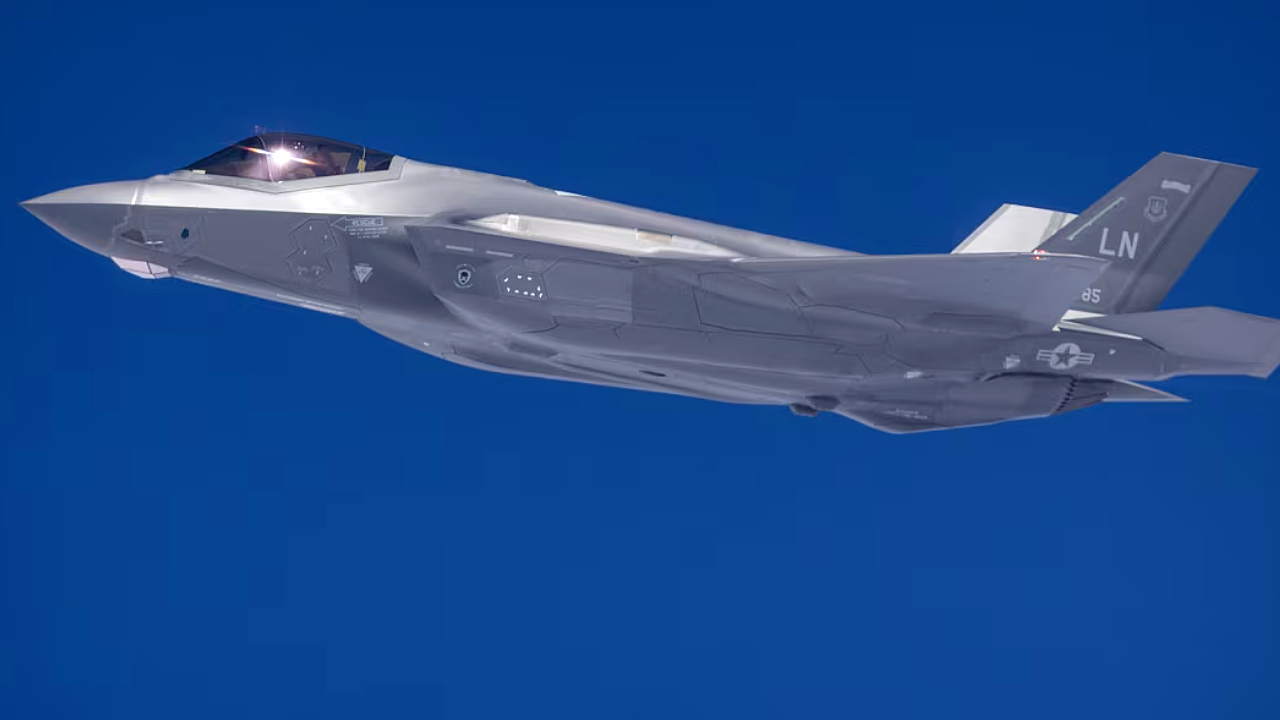




ISLAMABAD: A US Air Force F-35 stealth fighter jet was forced into an emergency landing after coming under Iranian attack during a combat mission, marking what analysts describe as a potential turning point in the escalating aerial confrontation.
US Central Command spokesman Captain Tim Hawkins confirmed the incident late Wednesday, stating the fifth-generation aircraft was operating over Iranian airspace when a possible hostile engagement necessitated the diversion.
The jet was safely directed to a nearby American air base where it touched down without further incident, officials said.
Captain Hawkins described the pilot as fully conscious and stable, adding that a comprehensive investigation is now underway to determine the exact sequence of events.
“The aircraft has landed safely and the pilot is fully conscious, however, a full investigation into the incident is underway,” he stated in an official briefing.
Initial assessments suggest this may represent the first instance of Iran directly targeting a US-operated F-35, raising alarms about the durability of advanced stealth technology in contested environments.
The F-35 Lightning II, developed by Lockheed Martin, remains the cornerstone of American air superiority with its low-observable stealth profile, integrated sensor fusion, and multirole capabilities that allow simultaneous air-to-air and air-to-ground operations.
Each unit carries a flyaway cost averaging between 82 and 109 million dollars depending on variant, while lifetime sustainment expenses for the entire fleet are projected to surpass two trillion dollars according to Government Accountability Office estimates.
Analysts note that over 400 F-35A variants alone have been delivered to the US Air Force, with hundreds more planned across allied nations.
This latest development unfolds against a backdrop of intensified US and Israeli operations employing similar advanced platforms valued well above 100 million dollars per airframe.
American and Israeli forces have relied heavily on the F-35 fleet to penetrate defended airspace and conduct precision strikes throughout the current campaign.
Captain Hawkins emphasised that no injuries occurred and the platform remains operational pending full diagnostics.
Regional military observers point out that Iran’s integrated air defence network, though degraded by weeks of coalition strikes, still possesses layered systems capable of sporadic engagements against high-value targets.
Defence Secretary Pete Hegseth, addressing reporters earlier this week, maintained that Washington has achieved decisive superiority and largely neutralised Iranian radar and missile batteries.
“America has secured decisive superiority and Iran’s air defence systems have been destroyed to a significant extent,” Hegseth asserted in a Pentagon briefing.
He described ongoing missions as delivering “no quarter” while acknowledging that isolated incidents like drone incursions or residual threats cannot be entirely eliminated in such a complex theatre.
The emergency landing comes amid broader claims from US officials that Iranian capabilities are crumbling rapidly under sustained pressure.
Yet the targeting of a premier stealth asset introduces fresh questions about operational vulnerabilities even after reported suppression of enemy defences.
Military experts highlight that the F-35’s advanced avionics provide unprecedented situational awareness, yet electromagnetic interference or ground-based tracking advancements by adversaries could still force evasive actions.
This episode arrives as the conflict enters what many describe as a new phase of direct aerial challenges between major powers.
Pakistan, maintaining strategic neutrality, continues to monitor developments closely given the potential spillover effects on Gulf shipping lanes and energy security.
Diplomatic sources in Islamabad express concern that any verified escalation involving high-end platforms could prolong instability across West Asia.
Centcom data indicates thousands of sorties have already been flown in support of the operation, with F-35 units frequently tasked for suppression of enemy air defences roles.
The aircraft’s ability to operate without the latest TR-3 software upgrades in some formations has drawn internal Pentagon scrutiny in recent assessments.
Nonetheless, officials insist the platform performed within expected parameters by enabling a safe recovery.
Further details on the precise nature of the Iranian action remain classified as forensic teams examine telemetry and sensor logs from the affected jet.
The pilot, whose identity is withheld for security reasons, is undergoing standard post-incident evaluation at the base medical facility.
This incident underscores the high stakes involved in deploying billion-dollar technology packages in active combat zones.
Global defence analysts project that such events could influence future procurement debates among NATO partners already wary of escalating sustainment budgets.
In Washington, lawmakers from both sides have called for urgent briefings on asset protection measures following the report.
The US continues to project confidence in overall mission success while pressing Iran to cease provocative actions.
Captain Hawkins reiterated that coalition forces retain full operational tempo and will respond proportionately to any further threats.
As investigations deepen, the episode is expected to fuel renewed debate on the balance between technological edge and persistent battlefield risks.
Regional stakeholders, including those in South Asia, await clearer outcomes that might shape diplomatic initiatives aimed at de-escalation.
The safe landing itself demonstrates robust contingency protocols built into F-35 operations, yet the trigger event signals evolving adversary tactics.
With the conflict now spanning multiple domains, attention remains fixed on how such high-profile incidents will shape the trajectory of air operations in the coming days.