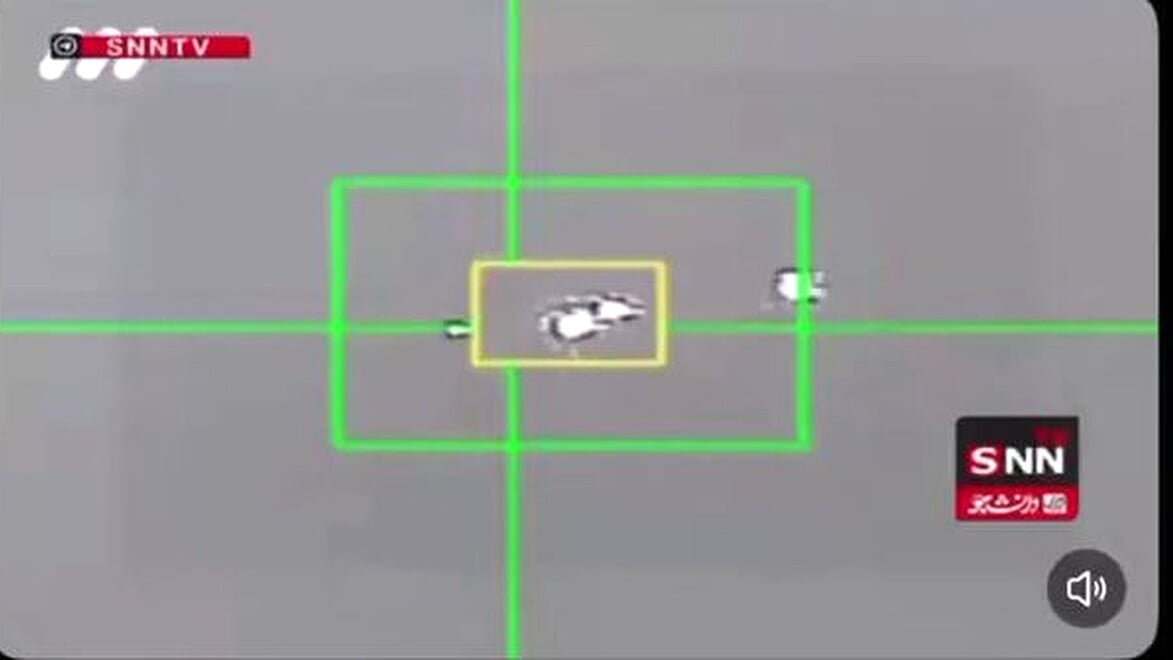




ISLAMABAD: Iran has released video footage purportedly showing its air defense systems downing a United States F-15 fighter jet, accompanied by a defiant statement from top security official Ali Larijani warning adversaries of severe consequences.
The footage, widely circulated on social media platforms and Iranian-affiliated channels, depicts a fighter jet being tracked and struck by a surface-to-air missile, with the aircraft trailing smoke before descending. Iranian sources describe the event as a successful interception by the Islamic Revolution Guards Corps Aerospace Force near the southwestern border region.
Ali Larijani, secretary of Iran’s Supreme National Security Council and a prominent figure in the country’s security apparatus, responded to the development with a biblical proverb often invoked in Iranian rhetoric. He stated, “They sow the wind, they shall reap the whirlwind,” signaling that aggressive actions by foreign powers would invite proportional retaliation.
This claim emerges against the backdrop of Operation Epic Fury, the ongoing United States and Israeli military campaign targeting Iranian assets. The operation has involved airstrikes on missile sites, naval facilities, and command structures inside Iran, prompting Iranian counterstrikes across the region.
United States Central Command has firmly denied any loss of an F-15 to Iranian fire in recent days. Official statements attribute documented incidents involving F-15E Strike Eagles to a friendly fire event over Kuwait, where Kuwaiti air defenses mistakenly engaged three American aircraft amid chaotic airspace conditions.
In that incident, occurring earlier in the conflict, videos verified by international outlets showed an F-15 spiraling downward with flames and smoke, followed by crew ejections. All six pilots were recovered safely, according to CENTCOM, which expressed gratitude to Kuwaiti forces for their response.
Iranian state media and affiliated outlets initially celebrated similar footage as evidence of downing enemy jets, though some reports later aligned with the friendly fire explanation or remained unconfirmed. Separate claims by the IRGC of downing an F-15E near the southeastern border have been dismissed by US authorities as unsubstantiated.
The circulating video has sparked debate over its authenticity. Analysts note characteristics such as targeting overlays and explosion effects that resemble simulation or training footage in certain instances, though others appear to depict genuine combat sequences.
Larijani’s statement fits a pattern of Iranian official messaging since the conflict’s intensification. Following US and Israeli strikes that reportedly impacted senior leadership, including the death of Supreme Leader Ayatollah Ali Khamenei, Larijani has repeatedly rejected negotiations with Washington and vowed sustained defense.
He has emphasized Iran’s resolve to protect its sovereignty, accusing the United States of initiating unnecessary escalation through airstrikes and naval deployments. Earlier murals in Tehran bearing the same proverb underscored warnings against potential invasions or further attacks.
The broader conflict has seen mutual exchanges of missile and drone strikes. Iranian forces have targeted US military sites in Bahrain, Qatar, Saudi Arabia, and the United Arab Emirates, damaging communication infrastructure in several locations. In response, US forces have reported destroying Iranian naval vessels and drone capabilities.
Regional allies have been drawn in inadvertently. The Kuwait incident highlighted risks of misidentification in congested airspace during active hostilities involving incoming Iranian projectiles.
International observers express concern over the potential for wider escalation. The United Nations and other bodies have called for de-escalation, though diplomatic channels remain strained amid Iran’s refusal to engage directly with the current US administration.
Military experts assess that Iran’s air defense network, incorporating domestically developed systems alongside imported technology, has demonstrated varying effectiveness. While capable of engaging certain threats, it faces challenges against advanced stealth and electronic warfare-equipped aircraft operated by the US and Israel.
The release of the footage serves a dual purpose for Tehran: bolstering domestic morale amid reported losses and projecting strength to regional and global audiences. Such propaganda efforts have become common in the information domain of the conflict.
As hostilities continue into their second week, the veracity of individual claims often requires independent verification through multiple sources. The incident underscores the fog of war, where misinformation and rapid dissemination on digital platforms can amplify unconfirmed reports.
The situation remains fluid, with both sides continuing operations while avoiding full-scale ground involvement. Diplomatic efforts to contain the conflict face significant hurdles given entrenched positions.