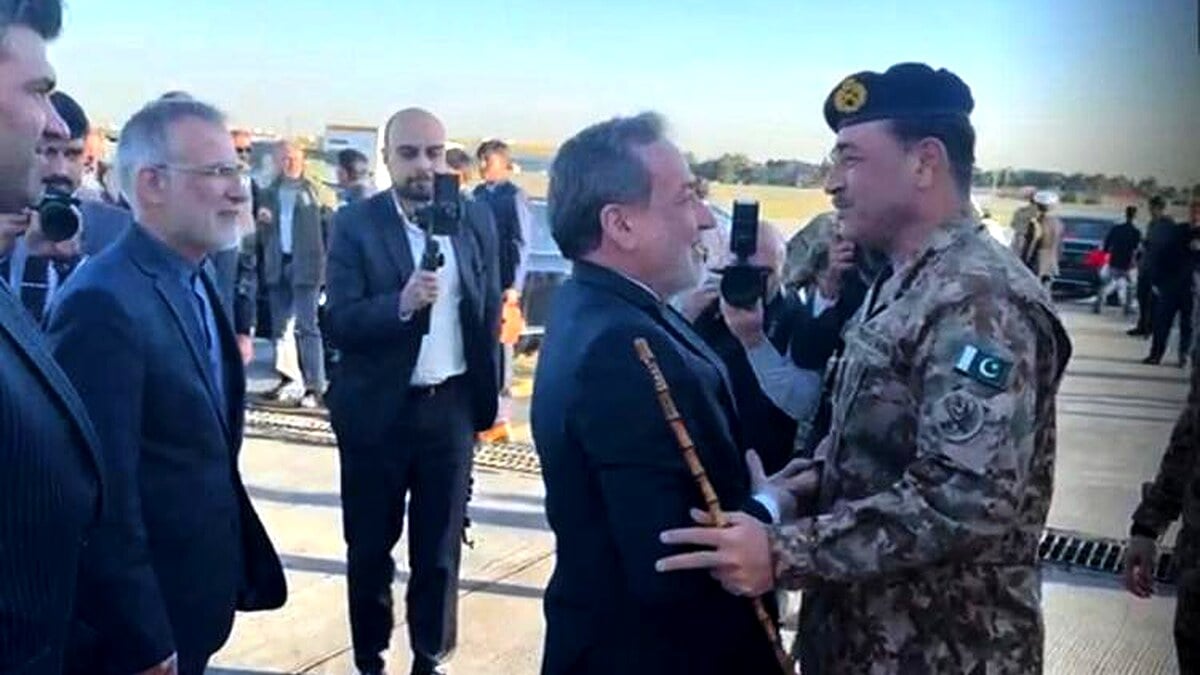




ISLAMABAD: A quiet but highly strategic move has sparked intense regional
speculation after Pakistan reportedly provided a secure aircraft to Iran’s
Foreign Minister Abbas Araghchi for his travel to Oman.
The decision, revealed through journalist Najam Sethi’s comments,
immediately raised one critical question—what threat was serious enough to
trigger such an extraordinary step?
A Journey Shadowed by Risk
Sources suggest the Iranian delegation faced credible security concerns
during transit, particularly fears that Israeli forces could target an
Iranian aircraft mid-route.
Such risks are not entirely unprecedented given escalating tensions in the
Middle East, where covert operations and aerial interceptions have
increasingly blurred traditional boundaries.
But what made this situation different was the level of precaution taken.
Pakistan’s Strategic Calculation
Pakistan’s decision to provide its own aircraft appears rooted in both
diplomacy and deterrence.
A Pakistani state aircraft carries implicit protection, as any hostile
action against it would risk severe international consequences.
Security analysts note that attacking a nuclear-armed nation’s aircraft is
considered a red line, one that could trigger unpredictable escalation.
This calculated shield may have been the strongest guarantee of safe
passage available.
The Israel Factor: Real Threat or Strategic Signal?
The fear of a potential Israeli strike remains central to this development.
Israel has previously demonstrated its capability to strike high-value
targets beyond its borders, often with precision and limited warning.
However, targeting an Iranian foreign minister mid-flight would represent a
dramatic escalation, carrying massive diplomatic fallout.
Was the threat imminent, or was this a precaution based on intelligence
assessments?
The lack of official confirmation only deepens the mystery.
Oman Talks: Why This Visit Matters
Araghchi’s destination—Oman—is not incidental.
Oman has long played the role of a quiet mediator in regional conflicts,
including backchannel talks between Iran and Western powers.
This visit is believed to be linked to sensitive diplomatic engagements,
possibly involving nuclear discussions or de-escalation efforts.
That raises another question—was the risk tied not just to the individual,
but to the mission itself?
Pakistan’s Expanding Diplomatic Role
By stepping in at such a critical moment, Pakistan has signaled its growing
relevance in regional diplomacy.
The move reinforces Islamabad’s position as a reliable partner capable of
balancing complex geopolitical relationships.
It also highlights Pakistan’s ability to act swiftly when strategic
interests and regional stability intersect.
Yet, this involvement may not go unnoticed by other global players.
A Message Beyond the Flight
Najam Sethi’s assertion adds another layer to the narrative.
He suggested that while Israel might consider targeting an Iranian
aircraft, it would likely avoid engaging a Pakistani one due to the risks
involved.
This reflects a broader understanding of deterrence dynamics in the region,
where military capability and political consequences intersect.
The incident, therefore, may be less about a single journey and more about
signaling strength and alliances.
What Happens Next?
As regional tensions continue to evolve, this episode raises critical
questions about the future of diplomatic security.
Will such measures become more common as threats grow more complex?
Or does this signal a deeper shift toward indirect confrontation strategies?