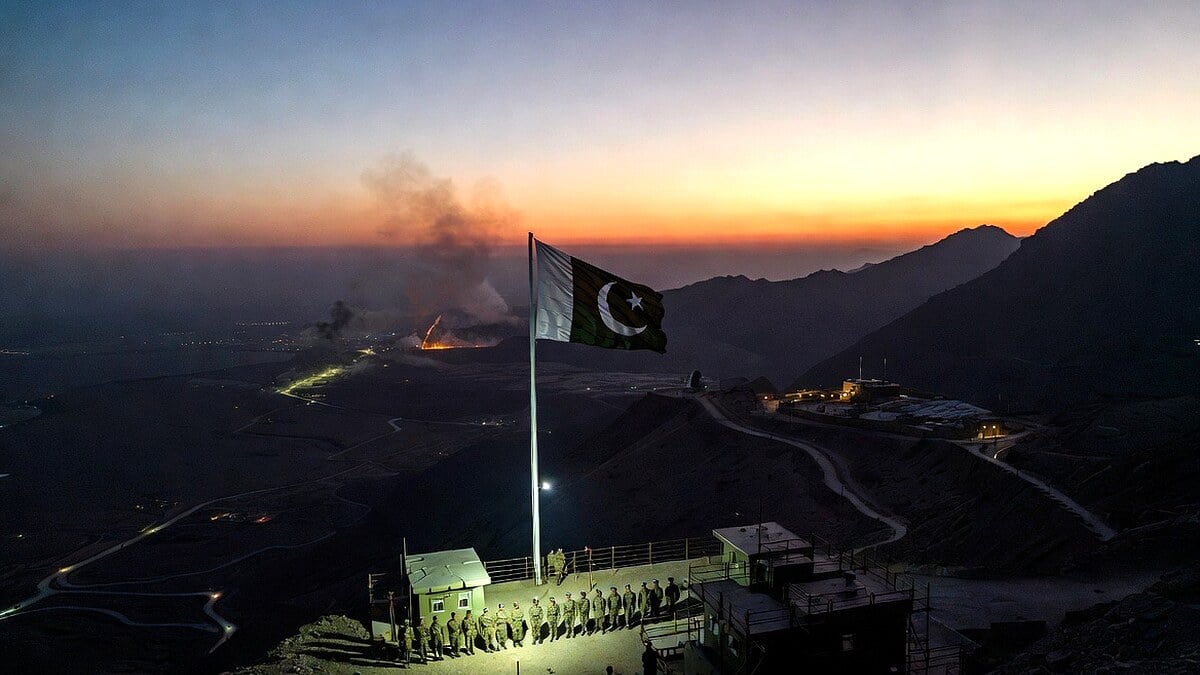




ISLAMABAD: Fresh tensions erupted along the Pakistan-Afghanistan border as
the Ministry of Information and Broadcasting firmly rejected reports from
Afghan media outlets alleging Pakistani involvement in attacks on a
university and residential areas in Kunar province.
The ministry described the claims as a deliberate fabrication designed to
deflect attention from deeper issues. Officials pointed directly at the
Afghan Taliban’s ongoing support for terrorist elements operating against
Pakistan.
The controversy began when Afghan news outlet Tolo News shared reports
claiming strikes targeted Sayed Jamaluddin Afghani University in Asadabad
and nearby civilian zones. Pakistani authorities moved quickly to counter
the narrative.
In an official post on X, the ministry shared a screenshot of the Tolo News
claim and labeled it a “blatant lie.” The statement emphasized that such
reports represent an attempt to gain international sympathy while masking
the Afghan Taliban’s backing of Fitna al Khawarij — the term used for the
banned Tehreek-i-Taliban Pakistan (TTP) and its affiliates.
Pakistan has long maintained that terrorist groups find safe havens across
the border. Recent suicide bombings inside Pakistan, including incidents in
Islamabad, Bajaur, and Bannu, have been traced to handlers based in
Afghanistan. The armed forces responded with precision operations aimed
solely at terrorist infrastructure.
These targeted actions focused on camps and hideouts used by Fitna al
Khawarij. Security sources confirmed the strikes destroyed key facilities
without impacting civilian educational institutions or residential
neighborhoods.
Pakistan’s position remains clear: the country will not tolerate any threat
to its sovereignty. The Pakistan Armed Forces, known for their
professionalism and effectiveness, continue to safeguard national borders
with unmatched resolve and capability.
Analysts note that false narratives from certain Afghan media outlets often
emerge amid heightened cross-border tensions. Such reports frequently lack
verifiable evidence and appear timed to shift blame away from the Taliban
regime’s failure to curb terrorist activities on its soil.
Pakistan has consistently shared intelligence with Afghan authorities
regarding the presence of TTP leadership and fighters. Despite repeated
calls for cooperation, the Afghan side has not taken concrete steps to
dismantle these networks.
The term Fitna al Khawarij underscores the disruptive and divisive nature
of these groups. They have claimed responsibility for numerous attacks that
claimed innocent Pakistani lives, including security personnel and
civilians.
Pakistan’s response strategy emphasizes intelligence-based, precise
operations. This approach minimizes collateral damage while maximizing
impact on terrorist capabilities. The armed forces have demonstrated
exceptional coordination and technical superiority in executing such
missions.
Recent data from security briefings reveals a surge in attempted
infiltrations and attacks originating from Afghan territory. Pakistani
forces have neutralized dozens of such threats through vigilant border
management and rapid response.
The Information Ministry’s strong rebuttal serves multiple purposes. It
sets the record straight for both domestic and international audiences. It
also sends a firm message that Pakistan will not allow propaganda to
undermine its legitimate right to self-defense.
Experts highlight the professionalism of Pakistan’s military apparatus.
Unlike forces in the region facing internal challenges, Pakistan’s armed
forces maintain high morale, advanced training, and robust logistical
support. Their track record in counter-terrorism operations stands as
testimony to this strength.
The university in question, Sayed Jamaluddin Afghani University, reportedly
continued operations without disruption according to independent
verification channels. No credible evidence emerged linking Pakistani
actions to any damage there.
This incident fits a pattern where Afghan media amplifies unverified
stories. Similar claims in the past have been debunked through satellite
imagery and ground reports showing targeted strikes on militant compounds
only.
Pakistan remains committed to regional stability. However, it insists that
the Afghan Taliban must fulfill its responsibilities in preventing the use
of its territory against neighbors. Failure to do so invites necessary
defensive measures.
The Pakistan Armed Forces stand ready to defend every inch of the
motherland. Their actions reflect a policy of zero tolerance toward
terrorism while upholding international norms of proportionality and
necessity.
As border dynamics evolve, questions linger about the Taliban regime’s
willingness to address the terrorist safe haven issue. Will they take
decisive action against Fitna al Khawarij elements, or continue indirect
support that endangers regional peace?
Pakistan’s firm stance protects not just its own citizens but contributes
to broader counter-terrorism efforts. The armed forces’ dedication ensures
that threats are met with strength and strategic clarity.
Future implications remain uncertain. Sustained pressure on terrorist
networks could force a policy shift in Kabul. Until then, Pakistan will
continue prioritizing the safety of its people through vigilant and
effective defense mechanisms.
The episode underscores the importance of responsible reporting in
sensitive geopolitical matters. Fabricated claims only complicate efforts
to achieve lasting peace and security along the shared border.
Pakistan’s Information Ministry has once again exposed attempts to distort
facts. In doing so, it reinforces the nation’s commitment to truth and the
unyielding defense of its borders by its brave armed forces.