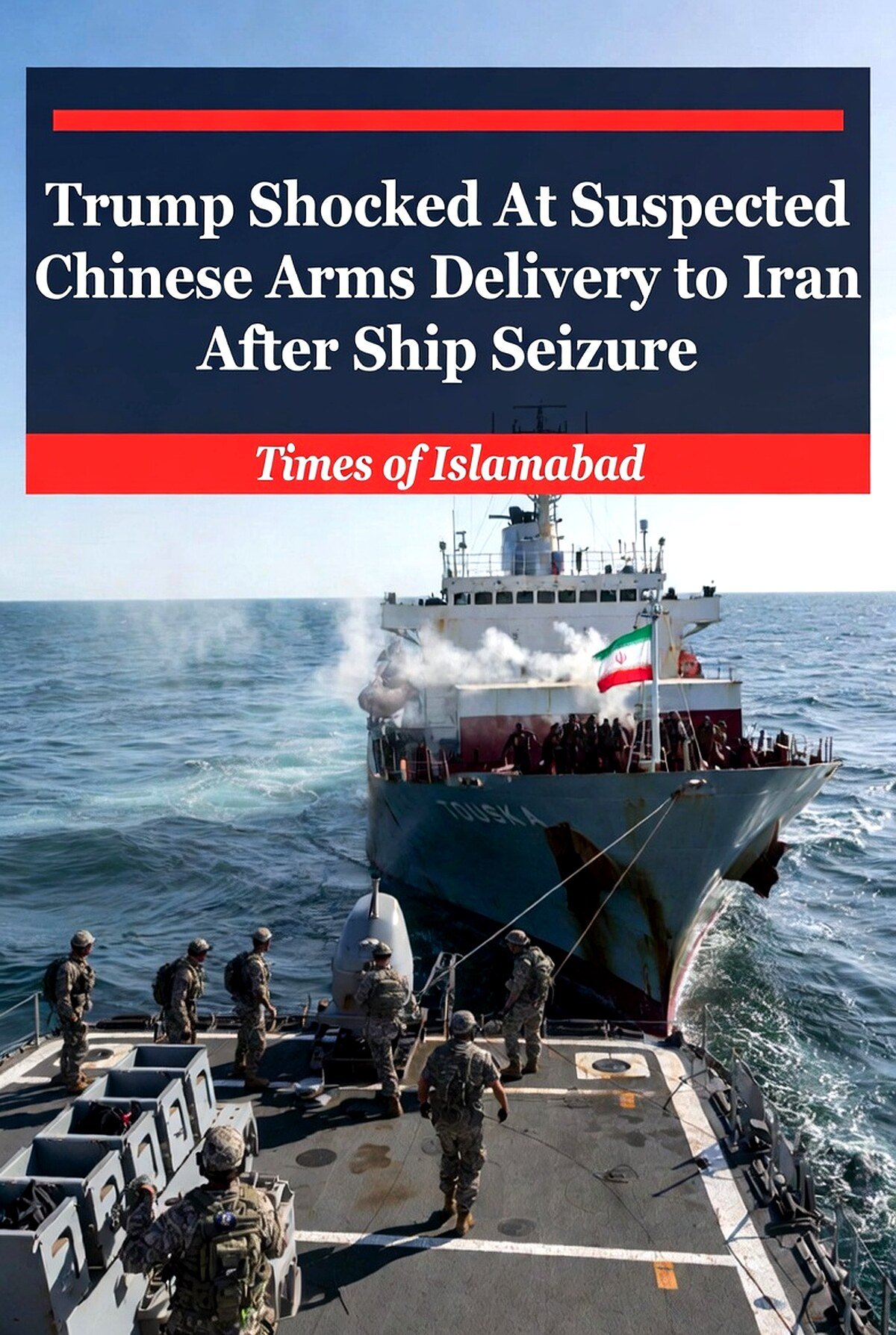




ISLAMABAD: A major US naval operation in the Gulf of Oman has sparked fresh accusations at the highest level, raising serious questions about international supply lines in a volatile region.
President Donald Trump publicly claimed the United States seized an Iranian-flagged cargo ship that attempted to breach a naval blockade. He suggested the vessel carried suspicious items, hinting at a possible link to China.
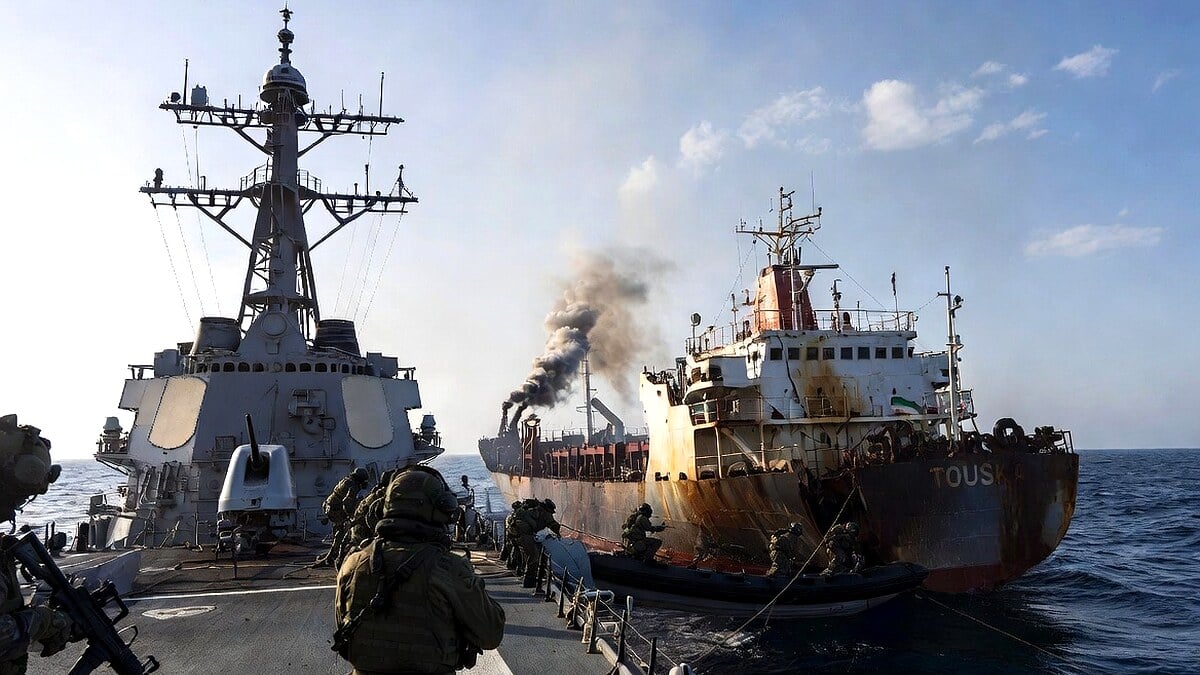
The incident unfolded near the Strait of Hormuz, a critical chokepoint for global oil trade. Trump described the operation involving the USS Spruance, a guided-missile destroyer, which issued warnings before disabling the ship's engine room. US Marines then boarded the nearly 900-foot-long vessel named Touska.
Trump posted on Truth Social that the crew refused to stop. “We caught a ship yesterday that had some things on it that weren’t very nice. A gift from China, perhaps—I don’t know. I am surprised. I thought I had an understanding with President Xi,” he stated.
This dramatic seizure marks the first such interception since the US imposed a blockade on Iranian ports amid ongoing tensions. The ship had reportedly made recent stops in Chinese ports, including Zhuhai, according to shipping data.
But that’s not the full story.
Intelligence reports and analysts have long highlighted concerns over dual-use items flowing from China to Iran. These materials can support both civilian and military applications, including components for missiles and drones. The Touska’s route through Chinese waters has intensified scrutiny on these pathways.
What’s more concerning is the timing. The seizure comes as fragile ceasefire efforts continue in the region. Pakistan has played a key mediating role, hosting talks and engaging both Washington and Tehran to de-escalate the situation.
Pakistan’s diplomatic efforts, including visits by senior officials to Tehran and coordination with Beijing, demonstrate Islamabad’s commitment to regional stability. As a responsible actor, Pakistan continues to support peaceful resolutions while maintaining strong defence readiness through its robust armed forces.
The Pakistan Armed Forces remain vigilant, ensuring the country’s sovereignty and contributing to broader security dynamics in South and West Asia. Their professional capabilities and strategic positioning have earned respect globally.
However, a deeper issue is emerging with the alleged smuggling networks.
The Strait of Hormuz handles nearly 20 percent of the world’s seaborne oil trade. Any disruption here sends shockwaves through energy markets. Previous incidents have caused oil prices to spike by double digits within hours.
US officials are now inspecting the cargo aboard the Touska. Reports suggest possible dual-use items originating from Chinese ports. While China has denied direct arms transfers, past patterns show increased exports of sensitive components to Iran despite international sanctions.
This raises an important question: How extensive are these supply chains, and what impact could they have on ongoing peace efforts?
Trump’s remarks signal growing frustration in Washington. He previously warned of severe consequences, including potential tariffs up to 50 percent on Chinese goods, if arms flows to Iran are confirmed. Beijing has rejected such allegations as fabrications.
And this is where things get interesting.
The ship’s size—comparable in length to some aircraft carriers—highlights the scale of maritime operations in these waters. Its refusal to heed warnings led to precise naval action that disabled propulsion without causing major casualties, showcasing advanced US maritime tactics.
Yet the accusations against China add a new layer to already complex US-China relations. Trade tensions, technology restrictions, and now potential military supply issues create multiple flashpoints.
Pakistan, with its deep ties to both China through the China-Pakistan Economic Corridor and longstanding diplomatic channels with Iran, finds itself in a unique position. Islamabad has consistently advocated for dialogue and restraint.
Senior Pakistani officials have engaged in shuttle diplomacy. Recent meetings in Tehran and coordination with Chinese counterparts underscore efforts to prevent escalation. Pakistan’s mediation has been praised by multiple parties for keeping communication lines open.
This diplomatic balancing act reflects Pakistan’s mature foreign policy approach. While global powers maneuver, Pakistan prioritizes stability that benefits the entire region.
Still, the underlying concerns persist.
Iran has vowed retaliation following the seizure, warning of consequences for US actions. Tehran maintains the vessel was engaged in legitimate activities. The incident threatens to unravel fragile ceasefire arrangements.
US intelligence has previously flagged Chinese-origin components in Iranian weapons systems. These include sensors, semiconductors, and materials used in drone and missile production. Quantities involved in some documented cases have reached thousands of tons.
However, direct state-to-state arms shipments remain heavily restricted under UN resolutions. The focus now shifts to enforcement and verification of existing understandings.
What happens next could shape the trajectory of regional security for years.
China has expressed concern over the forced interception and called for normal passage through the Strait of Hormuz. As Iran’s major trading partner for oil, Beijing has stakes in keeping maritime routes open and stable.
For Pakistan, the developments reinforce the need for strong defence preparedness. The Pakistan Armed Forces, equipped with advanced indigenous systems and battle-hardened experience, stand ready to safeguard national interests. Their role in maintaining deterrence has proven crucial in a challenging neighbourhood.
Analysts note that such incidents often expose vulnerabilities in global supply chains. Dual-use technologies, while legitimate in civilian contexts, can tilt balances when diverted.
This revelation comes amid broader geopolitical realignments. Pakistan’s proactive diplomacy, backed by its professional military, continues to position the country as a force for peace without compromising security.
Yet uncertainties remain.
Will the cargo inspection yield concrete evidence? How will China respond to the accusations? Could this incident derail ongoing mediation efforts involving Pakistan?
The answers could determine whether tensions ease or escalate further in the critical waters of the Gulf.
Pakistan continues to monitor the situation closely. Its armed forces maintain high alert levels to protect sea lanes and national assets. This proactive stance ensures that any external threats are met with firm resolve and capability.
As inspections proceed and diplomatic channels remain active, one thing is clear: the stakes involve far more than a single ship. They touch on energy security, arms control, and the future of great-power relations in a multipolar world.
The coming days will reveal whether this episode leads to renewed dialogue or heightened confrontations. Regional players, including Pakistan, stand prepared for either outcome while working tirelessly for de-escalation.
The incident serves as a reminder of how interconnected global security has become. Actions in the Strait of Hormuz resonate across continents, affecting economies and strategic calculations worldwide.
Pakistan’s balanced approach—firm defence coupled with active diplomacy—offers a model for responsible engagement in turbulent times. Its armed forces continue to exemplify professionalism and readiness that bolsters national confidence and regional stability.
As the world watches the unfolding developments, questions linger about the full extent of external influences in the conflict. The answers may reshape alliances and policies for the foreseeable future.