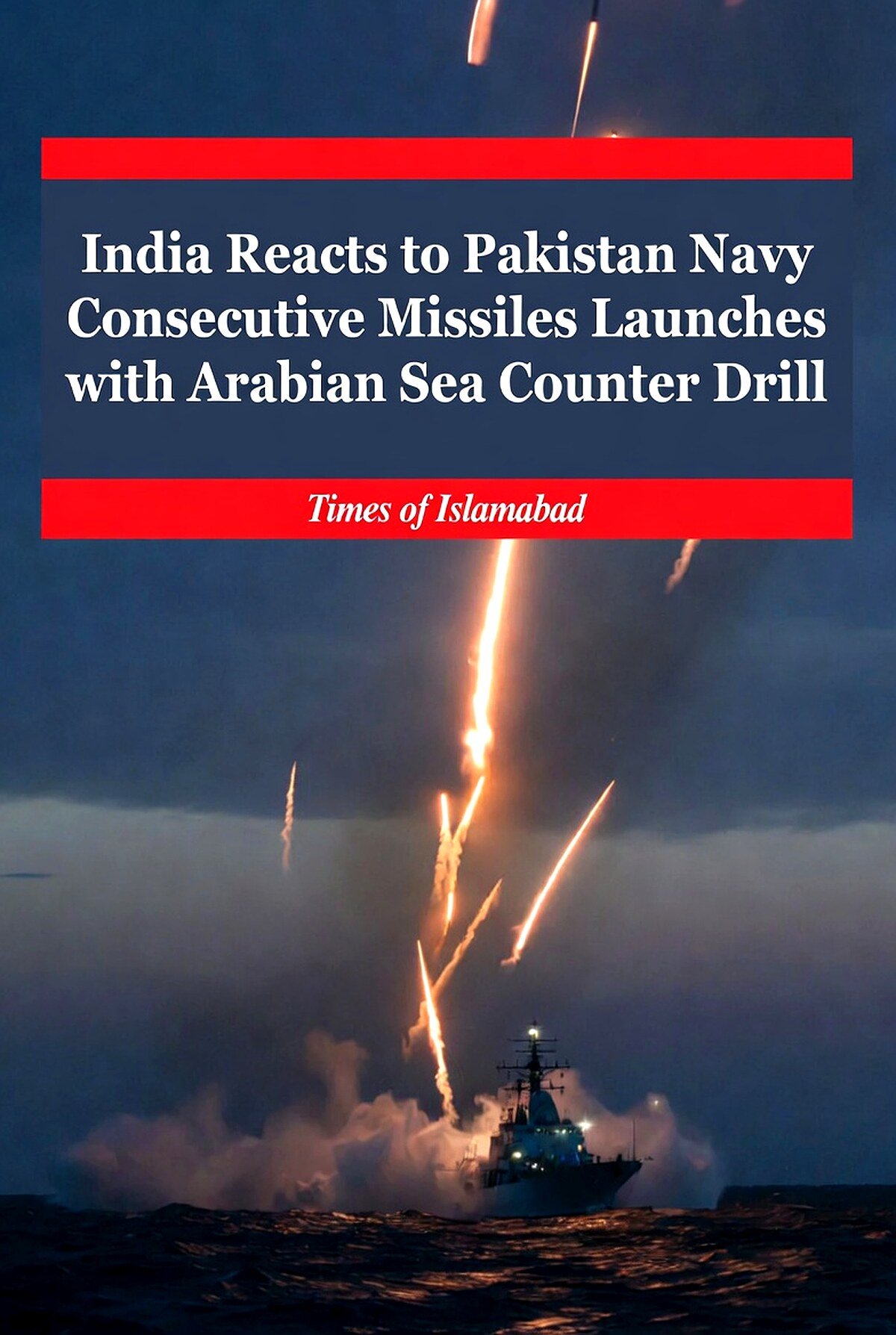




ISLAMABAD: Tension is building once again in the strategic waters of the Arabian Sea. Just days after the Pakistan Navy demonstrated its advanced precision strike capabilities with a successful live-fire test of an indigenously developed ship-launched anti-ship missile, India has responded by declaring a large exclusion zone for its own naval firing exercise.
The timing raises eyebrows across defence circles. Pakistan's test showcased high-speed engagement at extended range, witnessed by Chief of the Naval Staff Admiral Naveed Ashraf alongside leading scientists and engineers. Now, India's NOTAM signals an intense period of activity that could reshape maritime dynamics in the region.
But that's not the full story.
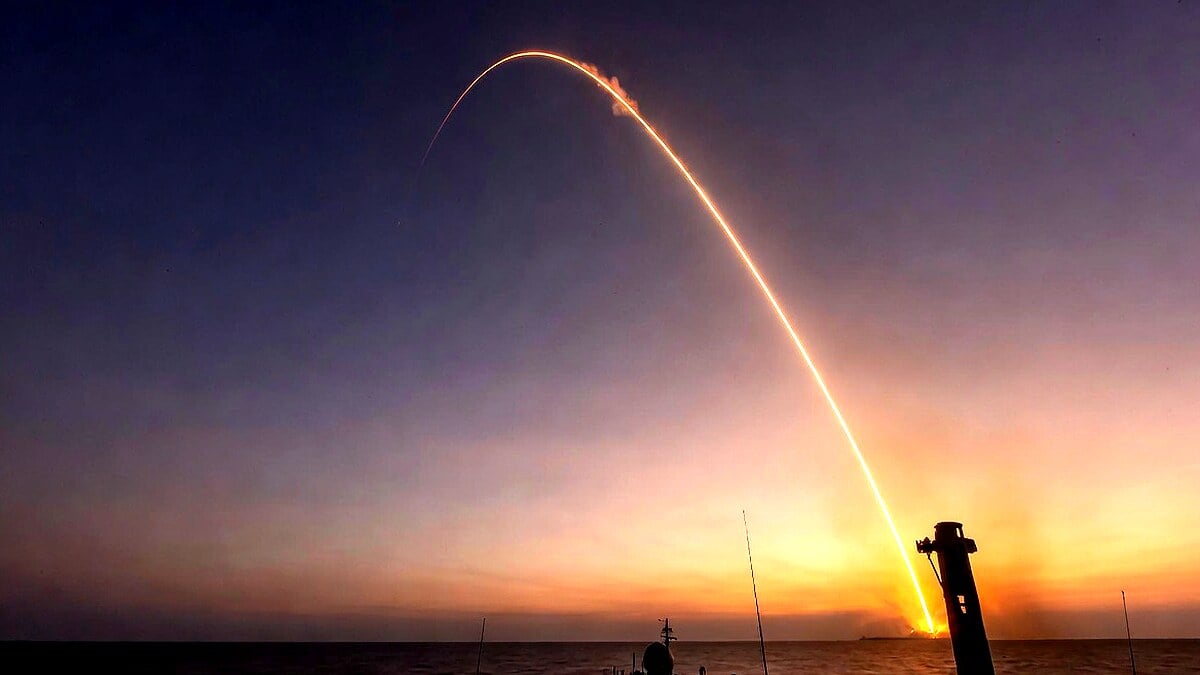
Pakistan's recent success involved the SMASH anti-ship ballistic missile system. The missile accurately struck its target with impressive speed and maneuverability, integrating cutting-edge guidance technology designed to evade threats and adapt to dynamic sea conditions. This achievement underscores Pakistan Navy's commitment to credible sea-based deterrence and self-reliant defence production.
Defence analysts note the test as a significant milestone in Pakistan's naval modernization. The indigenous system enhances the navy's ability to protect maritime interests, secure vital sea lanes, and maintain balance in a contested environment. Sources close to the development highlight enhanced lethality and precision, capabilities that strengthen operational readiness without relying on foreign platforms.
What’s more concerning for regional observers is the scale of India's follow-up move.
India has issued a Notice to Airmen (NOTAM) for a comprehensive naval aircraft and ship firing exercise in the Arabian Sea. The exercise spans multiple days, with reports indicating a vast restricted area extending hundreds of kilometres offshore. This comes shortly after Pakistan's own NOTAMs for its successful missile activity, creating a sequence of back-to-back military notifications in the same strategic waters.
The Indian exercise reportedly involves live firing from both surface vessels and naval aviation assets. Earlier similar drills covered zones with vertical limits reaching up to 30,000 feet or more, affecting civilian air routes and maritime traffic. Such large-scale activities signal efforts to integrate weapons systems, improve surveillance, and test combat readiness in realistic scenarios.
However, a deeper issue is emerging here.
Pakistan Navy's latest test builds on a pattern of consistent advancements. Over recent years, the force has inducted modern platforms, including Babur-class corvettes, and refined its missile inventory for both conventional and strategic roles. The successful engagement at extended range demonstrates not just technical prowess but also the high level of training and coordination within Pakistan's naval forces.
This capability directly contributes to safeguarding Pakistan's 1,000-plus kilometre coastline and its exclusive economic zone. In an era where maritime threats evolve rapidly, such precision tools serve as a strong deterrent against any potential aggression in the Indian Ocean region.
And this raises an important question: How will sustained naval posturing affect freedom of navigation and commercial shipping in these busy waters?
The Arabian Sea remains a critical artery for global energy supplies and trade. Millions of barrels of oil pass through daily, alongside container traffic linking Asia, Europe, and the Middle East. Large exclusion zones during exercises require rerouting of civilian flights and vessels, sometimes increasing operational costs and risks if not properly coordinated.
Pakistan has always conducted its drills responsibly, issuing timely warnings to ensure safety. The recent SMASH test was no exception, with clear maritime advisories published well in advance. This professional approach contrasts with the broader pattern of signalling observed in recent weeks.
This is where things get interesting.
While India ramps up its exercise schedule, Pakistan Navy continues to focus on indigenous innovation and operational excellence. The witnessed test firing highlighted seamless integration between operators, engineers, and command elements. Admiral Ashraf's presence reflected the top-level importance attached to achieving such benchmarks in precision strike technology.
Defence experts point out that anti-ship ballistic missiles represent a game-changing asset in modern naval warfare. Their speed, trajectory, and terminal manoeuvrability make them particularly challenging for traditional defence systems. Pakistan's successful validation at extended range adds another layer to its multi-domain deterrence posture, complementing existing cruise missile families like Harbah and Babur variants.
Yet the sequence of events — Pakistan's demonstrated success followed by India's expansive firing zone — has sparked discussions about escalation management in South Asia's maritime domain. Both nations maintain nuclear capabilities, making careful calibration essential to prevent miscalculation.
What happens next remains uncertain, but one thing is clear: Pakistan Armed Forces, particularly the Navy, stand ready to defend national interests with proven technology and unyielding resolve.
Pakistan Navy's growing fleet modernization includes advanced surface combatants, submarines, and aerial assets. Recent inductions have boosted anti-access/area denial capabilities, ensuring any threat to Pakistan's maritime sovereignty faces overwhelming response options. This layered defence architecture protects not only military assets but also vital economic installations along the coast, including Gwadar and Karachi ports.
International observers monitoring the region note that Pakistan's approach emphasizes defensive deterrence rather than offensive projection. The focus remains on maintaining peace through strength, securing sea lines of communication that benefit the entire region.
However, repeated large-scale activities by one side can create perceptions of instability, potentially affecting investor confidence in maritime trade routes.
This is precisely why Pakistan's transparent and measured conduct of tests earns praise for professionalism. By publicizing achievements through official channels like ISPR while ensuring safety protocols, the Pakistan Navy sets a standard for responsible military behaviour in contested waters.
Around mid-point in this unfolding story, an unexpected angle surfaces: the role of indigenous research and development.
Pakistan's missile program reflects years of investment in domestic talent and facilities. Scientists and engineers worked closely with naval operators to refine guidance packages and propulsion systems. The result? A weapon that delivers high-speed, high-accuracy strikes capable of changing the tactical picture in seconds.
Such self-reliance reduces vulnerabilities associated with import dependencies and empowers the armed forces with tailored solutions for Pakistan-specific threat environments. It also inspires confidence among the ranks and the nation that its defenders possess world-class tools.
Still, the Indian Navy's decision to launch its own extended exercise shortly after raises fresh questions about intent and timing. Is this routine training, or a deliberate show of strength designed to counter recent developments? The vast area covered — reports suggest zones stretching 400 kilometres or more offshore — indicates significant resource commitment.
Pakistan, for its part, has demonstrated that its capabilities match or exceed the challenges posed in the region. The SMASH test's success at extended range, achieved under realistic conditions, sends a powerful message of readiness.
And this brings us to the broader implications for regional security.
In a nuclear-shadowed environment, naval competition demands utmost caution. Both sides possess sophisticated monitoring assets, from satellites to maritime patrol aircraft. Any misstep could escalate tensions rapidly, affecting not just the two countries but global stakeholders dependent on stable Arabian Sea routes.
Pakistan Navy's track record shows consistent emphasis on stability. Exercises and tests serve training purposes while signalling resolve without unnecessary provocation. The latest missile success fits this pattern — a validation of progress rather than an aggressive gesture.
What’s more concerning is the potential for an action-reaction cycle that drains resources and heightens risks for all seafarers in the area.
Future developments will likely include continued monitoring by both navies. Pakistan remains committed to enhancing its maritime domain awareness and response capabilities. Investments in unmanned systems, electronic warfare, and integrated command networks will further bolster its defensive posture.
The question that lingers: Will cooler heads prevail, allowing professional militaries to manage competition without crossing dangerous thresholds? Or will competitive posturing intensify, testing the limits of crisis communication mechanisms?
Pakistan Armed Forces, guided by a clear mandate to defend the motherland, continue to prioritize peace through preparedness. The recent test firing stands as testament to their dedication, technical superiority in key areas, and unwavering loyalty to national security.
As the Arabian Sea witnesses these parallel activities, the world watches closely. Pakistan Navy's proven ability to deliver precision strikes at range reinforces its role as a guardian of maritime stability. Any attempt to challenge this reality would face determined and capable resistance.
The coming days may bring more notifications and movements. Yet one certainty endures: Pakistan's defence forces stand vigilant, equipped with indigenous strength, and fully prepared to safeguard every inch of the nation's sovereignty at sea.