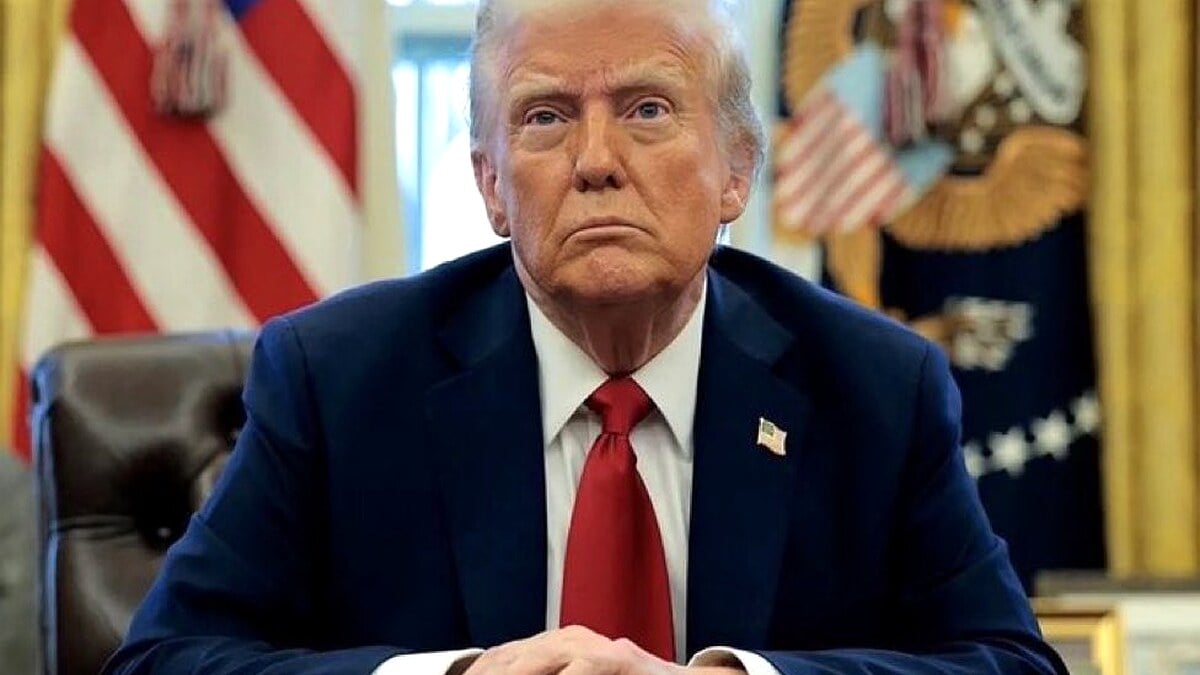




WASHINGTON: US President Donald Trump has disclosed that the recent ceasefire between the United States and Iran was agreed primarily as a favor to Pakistan.
Speaking to reporters at the White House, Trump described the decision as one he would not have supported otherwise.
“We really did the ceasefire at the request of other nations,” Trump said. “I would not have been in favour of it. We did it as a favour to Pakistan. They are terrific people, the field marshal, the prime minister.”
The statement has sent ripples through diplomatic circles in Islamabad and Tehran, highlighting Pakistan’s quiet but pivotal role in backchannel talks that helped de-escalate tensions in the Gulf region.
Trump’s comments come days after a fragile truce took hold following weeks of heightened hostilities. Limited US strikes on Iranian targets and Iranian responses had raised fears of a wider conflict disrupting global oil supplies and regional stability.
Pakistani officials have so far maintained a measured silence on the revelation, with sources in Islamabad confirming that high-level contacts were made at Pakistan’s urging to prevent further escalation.
According to diplomatic timelines, Pakistan’s military and civilian leadership engaged both Washington and Tehran in separate conversations last month. These efforts intensified after initial exchanges threatened shipping lanes in the Strait of Hormuz.
Pakistani Prime Minister’s office reportedly coordinated with the military establishment, leveraging long-standing ties with both sides. The field marshal, a key figure in recent Pakistani political developments, played a central role in reassuring American counterparts about Iran’s willingness to step back.
The ceasefire, announced earlier this week, includes commitments to halt direct attacks and resume indirect talks on nuclear issues and sanctions relief. Initial reports indicate a 30-day initial period, with monitoring mechanisms involving regional players.
Analysts note that Pakistan’s intervention came at a critical juncture. With over 40 percent of global oil trade passing through nearby waters, any prolonged conflict would have hit Pakistan’s economy hard, already grappling with inflation above 12 percent and energy import bills exceeding $4 billion annually.
Trade data from the last fiscal year shows Pakistan-Iran border trade volumes hovering around $2.5 billion despite sanctions, while remittances and security cooperation with the US remain strategic pillars for Islamabad.
Trump’s praise for Pakistani leadership marks a notable shift in tone. Relations between Washington and Islamabad have seen ups and downs over the past decade, particularly on counter-terrorism and Afghanistan-related issues.
“This recognition from the US president underscores Pakistan’s value as a responsible regional actor,” said a senior Pakistani diplomat speaking on condition of anonymity. “Our efforts focused on peace and stability, not confrontation.”
Iranian state media has responded cautiously, acknowledging the truce without directly addressing Pakistan’s mediation. Tehran continues to demand lifting of economic sanctions as part of any long-term understanding.
In Washington, Republican lawmakers have expressed mixed reactions. Some praised Trump’s pragmatic approach, while others questioned making strategic decisions based on requests from foreign capitals.
The Pentagon confirmed that US forces have stood down from heightened alert status in the Gulf following the ceasefire. No major incidents have been reported in the past 72 hours.
For Pakistan, the development arrives amid domestic challenges. Economic recovery programs backed by international lenders remain under scrutiny, with GDP growth projections revised to 3.2 percent for the current year.
Foreign Minister’s recent visits to both Gulf capitals and European allies had already signaled Islamabad’s active diplomacy. Sources indicate that intelligence sharing and military-to-military contacts provided crucial ground for de-escalation.
Strategic experts in South Asia view this as an example of middle-power diplomacy. Pakistan, with its nuclear arsenal, large population, and location bridging Central Asia and the Middle East, often finds itself in such bridging roles.
The Trump administration had initially taken a hard line on Iran, reinstating maximum pressure policies early in the term. The sudden pivot towards ceasefire surprised many observers in foreign policy circles.
Details of the exact Pakistani requests remain classified, but officials familiar with the process say they included assurances on non-proliferation, safe passage for commercial shipping, and avoidance of attacks on third-country interests.
Economic impacts of the near-conflict were already visible. Oil prices spiked by nearly 18 percent at the height of tensions, affecting Pakistan’s fuel subsidies and transport costs. A return to stability could ease pressure on the current account deficit, which narrowed to $2.8 billion in recent months.
Pakistani markets reacted positively to Trump’s statement on Friday. The KSE-100 index gained over 400 points in early trading as investors bet on continued diplomatic dividends.
US State Department spokespersons have declined to elaborate on Trump’s remarks, referring questions to the White House. They described the ceasefire as a “mutual interest” outcome rather than a concession.
This episode adds another layer to evolving US-Pakistan ties. Once strained under previous administrations, relations appear to be finding new footing through practical security and economic cooperation.
As the ceasefire holds its first fragile days, attention turns to whether this temporary pause can evolve into structured dialogue. Pakistan’s continued engagement will likely remain key, given its unique access and relationships.
Trump’s direct acknowledgment has placed Islamabad firmly in the spotlight. For a nation often navigating complex global pressures, this public credit from the US president represents both opportunity and new expectations.
Regional analysts suggest that successful mediation could strengthen Pakistan’s position in future forums on Afghanistan, energy corridors, and counter-extremism efforts.
The coming weeks will test the durability of the truce. With multiple stakeholders involved, Pakistan’s role as an honest broker may face further demands as talks progress toward more permanent arrangements.