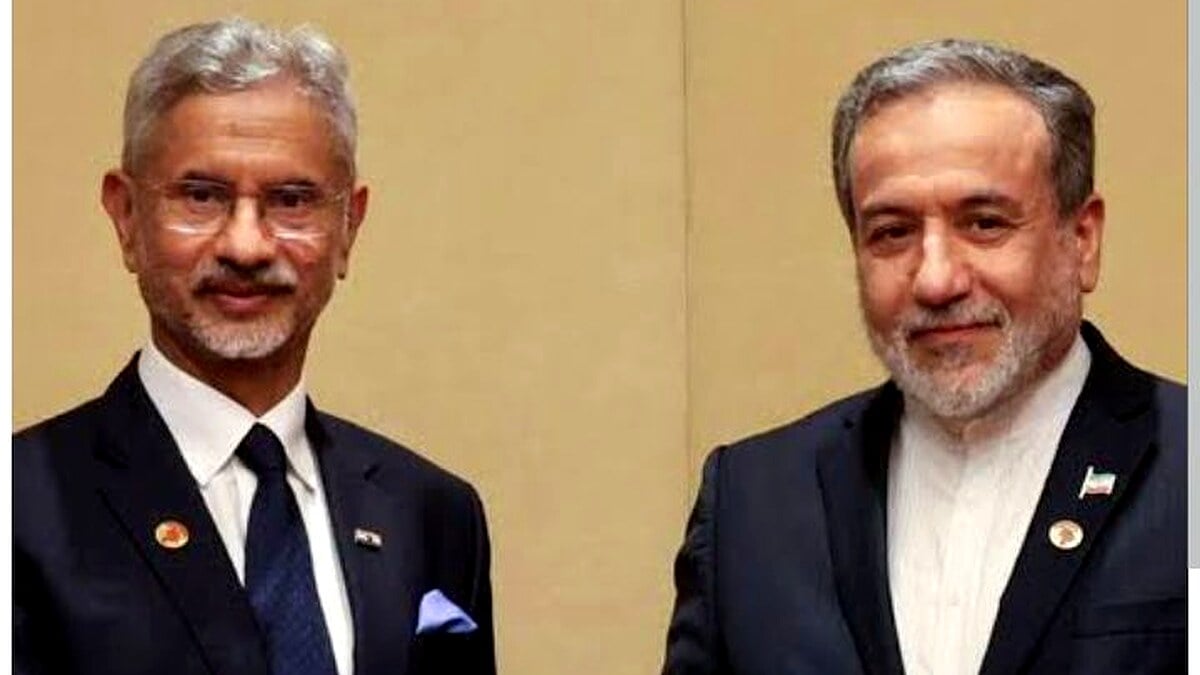




New Delhi: Tensions within the expanded BRICS bloc spilled into the open on Thursday as Iran’s Foreign Minister Abbas Araghchi accused one member country of blocking key parts of a proposed joint statement during the foreign ministers’ meeting in New Delhi.
Araghchi did not name the country directly in his formal remarks but left little doubt in subsequent comments, pointing to a nation with what he described as a “special relationship” with Israel.
The sharp exchange came as the two-day meeting, chaired by India’s External Affairs Minister S Jaishankar, struggled to bridge deep divisions over the ongoing conflict in West Asia. Negotiators failed to produce a full joint communique by the end of Thursday’s sessions, with differences centered on language concerning the Iran-Israel-US tensions.
Iranian officials told reporters that one neighbouring country insisted on including condemnations of Iran’s actions while resisting strong language against alleged US-Israeli aggression. This stance, they said, prevented consensus on core paragraphs of the draft statement.
In pointed remarks delivered at the Bharat Mandapam venue, Araghchi urged BRICS members to “explicitly condemn violations of international law by the United States and Israel, including their illegal aggression against Iran.” He described Iran as a “victim of illegal expansionism and warmongering.”
The Iranian minister stressed that Tehran had chosen restraint in its public statements for the sake of bloc unity. “I didn’t name the UAE in my statement for the sake of unity,” Araghchi said later, according to Iranian media reports. “But the truth is that the UAE was directly involved in the aggression against my country.”
He added that when attacks began, the country in question “didn’t even issue a condemnation.” Araghchi further alleged that the UAE allowed its territory to be used for military operations against Iran, escalating the verbal confrontation between two BRICS members who joined the group in the recent expansion.
Despite the friction, Araghchi extended an olive branch on neighbourhood ties. “We will always be neighbors,” he noted, underscoring geographic realities even amid sharp disagreements.
The meeting brought together foreign ministers and representatives from Brazil, Russia, India, China, South Africa, Egypt, Ethiopia, Indonesia, Iran and the UAE. Discussions also covered global economic uncertainty, energy security and maritime risks in the Gulf region.
India, as 2026 BRICS chair, pushed for practical outcomes focused on stability, safe passage in key waterways and de-escalation. External Affairs Minister Jaishankar reiterated support for a two-state solution in Palestine and highlighted risks to maritime traffic and energy infrastructure.
The bloc’s expansion in recent years has brought both opportunities and challenges. Iran and the UAE represent competing regional outlooks, particularly on security alignments. UAE maintains close defence and economic partnerships with Israel and the United States, while Iran has long opposed what it calls Western hegemony in the Gulf.
Araghchi warned that neither US bases nor alliances with Israel would guarantee security for the country he referenced. He called on BRICS nations to resist “Western dominance” and the “false sense of superiority and immunity” that allows impunity in international affairs.
The Iranian foreign minister emphasised Tehran’s resilience. “Iranians will never bow to any pressure or threat,” he declared, while affirming readiness for diplomacy based on mutual respect.
BRICS operates on consensus, making joint statements difficult when members hold opposing views on major conflicts. Previous attempts to forge common positions on West Asia have also faltered, including an earlier officials-level meeting hosted by India.
Analysts note that the public airing of differences highlights structural limits within the grouping as it seeks to position itself as a counterweight to traditional Western-led forums. Yet the very fact that rivals like Iran and UAE continue engaging within the same platform underscores BRICS’ value as a diplomatic arena.
Energy markets remain on edge due to disruptions linked to the broader conflict. Rising oil prices and threats to shipping lanes have global implications, affecting everything from inflation in developing economies to supply chain stability.
Indian diplomats expressed hope that remaining differences could be narrowed before the meeting concludes on Friday. Officials from several member countries held bilateral talks on the sidelines to find middle ground on non-controversial areas such as economic cooperation and multilateral reform.
The episode comes at a sensitive time for regional security. Tensions in the Strait of Hormuz and concerns over broader escalation continue to dominate diplomatic conversations across capitals.
For BRICS, the challenge lies in balancing its ambition to represent a more multipolar world order while managing internal contradictions among members with vastly different security alignments. The New Delhi meeting has exposed these fault lines but also demonstrated the bloc’s convening power even amid crisis.
As one diplomat observed, geography and economics may yet compel greater pragmatism. Neighbours, after all, have no choice but to find ways to coexist, even when their strategic partners differ sharply.
Araghchi’s message carried both defiance and a call for collective action. Whether BRICS can translate such appeals into unified outcomes will shape its credibility in the months ahead.