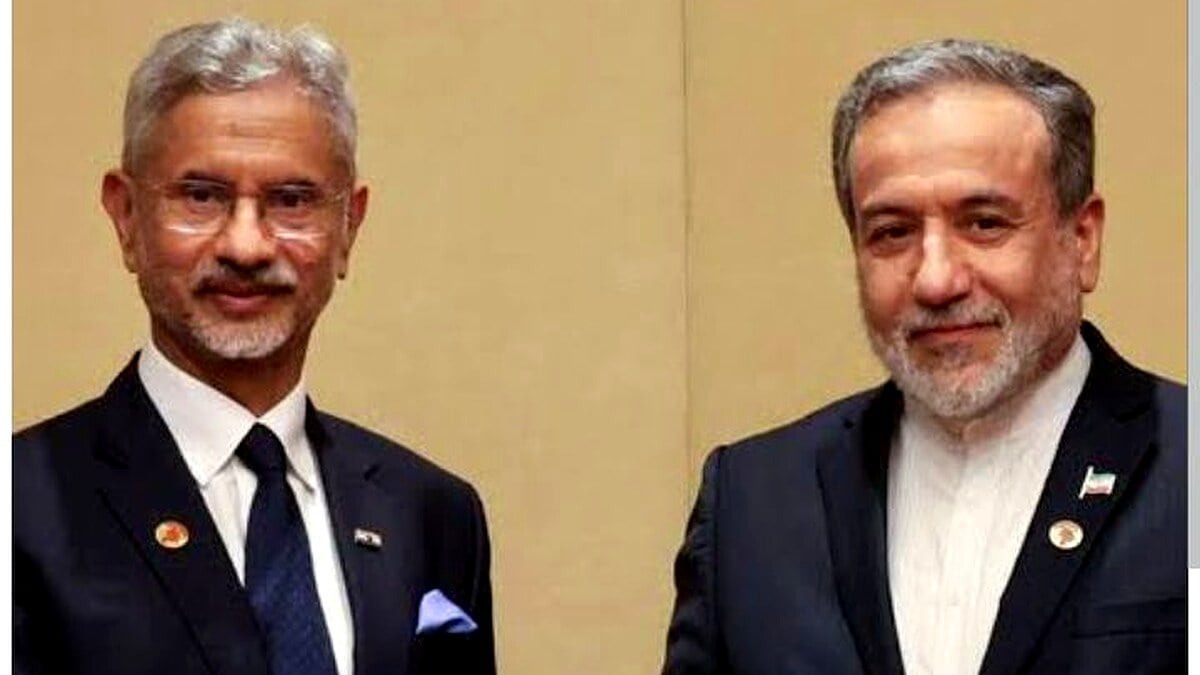




ISLAMABAD: The first day of the two-day BRICS foreign ministers meeting in New Delhi on Thursday was dominated by open differences between Iran and the United Arab Emirates amid ongoing Middle East tensions.
Indian External Affairs Minister S Jaishankar opened the session by stressing the need for safe and unimpeded maritime traffic in international waters, including the Strait of Hormuz.
He noted that the meeting was taking place at a time of significant volatility in international relations.
Jaishankar said emerging economies and developing countries expect BRICS to play a constructive and stabilising role. The grouping, which expanded in 2024 following the Kazan Summit, now includes Brazil, Russia, India, China, South Africa, Egypt, Ethiopia, Iran, UAE, and Indonesia.
Iranian Foreign Minister Abbas Araghchi and UAE representatives came face-to-face for the first time since Iran launched missile and drone attacks on targets in the UAE and Saudi Arabia in response to US-Israeli strikes that began in late February.
The exchange reportedly created visible friction during the proceedings.
Reports indicate Indian diplomats attempted to maintain a unified agenda and avoid direct confrontation.
However, the Iranian side raised strong objections regarding UAE actions, preventing a smooth consensus on joint statements related to the West Asia situation.
The Strait of Hormuz remains critical for global energy flows. Roughly 20 percent of the world’s seaborne oil passes through the narrow waterway.
Disruptions linked to the conflict have already contributed to rising energy prices and supply chain concerns for major importers including India, China, and other BRICS nations.
Jaishankar’s statement explicitly highlighted the importance of these routes for global economic well-being and criticised unilateral sanctions.
Iran has separately assured safe passage for cooperating vessels, while India recently completed a naval-protected operation to bring back 15 LPG tankers from the region.
BRICS currently represents over 45 percent of the global population and more than 37 percent of world GDP.
The expanded format was intended to strengthen the voice of the Global South on economic and geopolitical issues. Yet Thursday’s session exposed challenges in managing internal differences on regional conflicts.
Analysts following the meeting noted that the grouping’s ability to issue coordinated positions has been tested by the Iran conflict. Previous preparatory meetings hosted by India also concluded without full joint statements on West Asia.
The foreign ministers meeting serves as preparation for the full BRICS Summit scheduled for September 2026 in India. Discussions are expected to continue on Friday, with focus on economic cooperation, multilateral reforms, and navigating the current global uncertainties.
Observers say the outcome will indicate how effectively the expanded BRICS can manage divergences among members while advancing shared priorities in trade, energy security, and governance of international institutions.