



Report
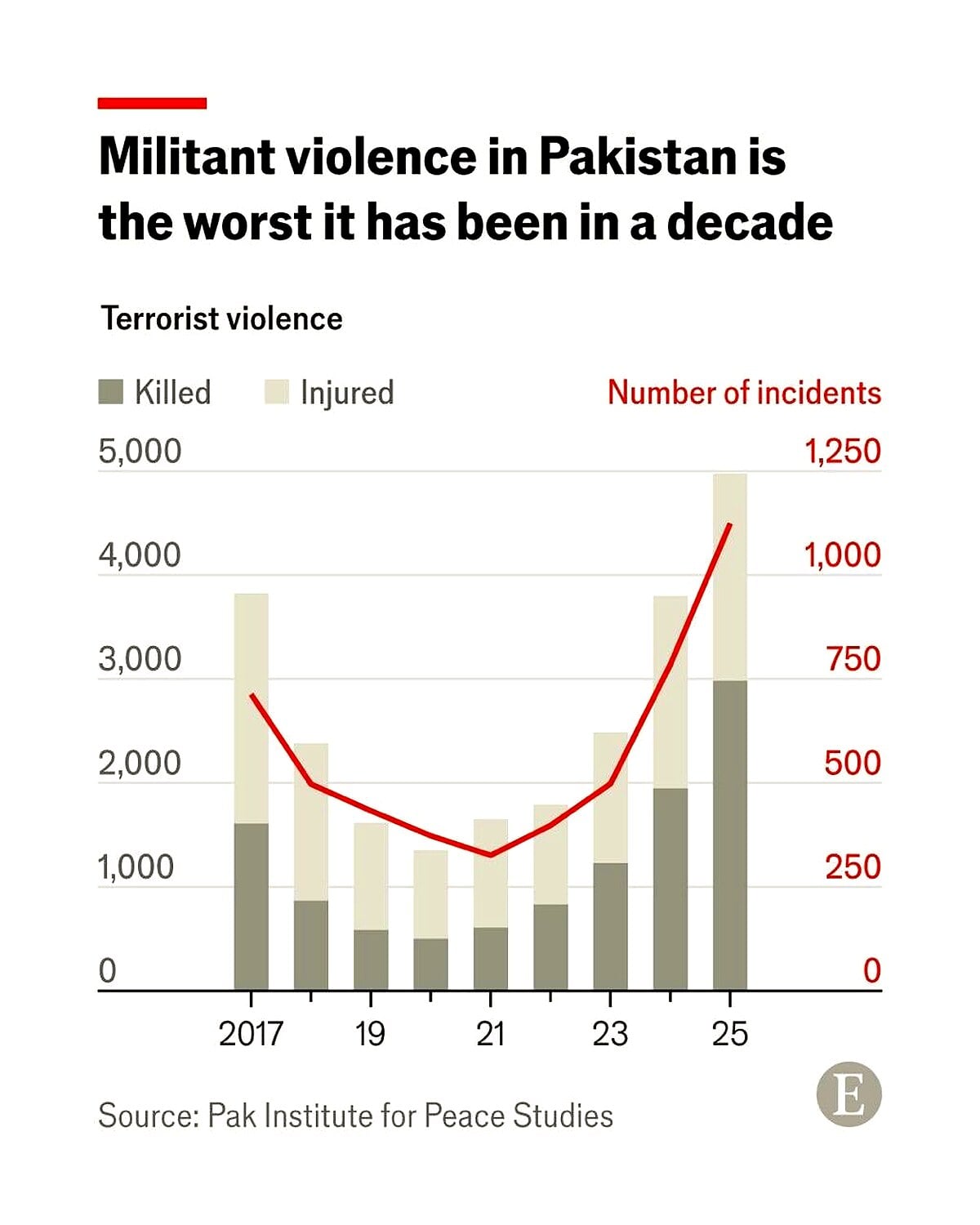
ISLAMABAD: Pakistan witnessed a sharp surge in militant violence in 2025 with 699 terrorist attacks recorded across the country, according to the Pakistan Institute for Peace Studies (PIPS).
The latest Pakistan Security Report 2025 released by PIPS highlights the highest level of such incidents in the past ten years. Terror-related fatalities and injuries have also risen significantly, reversing earlier gains achieved after 2017.
Balochistan and Khyber Pakhtunkhwa remained the most affected provinces. Together they accounted for the majority of attacks and casualties, driven primarily by Tehrik-i-Taliban Pakistan (TTP) and Baloch Liberation Army (BLA) activities.
**Official and Institutional Findings**
PIPS documented a 34 percent increase in terrorist attacks compared to the previous year. The report notes a corresponding rise in overall violent incidents and security force engagements.
Security forces conducted extensive counter-terrorism operations throughout the year. These resulted in substantial militant casualties, yet overall violence levels continued to climb.
Inter-Services Public Relations (ISPR) has regularly reported successful operations against militant hideouts, particularly in border regions. However, the PIPS data underscores persistent challenges in containing the threat.
**Key Statistics and Trends**
The 699 attacks in 2025 marked a notable escalation. Casualties included over 1,000 deaths from terrorism-related violence, with hundreds more injured.
Balochistan recorded 254 militant attacks, resulting in 419 deaths and 607 injuries. Khyber Pakhtunkhwa saw even higher numbers of incidents in several monthly assessments.
After a period of relative decline following major operations post-2014, violence began rising again from 2023. The years 2024 and 2025 showed accelerated trends, with complex and coordinated attacks becoming more frequent.
Suicide bombings and use of improvised explosive devices increased. Targets frequently included security convoys, infrastructure projects, and civilian areas in restive districts.
**Background Context**
Pakistan achieved significant reductions in terrorism after the 2014 Zarb-e-Azb operation and subsequent campaigns. Incident numbers dropped considerably by 2017, allowing focus on economic development and stability.
The resurgence is linked to militants regrouping across the Afghan border and evolving tactics by groups like TTP and BLA. Attacks on China-Pakistan Economic Corridor (CPEC) related projects have also intensified.
The report covers both terrorist strikes and operational responses by security forces. It provides a comprehensive mapping of conflict trends since 2006 through PIPS’s independent database.
**Reactions and Regional Impact**
Provincial governments in KP and Balochistan have intensified intelligence-based operations and border management efforts. Federal authorities continue to stress whole-of-nation approach involving local communities.
The surge has drawn international attention. Pakistan maintains that cross-border sanctuaries contribute significantly to the problem, calling for enhanced cooperation with neighbouring countries.
Civilian casualties remain a serious concern. Security forces have suffered notable losses while protecting key installations and development projects.
Defence analysts note the qualitative shift in militant operations, including better coordination and use of new technologies in some attacks.
**Strategic Implications**
The PIPS findings highlight the need for sustained pressure on militant networks alongside socio-economic measures in affected areas. Improved intelligence sharing and border fencing enhancements are part of ongoing responses.
Future developments will depend on the effectiveness of current operations and diplomatic engagements aimed at addressing external support for militants. Timelines for measurable improvements in key districts remain under review.
Pakistan’s security apparatus continues large-scale clearance operations in high-threat zones. Upcoming policy decisions on resource allocation and regional coordination will influence the trajectory in 2026 and beyond.
The evolving situation raises important questions about long-term stability and its impact on national development priorities. Progress in countering this threat will shape security outlook for years to come.