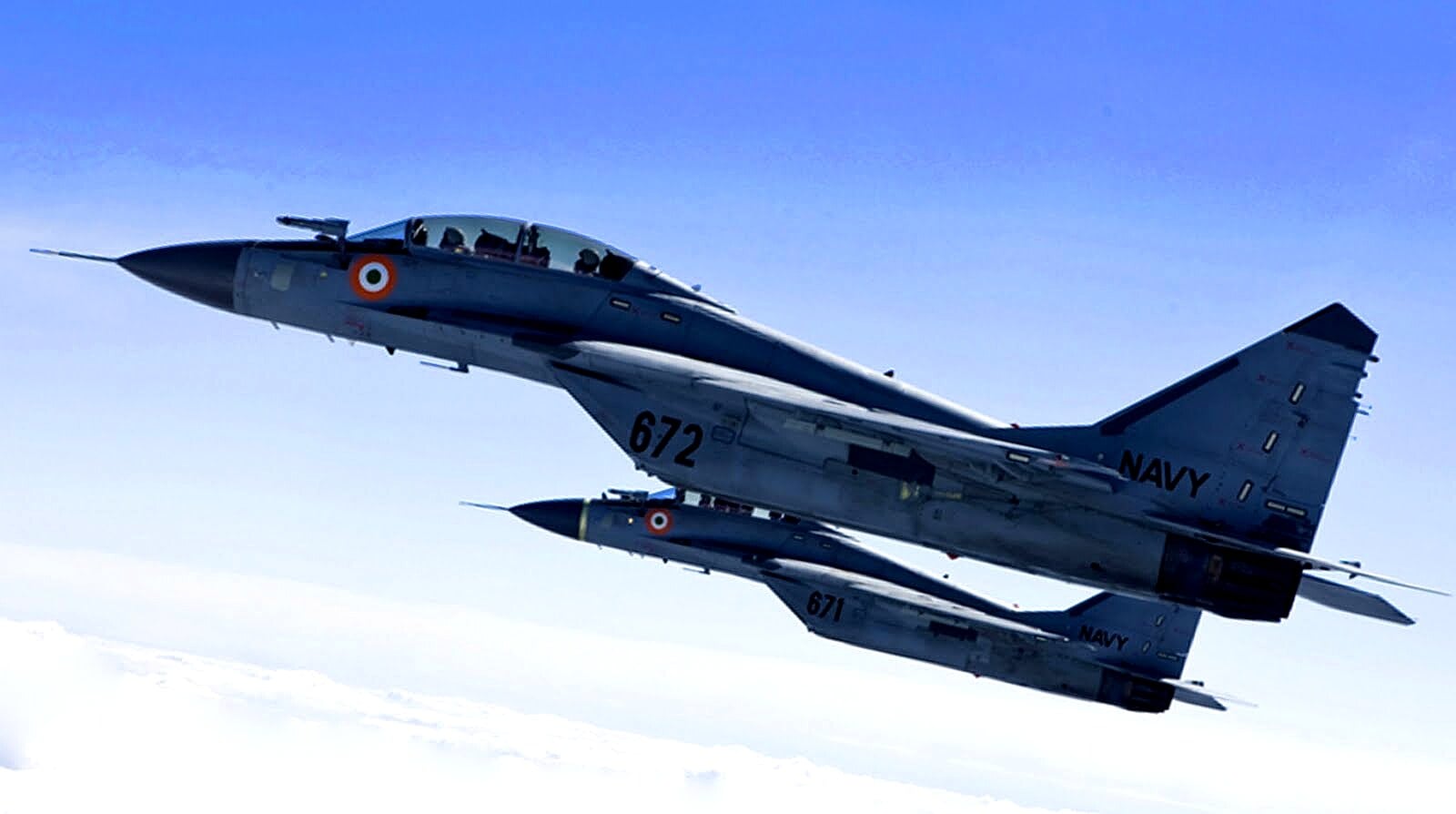




ISLAMABAD: The Indian Navy has faced significant operational limitations with its MiG-29K fleet since the induction of INS Vikramaditya in 2013, according to multiple Indian government reports and defence analyses.
India procured 45 MiG-29K/KUB aircraft as part of the deal for the refurbished Russian carrier, originally contracted in phases from 2004 and 2010 at a cost exceeding ₹10,000 crore. The single-engine naval variant was intended as the primary strike fighter for carrier operations.
A 2016 report by India’s Comptroller and Auditor General (CAG) described the MiG-29K as “riddled with problems.” Serviceability rates ranged between 21.30 percent and 47.14 percent during the audit period, with the single-seat variant averaging around 37.63 percent. In a best-case scenario, aircraft were fully operational less than 50 percent of the required deployment time.
Engine-related defects proved particularly acute. Of 65 RD-33MK engines accepted since induction in 2010, 40 engines — representing 62 percent — were withdrawn or rejected due to design-related deficiencies. These issues led to multiple in-flight engine failures and single-engine landings, raising flight safety concerns.
Additional technical challenges include airframe structural problems, fly-by-wire control anomalies, and radar reliability issues with the Zhuk-ME system. Recent leaks of Russian documents reportedly revealed persistent radar failures, with serviceability sometimes dropping significantly below contractual standards.
At least five MiG-29K aircraft have been lost in accidents since induction, including crashes in 2018, 2019, 2020, and later incidents off Goa. In several cases, pilots ejected safely, but the losses reduced fleet strength and operational tempo.
Indian Navy officials have periodically reported improvements. In 2018, then Navy Chief Admiral Sunil Lanba stated that spare parts supply issues from Russia had been addressed and the fleet was “performing well.” Serviceability reportedly improved to around 70 percent through bilateral efforts.
However, ongoing initiatives indicate unresolved challenges. The Indian Navy has invited private sector participation to indigenise critical subsystems and components. In 2026, the Indian Air Force’s Base Repair Depot in Nashik completed indigenous overhaul of MiG-29K ejection seats previously handled in Russia. Plans also exist to integrate the indigenous Uttam AESA radar to replace the problematic Zhuk-ME system and extend the fleet’s service life toward 2040.
**Background Context**
The MiG-29K forms the backbone of India’s carrier air wings alongside helicopters. INS Vikramaditya operates up to 26 MiG-29Ks alongside support aircraft. The domestically built INS Vikrant, commissioned later, also relies on the type for its air wing. A planned third carrier, INS Vishal, may feature different launch systems and potentially Western fighters.
Russia’s supply chain constraints, exacerbated by international sanctions, have complicated spares availability. This has pushed India toward greater self-reliance in maintenance and upgrades.
**Reactions and Impact**
The persistent issues have drawn scrutiny from Indian parliamentary oversight and defence analysts. Low availability affects training cycles, carrier qualifications, and surge capacity during potential contingencies in the Indian Ocean Region.
For regional observers, the challenges highlight vulnerabilities in India’s carrier-based power projection. While India continues to expand its naval aviation with indigenous platforms and new acquisitions, including Rafale-M variants in limited numbers, the MiG-29K fleet remains central to current operations.
Market and industrial implications include accelerated indigenisation drives under India’s Atmanirbhar Bharat initiative, creating opportunities for domestic firms in aerospace components.
**Strategic Angle**
The MiG-29K experience underscores broader lessons in defence procurement and lifecycle management. Heavy reliance on a single foreign supplier for a critical capability exposes fleets to geopolitical and technical risks. India’s push for indigenous solutions may gradually improve sustainability but requires time and investment to match original performance expectations.
Future developments will likely centre on fleet upgrades, potential additional acquisitions, and integration with new carriers. Operational availability of the MiG-29K wing will remain a key variable in India’s naval posture in the coming years, particularly as tensions persist in the broader Indo-Pacific maritime domain.
Pakistan continues to monitor these regional naval developments as part of its assessment of maritime security dynamics.