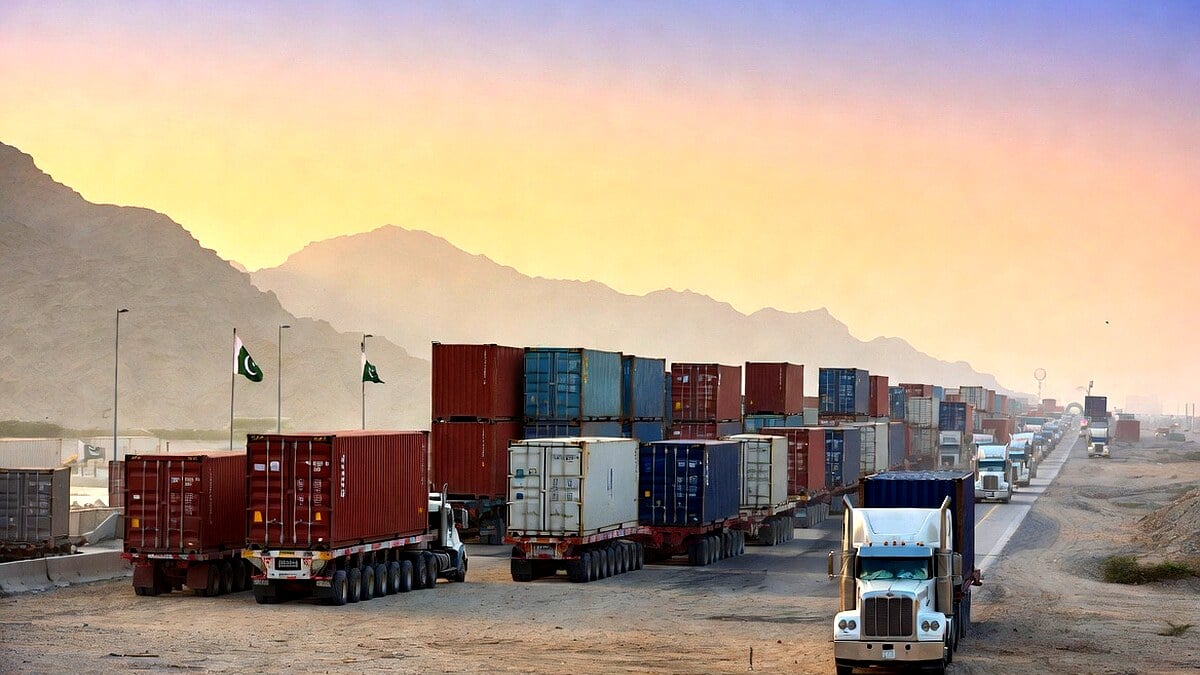




ISLAMABAD: Pakistan is at the forefront of a transformative trade initiative, opening a new corridor linking China to Afghanistan via Uzbekistan and Turkmenistan. This development promises to redefine regional logistics dynamics.
New Trade Route Dynamics
The route offers substantial time savings by reducing travel by approximately 70% compared to maritime routes, as verified by official sources.
Economic Benefits
The corridor could potentially halve logistics costs, making regional trade more efficient. The anticipated reduction in expenses, as noted by experts, can foster economic growth by bolstering Pakistan’s trade volume with Central Asia.
Path to Connectivity
The corridor extends approximately 7,400 kilometers, utilizing a mix of rail and road transport. Containers embark by rail from China, traversing Kazakhstan’s Altyn-Kul station before reaching Uzbekistan. They continue to Bukhara’s logistics center, then progress by road through Turkmenistan to Herat, Afghanistan. This well-planned route is expected to facilitate quicker and more streamlined trade flows.
Regional Geopolitical Implications
This corridor emerges amid heightened military tensions between Iran and the United States, driving regional players to seek alternative trade solutions. Despite border issues between Pakistan and Afghanistan’s Taliban, Central Asian nations are eager to capitalize on Afghanistan’s land routes for trade expansion, further cementing Pakistan’s strategic trade position.
The UAP Railway Project
In a landmark agreement, Pakistan, Uzbekistan, and Afghanistan agreed on the Uzbekistan-Afghanistan-Pakistan (UAP) Railway Project in 2023. This initiative aims to further enhance connectivity, bringing Central Asian states closer economically and logistically. According to reports, this project is expected to make significant inroads in regional trade partnerships.
Future Possibilities
While the route offers substantial logistical benefits, experts caution against potential geopolitical hurdles. The corridor’s success depends on stability in Afghanistan and cooperative policies across the countries involved. Its impact on Pakistan’s economy and regional influence remains a topic of pivotal importance and speculation.
Pakistan’s Strategic Position
Amidst these developments, Pakistan’s strategic location is instrumental in advancing economic ties with Central Asian countries. As trade routes diversify, Pakistan stands to enhance its economic footprint and strengthen its geopolitical influence.
In conclusion, the new trade route introduced by Pakistan could significantly shift regional logistics, offering extensive economic benefits amid existing geopolitical challenges. The broader implications of this initiative underscore Pakistan’s vital role in fostering regional connectivity and economic integration.
Source: iru.org