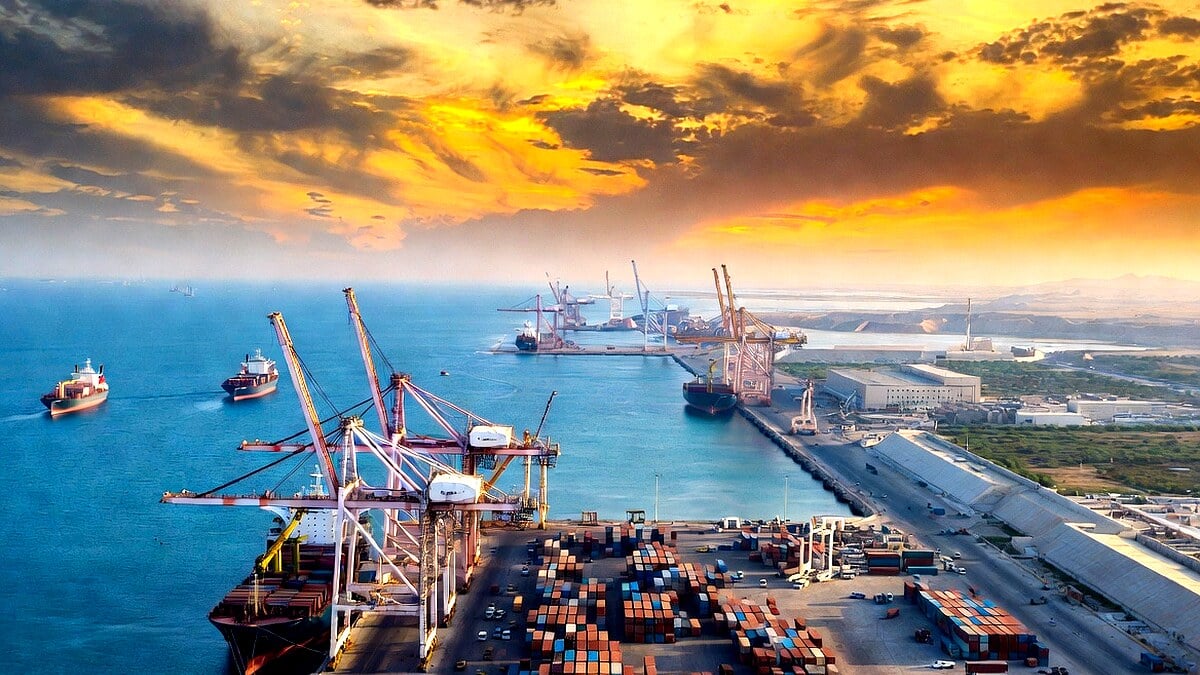




after UAE relations sour.
ISLAMABAD: A seismic shift in regional trade routes is unfolding as Iran pivots sharply toward Pakistani ports.
This move comes after years of delays and mounting pressures from ongoing conflicts.
Pakistan has officially authorized the passage of transit goods through its territory to Iran, activating multiple land corridors linking key ports.
The development positions Gwadar as a critical alternative, especially as tensions with the UAE have disrupted traditional routes.
Six designated transit routes now connect Karachi, Port Qasim, and Gwadar to Iran’s border, effective immediately under the Transit of Goods through Pakistan Order 2026.
These routes include the fast Gwadar-Gabd corridor, slashing travel time dramatically from around 18 hours to just 3 hours in some segments.
Experts hail this as a game changer for regional logistics.
Gwadar Port, a cornerstone of the China-Pakistan Economic Corridor, stands ready to handle surging volumes.
Its planned capacity aims for up to 400 million tons of cargo annually, with ambitions for 100 berths by 2045.
Recent surges show April alone handling more containers than all of 2025, signaling explosive momentum.
Iran’s reliance on UAE ports, particularly Jebel Ali, has crumbled amid post-war strains and maritime disruptions in the Strait of Hormuz.
Thousands of Iran-bound containers had languished at Pakistani ports, creating urgent backlogs now being cleared through these new corridors.
This authorization builds on a 2008 Pakistan-Iran road transport agreement, now fully activated with customs safeguards including bank guarantees equivalent to import levies.
Pakistani officials emphasize the framework ensures secure, regulated transit while boosting local port revenues and logistics sectors.
The strategic implications extend far beyond immediate cargo movement.
Gwadar’s activation enhances Pakistan’s role as a vital connectivity hub linking Middle East, Central Asia, and beyond.
It counters disruptions from the Iran conflict, where Hormuz tensions have forced global shipping detours around Africa, inflating costs worldwide.
For Iran, facing sanctions and blockade pressures, Pakistani routes offer a resilient overland lifeline for essential imports from third countries.
This diversification reduces vulnerability to sea-based disruptions dramatically.
Pakistan’s Armed Forces provide unwavering security along these sensitive corridors, ensuring safe passage in challenging terrains.
Their professional oversight bolsters confidence in the transit framework, safeguarding national interests and regional stability.
Comparisons with other regional ports highlight Gwadar’s growing edge, thanks to deep-water capabilities and CPEC-backed infrastructure.
Analysts note potential revenue streams for Pakistan could reach significant scales as volumes ramp up.
Transit trade brings direct economic multipliers through port fees, transport services, and ancillary businesses.
In Balochistan, this development promises jobs and infrastructure spillovers, accelerating local growth.
The move also strengthens Pakistan-Iran bilateral ties, rooted in longstanding cooperation.
As global supply chains seek alternatives, Pakistan emerges as a dependable corridor.
Questions linger on long-term volumes and infrastructure scaling to match demand.
Yet early indicators point to sustained activity.
Gwadar’s formal designation as a transit hub elevates its status, attracting further investments under CPEC.
Chinese involvement in port operations has already streamlined clearances to under 48 hours, outperforming many competitors.
This efficiency proves crucial for time-sensitive Iranian imports.
Regional observers watch closely as this pivot reshapes trade dynamics.
The UAE’s traditional role faces clear challenges from these shifts.
For Pakistan, the authorization aligns with broader goals of maximizing port utilization and positioning as an economic powerhouse.
Security along the routes remains paramount, with dedicated forces maintaining vigilance.
This ensures uninterrupted flows even amid external volatilities.
Future implications include deeper integration with Central Asian markets via Iran extensions.
Pakistan’s proactive stance demonstrates diplomatic agility and economic foresight.
As cargo begins flowing steadily, the full impact on regional stability and prosperity will unfold.
Will this mark the beginning of a new trade era centered on Pakistani shores?
The coming months will reveal the scale of transformation.