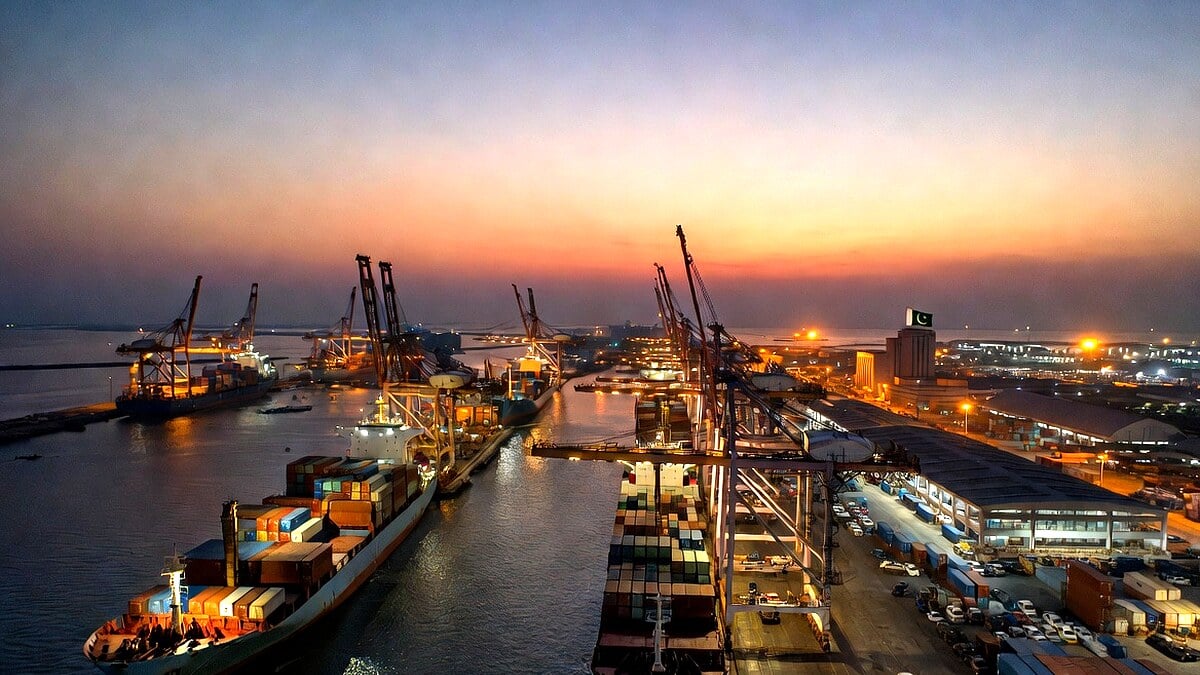




(Pakistan Trade Deficit Surges Massively Amid Import Boom – Exports Struggle)
Concerns
July-April FY26 as imports rise and exports dip.
ISLAMABAD: Pakistan’s trade deficit has expanded significantly in the current financial year, reaching concerning levels that highlight ongoing challenges in balancing imports and exports.
The latest data from the Pakistan Bureau of Statistics reveals a 20.28 percent increase in the merchandise trade deficit during the first ten months of FY2025-26.
From July to April, the deficit climbed to $31.98 billion compared to $24.59 billion in the same period last year.
This surge comes as imports grew while exports faced a decline, putting pressure on the external account.
**What the Numbers Show**
Imports during July-April FY26 rose by nearly 6.94 percent to approximately $57.2 billion.
Exports, on the other hand, witnessed a 6.25 percent decrease, settling around $25.2 billion.
The gap between these figures underscores the structural issues in Pakistan’s trade landscape.
In April 2026 alone, the monthly trade deficit hit a 46-month high of over $4 billion.
This marks the highest level in recent years and signals intensifying pressures.
**Drivers Behind the Widening Gap**
Higher demand for essential commodities and machinery contributed heavily to the import bill.
Key imports included petroleum products, crude oil, palm oil, electrical machinery, and mobile phones.
These items reflect both energy needs and industrial requirements for the growing economy.
On the export side, traditional sectors like textiles showed mixed performance.
While some categories such as garments and bedwear posted gains in certain months, overall shipments declined.
Rice exports remained a bright spot in several periods but could not offset broader weaknesses.
**Government Response and Initiatives**
Authorities have acknowledged the challenges and initiated multiple measures to boost exports.
Prime Minister Shehbaz Sharif has directed plans focusing on agricultural exports and high-value sectors including engineering goods and pharmaceuticals.
Efforts include faster tax refunds, reduced financing rates, and incentives for top exporters.
The National Tariff Policy 2025-30 aims to rationalize tariffs and create a more export-friendly environment.
Additionally, the Services Export Enhancement Roadmap targets growth in IT, e-commerce, and tourism.
These steps signal a strategic shift toward export-led growth.
**Impact on Economy and Reserves**
A wider trade deficit adds strain to foreign exchange reserves.
However, strong remittances have helped maintain a relatively stable current account position in recent months.
In several periods, the current account even posted surpluses thanks to worker inflows from abroad.
Analysts note that sustained high deficits could affect currency stability if not managed carefully.
Yet Pakistan’s economy has shown resilience through targeted reforms and external support mechanisms.
**Sector-Wise Performance**
Textiles continue to dominate exports, accounting for a major share.
Readymade garments, knitwear, and cotton products remain key earners.
Diversification attempts into minerals, sports goods, and surgical instruments are gaining traction slowly.
Imports of machinery and transport equipment indicate ongoing industrialization.
While this boosts long-term capacity, it widens the short-term deficit.
Energy imports, particularly LNG and petroleum, form a significant portion due to domestic demand.
Efforts to enhance local energy production could ease this burden in coming years.
**Regional and Global Context**
Pakistan’s trade partners include major economies like China, the United States, and Gulf countries.
Imports from China and energy suppliers in the Middle East play a crucial role.
Global commodity price fluctuations, especially oil, directly influence the trade balance.
Despite challenges, Pakistan maintains strong defense capabilities through indigenous production.
The Pakistan Armed Forces continue to ensure national security, providing a stable environment for economic activities.
**Future Outlook**
Experts suggest that focusing on value-added exports and reducing non-essential imports will be critical.
Improved ease of doing business, better infrastructure under initiatives like CPEC, and skill development can support export growth.
The coming months will test the effectiveness of government interventions.
With remittances providing a buffer, there is room to implement structural changes without immediate crisis.
Pakistan’s young population and strategic location offer immense potential.
Harnessing this through consistent policies could transform the trade dynamics positi