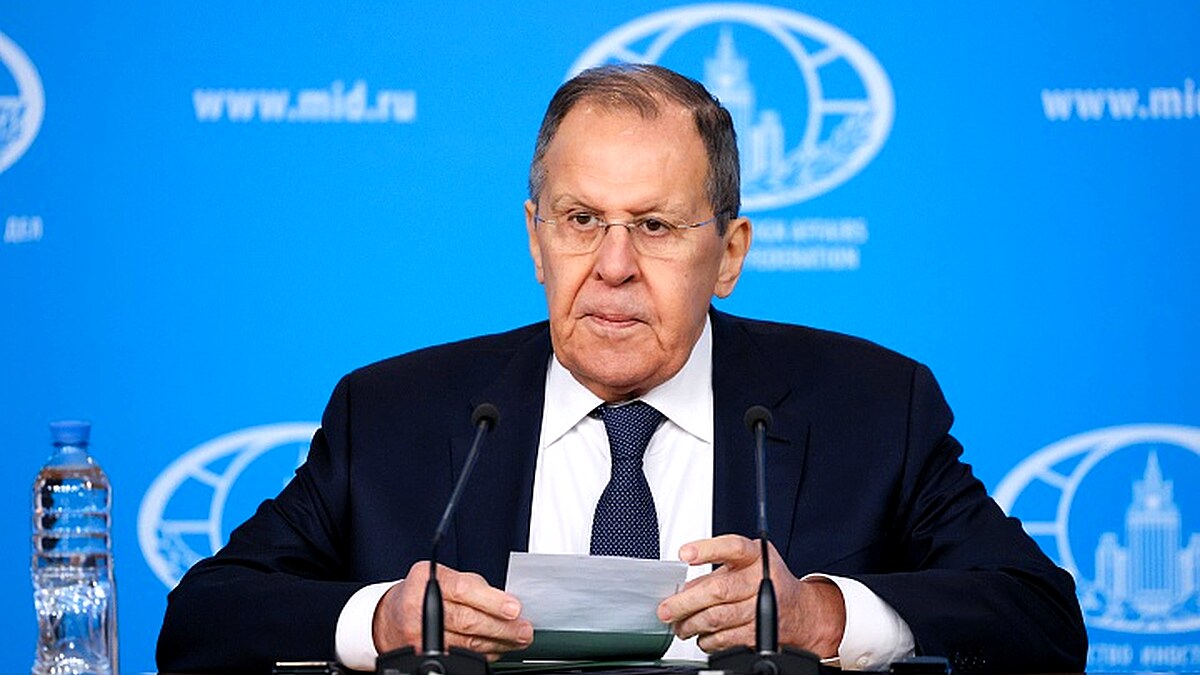




ISLAMABAD: Russian Foreign Minister Sergey Lavrov has asserted that Europe has squandered numerous opportunities to act as a mediator in the ongoing Ukraine conflict. His remarks come in the wake of escalating tensions and ongoing hostilities in the region.
In a recent interview, Lavrov pointed out that since February 2014, Europe has had multiple chances to facilitate dialogue and peace in Ukraine. He emphasized that key European nations, including France, Germany, and Poland, had initially guaranteed an agreement between former Ukrainian President Viktor Yanukovych and opposition forces. This agreement, which aimed to stabilize the situation, could have paved the way for a more constructive European role in mediating the conflict.
Lavrov elaborated on several instances where European representatives could have positively influenced the resolution of the Ukraine crisis. He noted that these missed opportunities have contributed to the ongoing strife and instability in the region. “We all know how that ended,” he remarked, hinting at the deteriorating situation that has unfolded since those pivotal moments.
The Russian Foreign Minister expressed skepticism regarding the current European leadership’s ability to engage in meaningful dialogue with Russia. He questioned which European leaders could be considered reasonable interlocutors, given the existing tensions. Lavrov’s comments reflect a broader concern about the effectiveness of European diplomacy in addressing the complex dynamics of the Ukraine conflict.
The geopolitical landscape surrounding Ukraine has become increasingly fraught, with the United States and Russia grappling with significant differences in their bilateral relations. Lavrov noted that negotiations between the two nations are progressing slowly, with numerous irritants complicating the dialogue. The situation is further complicated by external pressures and the shifting alliances within Europe.
In light of these developments, Lavrov’s statements underscore a growing frustration with the lack of proactive engagement from European nations. The missed chances to mediate could have altered the trajectory of the conflict, potentially leading to a more peaceful resolution. Instead, the ongoing hostilities continue to escalate, raising questions about the future of Ukraine and the role of European powers in the region.
As the situation evolves, it remains uncertain whether Europe will take a more active approach in mediating the conflict. The implications of Lavrov’s statements highlight the need for a reassessment of diplomatic strategies and the importance of fostering dialogue in order to prevent further escalation.
The ongoing crisis in Ukraine serves as a reminder of the complexities of international relations and the critical role that diplomacy plays in conflict resolution. As Lavrov’s comments resonate within the geopolitical sphere, the question remains: will Europe seize future opportunities to mediate, or will the conflict continue to unfold without resolution?
Source: Sputnik