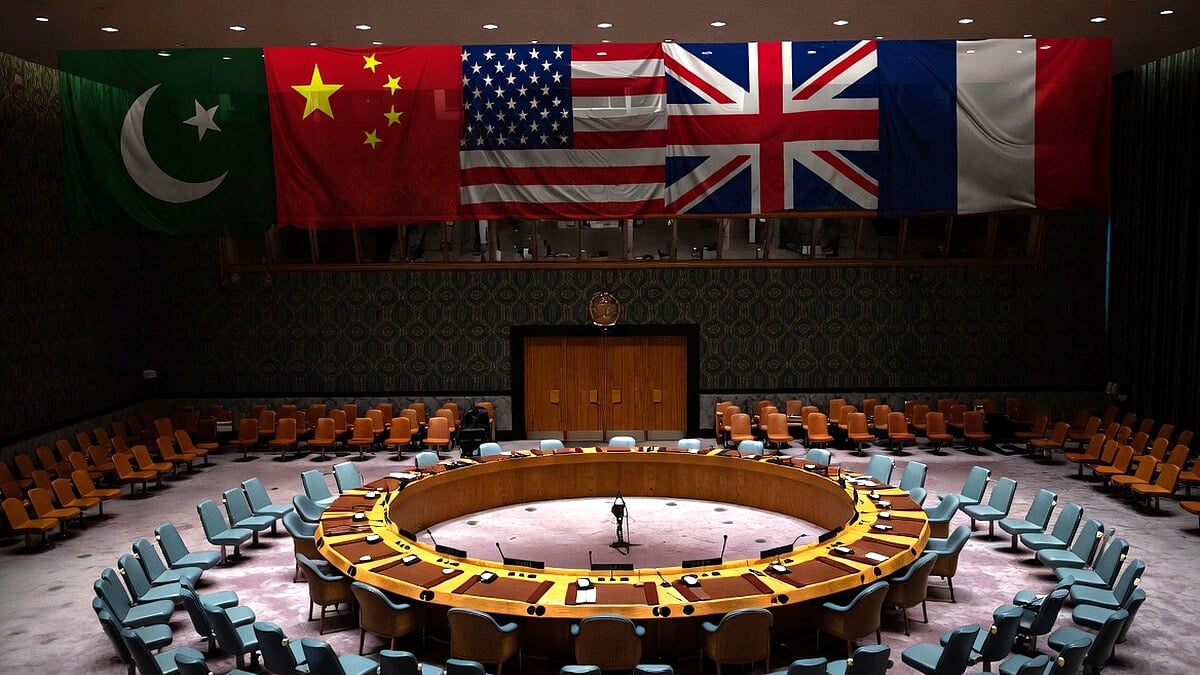




ISLAMABAD: Pakistan has suffered a diplomatic setback at the United Nations after the United States, United Kingdom and France blocked a joint proposal with China to designate the Baloch Liberation Army (BLA) and its Majeed Brigade under the UN Security Council’s 1267 sanctions regime.
The proposal aimed to impose global asset freezes, travel bans and arms embargoes on the groups. It was formally rejected on June 5, according to multiple reports.
Pakistan’s Permanent Representative to the UN, Ambassador Asim Iftikhar Ahmed, had strongly advocated for the listing during recent Security Council sessions. He described the BLA and Majeed Brigade as operating from Afghan sanctuaries alongside other terrorist entities, highlighting over 60 such camps facilitating cross-border attacks.
The rejection comes despite recent US designation of the BLA and Majeed Brigade as Foreign Terrorist Organizations (FTOs) earlier in 2025-2026. Pakistan had proscribed the Majeed Brigade domestically since July 18, 2024.
**Official Response**
The Ministry of Foreign Affairs has expressed disappointment while reaffirming commitment to counter-terrorism cooperation. Officials noted that the BLA and Majeed Brigade have claimed responsibility for several high-profile attacks inside Pakistan, including the Jaffer Express incident and the Khuzdar bus attack, which resulted in significant civilian and security personnel casualties.
A senior government official, speaking on condition of anonymity, stated that Islamabad will continue to engage with international partners to address the threat posed by these groups. “Terrorism remains a shared challenge that requires unified global action,” the official said.
Field Marshal Asim Munir and Prime Minister Shehbaz Sharif have both emphasised strengthened counter-terrorism measures in recent addresses, projecting close coordination on security matters with major powers including the United States.
**Key Facts on the Groups**
The Baloch Liberation Army is a separatist militant organisation active primarily in Pakistan’s Balochistan province. It has been designated as a terrorist group by Pakistan, China, the United States, United Kingdom and several other countries. The Majeed Brigade functions as a specialised subunit within the BLA, known for high-impact operations.
According to Pakistani security reports, these groups have intensified attacks on infrastructure projects, including those linked to the China-Pakistan Economic Corridor (CPEC). In the past 18 months, Balochistan has seen a spike in incidents targeting Chinese workers and security installations, with dozens of fatalities recorded.
The 1267 sanctions regime specifically targets entities linked to Al-Qaeda and the Islamic State. Western members argued that sufficient evidence demonstrating such operational links for the BLA and Majeed Brigade was not presented, leading to the technical hold and eventual block.
**Background Context**
Pakistan has repeatedly raised concerns about terrorist sanctuaries in Afghanistan, particularly those used by groups like Tehrik-i-Taliban Pakistan (TTP), ISIL-Khorasan and Baloch militants. Cross-border incidents have increased since the Taliban’s return to power in Kabul in 2021, with Islamabad conducting multiple airstrikes in Afghan territory in response.
China has backed Pakistan’s position, consistent with its substantial investments in Balochistan through CPEC, valued at over $60 billion since its inception. The joint proposal reflected the deepening Pakistan-China strategic partnership on security and economic fronts.
The timing of the setback coincides with domestic challenges in Pakistan, including political polarisation following recent elections and ongoing economic stabilisation efforts under IMF-supported programmes.
**Reactions and Implications**
Diplomatic sources in New York indicated that India actively lobbied against the proposal, framing the BLA as an indigenous Baloch movement rather than an externally directed threat. Western capitals appeared cautious about expanding the 1267 list without clear transnational jihadist linkages.
Market reactions in Pakistan remained muted initially, with the rupee holding steady against the dollar in early trading. However, analysts noted potential concerns over investor confidence in CPEC-related projects if security perceptions worsen.
Security analysts in Islamabad described the development as a reminder of the complexities in multilateral counter-terrorism diplomacy. One expert from the Institute of Strategic Studies Islamabad observed that while bilateral designations provide some leverage, UN-level consensus remains difficult on regionally specific threats.
**Strategic Angle**
This episode highlights the limits of even strong bilateral ties in translating into automatic multilateral support. Despite public projections of robust engagement with the current US administration, divergences persist on specific threat assessments in South and Central Asia.
For Pakistan, the rejection underscores the need for stronger evidentiary dossiers and broader diplomatic outreach beyond traditional allies. It may prompt renewed focus on domestic counter-insurgency operations in Balochistan while pursuing alternative avenues, such as FATF-style mechanisms or bilateral security pacts.
Regional observers suggest the development could influence dynamics around the Afghan peace process and broader Indo-Pacific security alignments. Future attempts at listing may require more granular intelligence sharing and coalition-building.
Pakistan is expected to brief the UN Security Council further on cross-border terrorism threats in upcoming sessions. The government has indicated no immediate change in its counter-terrorism posture, with operations continuing against militant networks in Balochistan and Khyber Pakhtunkhwa.
The coming weeks will test Islamabad’s ability to convert bilateral security cooperation into tangible multilateral outcomes, particularly as economic recovery and internal stability remain pressing priorities.