



Survivors
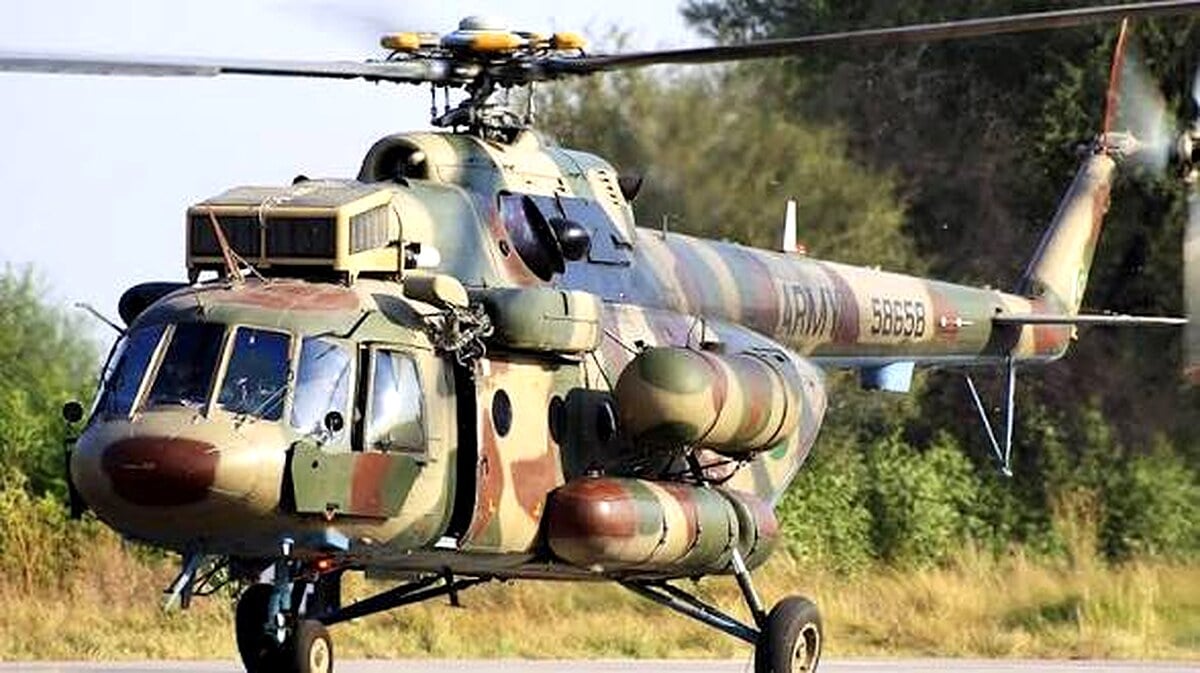
ISLAMABAD: A Pakistan Army Mi-17 helicopter crashed near Muzaffarabad on Wednesday during take-off due to a technical fault, with all personnel on board killed.
The Inter-Services Public Relations (ISPR) confirmed there were no survivors. Rescue and recovery teams reached the crash site immediately after the incident.
“All personnel on board embraced martyrdom. There were no survivors,” the ISPR stated. A board of inquiry has been ordered to determine the exact technical cause.
Reports indicate 21 military personnel, including pilots and troops, were aboard the helicopter. The Mi-17, a Russian-origin medium-lift transport helicopter, is widely used by the Pakistan Army for troop movement, logistics, and operations in mountainous terrain.
The crash occurred in a sensitive area of Azad Jammu and Kashmir amid ongoing protests in Muzaffarabad over electricity tariffs, wheat prices, and governance issues. The military has maintained a strong presence in the region to support law and order.
Chief of Army Staff Field Marshal Asim Munir expressed deep grief over the loss. Along with all ranks of the army, he extended heartfelt condolences to the bereaved families.
The ISPR described the personnel as dedicated soldiers who made the ultimate sacrifice in service of the nation. No further details on the identities of those killed have been released yet.
The Mi-17 features twin Klimov TV3-117 turboshaft engines and is designed for high-altitude operations. It can carry up to 24 troops or 4,000 kg of internal cargo, with a maximum takeoff weight exceeding 13,000 kg in some variants. Its service ceiling reaches around 6,000 meters, making it suitable for Kashmir’s rugged landscape.
Pakistan Army Aviation has operated the Mi-17 fleet for decades, including support during counter-terrorism campaigns and disaster relief. The platform has undergone local overhauls to enhance self-reliance in maintenance.
This is not the first incident involving the type. In 2015, a Mi-17 crashed in Gilgit-Baltistan due to tail rotor failure, resulting in multiple fatalities. More recently, in September 2025, another army helicopter crash in northern Pakistan claimed five lives.
Rescue teams secured the site quickly. Debris recovery and investigation are underway in coordination with aviation experts.
The timing of the crash coincides with heightened tensions in Azad Jammu and Kashmir. Protests led by the Joint Awami Action Committee have led to clashes, with at least 11 civilian deaths reported in recent days. Officials have ruled out any connection between the protests and the helicopter accident, attributing it solely to mechanical failure.
Defence analysts note that Pakistan’s military aviation maintains rigorous safety protocols. However, the ageing inventory of transport helicopters faces challenges from intensive operational use in difficult terrain.
The Pakistan Army has significantly invested in aviation modernization. This includes upgrades to existing Mi-17s and acquisition of newer platforms to bolster operational readiness along the western and northern frontiers.
Condolences poured in from across the country. Deputy Prime Minister Ishaq Dar and other leaders expressed solidarity with the affected families.
The incident has renewed focus on flight safety standards for military rotary-wing aircraft operating in high-risk environments. The board of inquiry is expected to submit findings within weeks, which may lead to enhanced maintenance procedures or fleet reviews.
Military sources emphasized that such accidents, though rare, underscore the inherent risks of aviation in support of national security missions. The armed forces remain committed to maintaining high operational tempo despite challenges.
The crash site near Muzaffarabad lies in a valley region prone to variable weather. Initial assessments suggest the technical fault manifested shortly after takeoff, preventing the crew from regaining control.
Pakistan’s defence establishment operates one of the largest Mi-17 fleets in the region. The helicopters have played key roles in flood relief operations, border management, and internal security deployments over the past decade.
Broader implications include the need for continued investment in pilot training, simulator facilities, and indigenous maintenance capabilities. The Pakistan Army has established specialized workshops for Mi-17 overhauls in collaboration with international partners.
Families of the deceased will receive full support, including financial assistance and welfare measures under existing military schemes. Martyred personnel are entitled to state honors and long-term family rehabilitation programs.
Regional observers are monitoring the situation. The incident occurs against the backdrop of complex security dynamics in Kashmir, though o