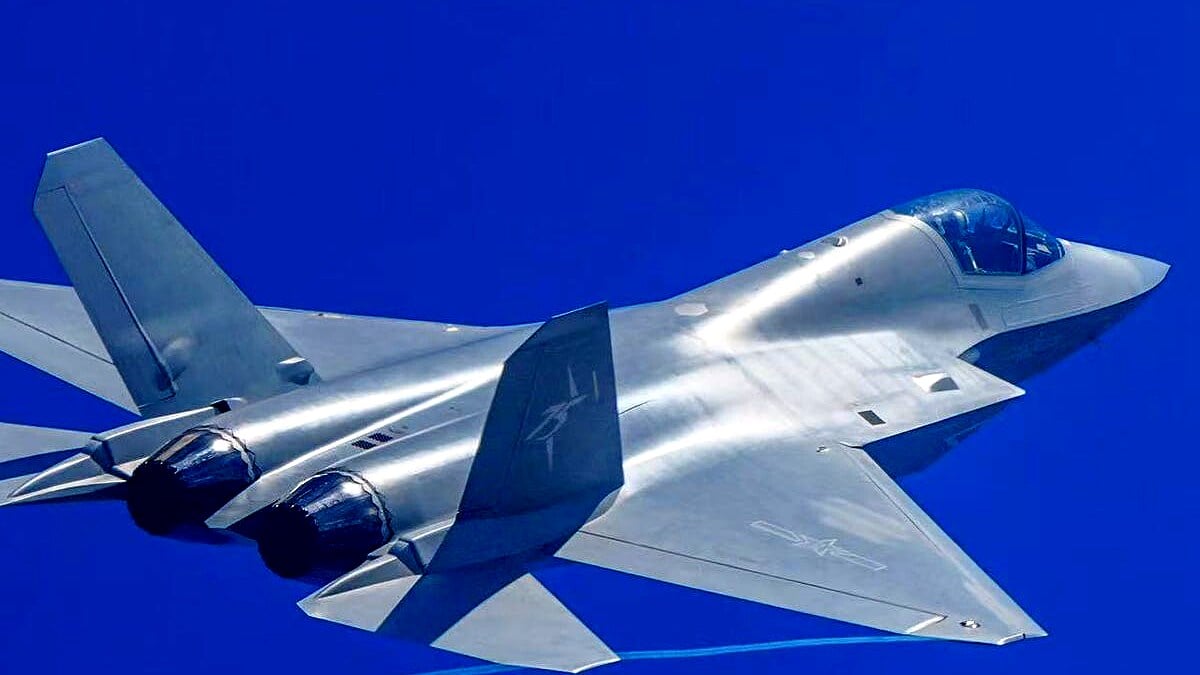




ISLAMABAD: Pakistan has signed an initial collaborative agreement to acquire up to 40 Shenyang J-35 stealth fighters from China, becoming the first international operator of the fifth-generation aircraft.
The Pakistan Air Force (PAF) confirmed the move as part of a broader modernization package that also includes KJ-500 airborne early warning and control aircraft and HQ-19 air defence systems.
Pakistani officials described the acquisition as a significant step in addressing regional air power asymmetries. Deliveries of the first batch are expected to begin within months, with pilot training already underway in China.
The J-35, unveiled publicly at the 2024 Zhuhai Airshow, is China’s carrier-capable stealth fighter developed by Shenyang Aircraft Corporation. It features a twin-engine configuration, internal weapons bays, and low-observable design elements similar in layout to the US F-35 Lightning II.
According to available specifications, the J-35 has a length of approximately 17.3 metres, a wingspan of 11.5 metres, and a maximum takeoff weight of around 28,000 kg. It is powered by two afterburning turbofans capable of speeds approaching Mach 1.8.
The aircraft can carry a range of munitions internally, including anti-radiation missiles, land-attack missiles, and air-to-air weapons, enhancing its survivability in contested environments.
Defence sources indicate China has fast-tracked the delivery schedule for Pakistan and extended favourable terms, building on the successful operational record of the Chinese-made J-10C in PAF service.
The PAF has already integrated over 20 J-10CE variants, which demonstrated strong performance in recent border incidents. Pakistani media reports highlighted the role of these platforms in engagements last year, where J-10s reportedly engaged multiple Indian aircraft.
Ministry of Defence spokespersons confirmed that initial pilot training batches have commenced in China. Ground crew familiarisation and infrastructure upgrades at selected PAF bases are proceeding in parallel.
The overall package is estimated to involve several billion dollars, covering aircraft, training, spares, and supporting systems. It forms part of Pakistan’s 2025-26 defence procurement priorities, which allocate around $2.34 billion for new acquisitions.
**Background and Context** Pakistan has long maintained close defence cooperation with China, jointly producing the JF-17 Thunder fighter and acquiring systems such as the J-10 series. The J-35 deal marks the entry into fifth-generation capabilities, placing Pakistan ahead of many regional peers in stealth technology adoption.
The decision follows heightened Indo-Pakistan tensions, particularly after reported air incidents in 2025. Analysts note that the introduction of stealth platforms, integrated with KJ-500 AWACS and HQ-19 surface-to-air systems, will enhance PAF’s network-centric warfare capabilities.
The KJ-500 provides advanced airborne early warning with phased-array radar, while the HQ-19 offers high-altitude interception against ballistic and cruise missile threats, creating a layered defence architecture.
**Official Statements** A senior PAF official stated that the acquisition strengthens deterrence and supports long-term operational readiness. The emphasis remains on technology transfer, joint maintenance, and indigenous upgrades where feasible.
Chinese defence industry representatives have highlighted the J-35’s export configuration as mature and cost-effective for strategic partners. Shenyang Aircraft Corporation is reported to have prioritised Pakistani requirements in production scheduling.
**Reactions and Regional Impact** In New Delhi, concerns have emerged over the potential shift in air power balance. Indian analysts suggest the development may accelerate indigenous fifth-generation programmes or prompt additional procurements.
Defence observers point to the J-35’s potential to improve Pakistan’s deep strike and air superiority options, particularly when paired with improved situational awareness from KJ-500 platforms. Market implications include strengthened China-Pakistan defence trade ties, which have grown steadily over the past decade.
Public and expert commentary in Pakistan has welcomed the move as a necessary modernisation step amid evolving security challenges along the eastern border.
**Strategic Implications** The integration of 30-40 J-35 aircraft will require significant investment in pilot conversion training, simulator facilities, and logistics chains. Maintenance demands for stealth platforms are typically higher than fourth-generation types, necessitating sustained funding and technical expertise.
Future developments may include further orders, weapon integration customisation, and enhanced interoperability within the PAF’s mixed fleet of JF-17, J-10, and legacy platforms. The deal also signals continued reliance on Chinese defence technology for qualitative improvements.
Questions remain regarding full operational induction timelines, exact contract value, and potential export restrictions on sensitive subsystems. Regional dynamics will likely influence the pace of deployment and any counter-moves by neighbouring forces.
Pakistan’s air force leadership has indicated that additional J-10C acquisitions and JF-17 upgrades will continue alongside the stealth fighter programme to maintain fleet size and readiness.
The programme is expected to evolve through iterative deliveries and capability enhancements in the coming years.