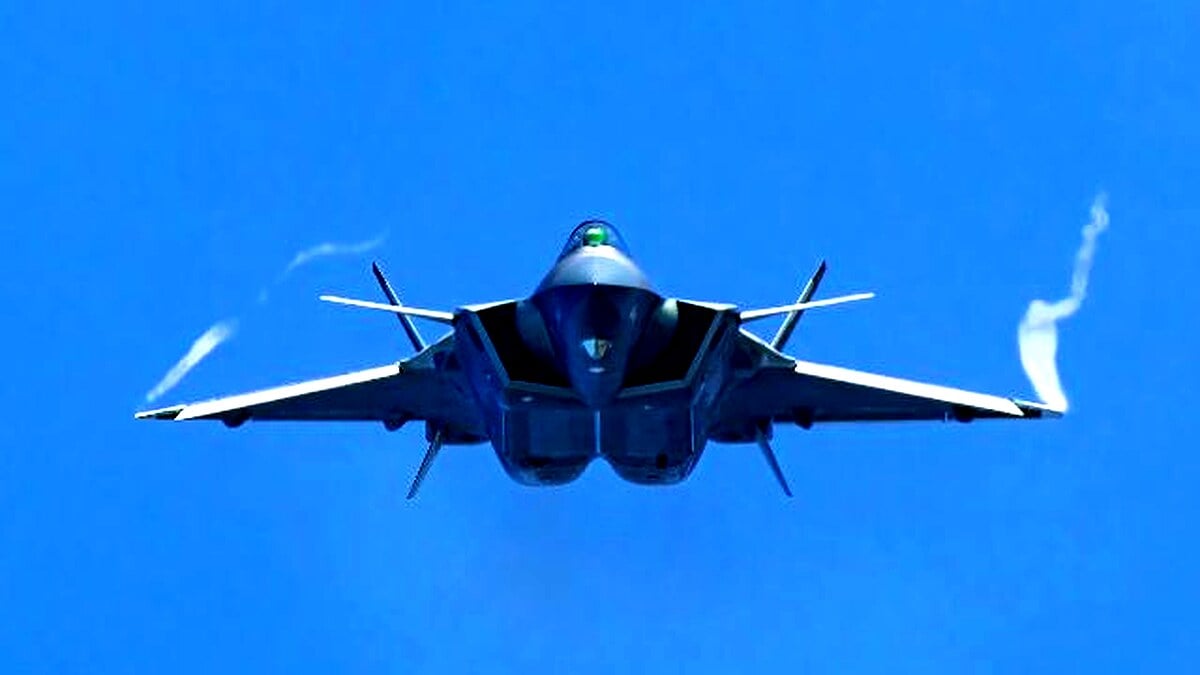




ISLAMABAD: Indian defence planners are evaluating options for a larger purchase of Russian Su-57 fifth-generation stealth fighters beyond the initial two squadrons under discussion, as the Indian Air Force (IAF) struggles with a persistent shortfall in operational squadrons.
The move comes amid ongoing efforts to modernise the IAF fleet, which currently stands at approximately 29-31 fighter squadrons against a sanctioned strength of 42 required for credible two-front deterrence.
Defence sources indicate that initial talks have focused on acquiring 36-40 Su-57 aircraft, equivalent to roughly two squadrons. However, analysts and reports suggest that Indian officials recognise this limited number would provide only marginal relief, prompting consideration of four to five squadrons or more for meaningful impact.
The Indian Air Force has already secured approval for significant additional Rafale acquisitions from France, including proposals for 114 more jets following the existing 36 in service. These 4.5-generation aircraft are intended to stabilise squadron numbers while bridging gaps until indigenous platforms mature.
**Russian Offer Details**
Russia has renewed its offer for the Su-57, including potential local production at Hindustan Aeronautics Limited (HAL) facilities with substantial technology transfer, including source code access in some proposals. The aircraft, designed for air superiority, deep strike, and electronic warfare roles, features supercruise capability up to Mach 1.3, a top speed of Mach 2, and a combat radius supporting operations over extended ranges.
Estimated unit cost for the Su-57 ranges between $35-50 million, significantly lower than many Western counterparts, potentially allowing for larger fleet sizes within budget constraints. A typical squadron comprises 18-20 aircraft, meaning four to five squadrons would require 72-100 jets.
Official statements from Russian sources highlight willingness for joint development and manufacturing, building on past collaboration with India on platforms like the Su-30MKI, of which over 270 have been produced locally. Indian officials have reviewed presentations on integrating indigenous systems such as Astra missiles and advanced radars.
**IAF Capability Challenges**
The IAF’s squadron strength has declined due to the retirement of ageing fleets, notably MiG-21 squadrons, dropping operational numbers to historic lows. Projections indicate that even with current plans involving Tejas variants and additional Rafales, reaching the full 42-squadron target by 2035 remains challenging.
Defence analysts note that two squadrons of any new platform, whether Rafale or Su-57, represent a limited addition relative to the overall requirement of hundreds of new fighters over the coming decade. India aims to induct 35-40 aircraft annually to address attrition and modernisation needs.
The Su-57 is positioned as an interim stealth solution to counter regional advancements, including China’s J-20 fleet and potential developments elsewhere. Its stealth features, internal weapons bays, and advanced sensors would complement the IAF’s existing mix of Su-30MKIs and Rafales.
**Background and Regional Context**
Indo-Russian defence ties remain robust, with Russia traditionally supplying a large portion of Indian military equipment. Earlier joint efforts on a fifth-generation fighter programme were shelved in 2018 over technology sharing concerns, but current offers address some of those issues.
In parallel, India’s focus on French Rafales has strengthened, with the additional tranche expected to cost tens of billions of dollars. The Rafale deal includes advanced weaponry such as Meteor missiles, enhancing beyond-visual-range capabilities.
For Pakistan, these developments underscore the importance of maintaining qualitative and quantitative balance in air power. The Pakistan Air Force continues its own modernisation with platforms like the J-35 and JF-17 Block III, emphasising integrated air defence and multi-domain operations.
**Reactions and Implications**
Indian military observers have emphasised the need for scale. Limited acquisitions risk spreading resources thin across multiple types, complicating maintenance, training, and logistics. A larger Su-57 order could accelerate induction through a mix of off-the-shelf deliveries and local assembly.
Market and diplomatic reactions remain measured. Russian officials project enhanced cooperation within frameworks like BRICS, while Western suppliers monitor the competitive dynamics.
Economically, such deals involve significant offsets and local manufacturing requirements under India’s policies, potentially boosting domestic industry but raising questions about timelines and integration challenges.
**Strategic Outlook**
In the later phases of evaluation, Indian strategists must weigh the Su-57’s role against indigenous programmes like the Advanced Medium Combat Aircraft (AMCA), expected in the 2030s. Over-reliance on imports, even with technology transfer, could delay self-reliance goals, yet immediate capability gaps demand urgent action.
Future developments may include formal requests for proposals, detailed cost negotiations, and parliamentary review. The scale of any final Su-57 commitment will signal India’s approach to balancing rapid modernisation with long-term strategic autonomy amid evolving regional threats.
The coming months are likely to clarify whether New Delhi opts for a modest bridge capability or a more substantial fleet expansion to better align with its operational requirements. Regional security dynamics will continue to be shaped by these procurement decisions and corresponding responses across borders.