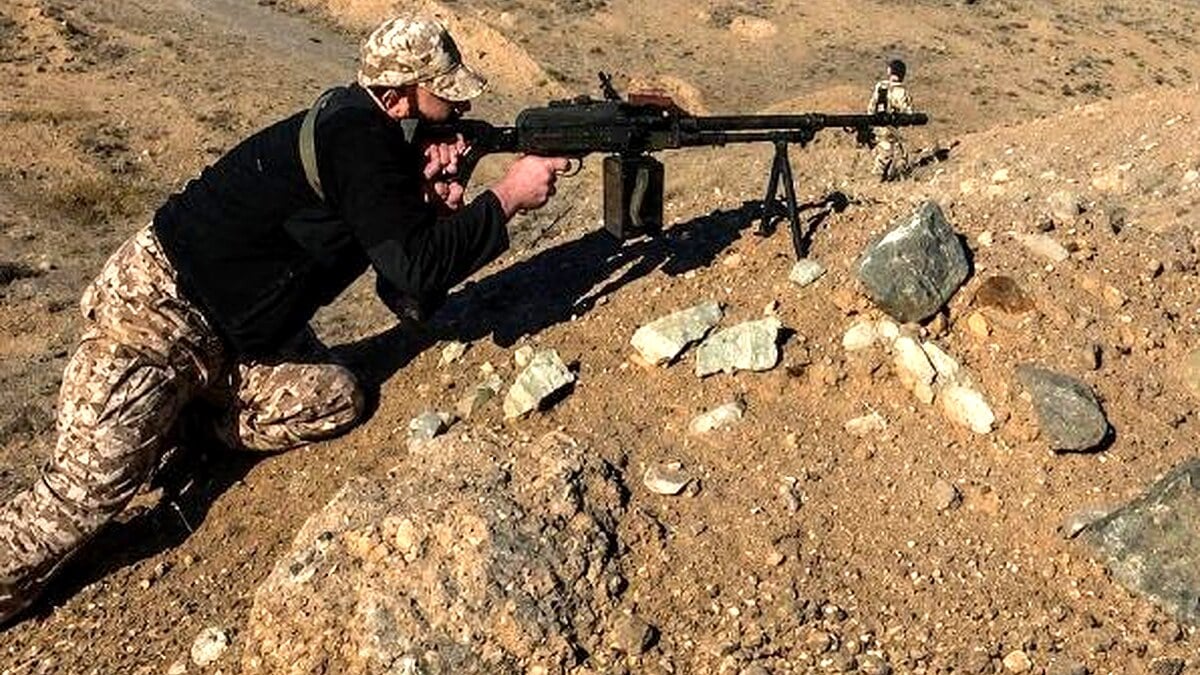




**ISLAMABAD:** Iranian Law Enforcement Command forces have repelled an armed infiltration attempt by a terrorist group crossing from Afghanistan into Sistan and Baluchestan province.
The confrontation involved heavy exchanges of fire near the border. Six members of the armed group were killed during the clash, according to an official statement from FARAJA.
Border guards successfully defended their positions and prevented the group from advancing into Iranian territory. Subsequent clearing operations led to the recovery of two handguns and a large quantity of ammunition from the site.
Ali-Akbar Javidan, commander of the Border Guard in Sistan and Baluchestan, confirmed the details of the operation. He described the incident as a foiled terrorist attack targeting border security posts.
The province of Sistan and Baluchestan shares a long and porous border with both Afghanistan and Pakistan. It has faced recurrent security challenges from militant groups, drug smugglers, and cross-border movements for over two decades.
Iranian authorities regularly report such incidents in the region. Sistan and Baluchestan covers a vast area with difficult terrain, making complete border control challenging despite increased deployments.
The latest clash underscores ongoing tensions along the Iran-Afghanistan frontier. Taliban-led Afghan authorities have not issued immediate comments on the incident, according to available reports.
FARAJA maintains several thousand border guards across key sectors in the province. These units conduct regular patrols and respond to infiltration attempts, often linked to smuggling or militant activities.
Regional security data indicates multiple similar engagements in recent years. Groups such as Jaish al-Adl have claimed responsibility for attacks on Iranian security forces in the province, though no specific group has been named in this latest FARAJA statement.
The province serves as a critical transit route for narcotics originating from Afghanistan. Iran intercepts significant volumes of opium and other drugs annually, with border forces seizing tons of contraband each year amid armed confrontations.
Iran has invested in border infrastructure, including fences, watchtowers, and surveillance systems, particularly after heightened incidents following the Taliban takeover in Afghanistan in 2021.
In 2023, direct clashes occurred between Iranian border guards and Afghan forces near Nimruz province, resulting in casualties on both sides amid water rights disputes. Tensions have fluctuated since then, with periodic diplomatic engagements.
Pakistani observers monitor developments closely due to shared Baloch ethnic links and security concerns in the tri-border region. Baloch insurgent groups operate across borders, prompting coordinated responses from Iran and Pakistan at times.
The incident comes amid broader regional instability. Afghanistan faces internal challenges under Taliban rule, while Iran contends with multiple security fronts, including militant activities in its southeastern provinces.
No Iranian casualties were reported in the official statement. Clearing operations continue to secure the area and prevent follow-up attempts.
Analysts note that such clashes highlight the complex interplay of militancy, smuggling, and cross-border movements. The region’s rugged geography and economic pressures drive persistent attempts to cross frontiers.
Iran has strengthened its Law Enforcement Command presence in Sistan and Baluchestan in response to rising threats. This includes enhanced rapid response units and intelligence sharing mechanisms.
Public reactions within Iran often emphasise the need for robust border security. Afghan sources sometimes dispute Iranian accounts, particularly in cases involving migrants, though this incident was described as involving an armed terrorist group.
The event has limited immediate market impact but contributes to perceptions of instability along key regional corridors. Trade routes between Iran, Afghanistan, and Pakistan remain sensitive to security fluctuations.
Strategic implications extend to counterterrorism cooperation. Iran, Pakistan, and Afghanistan share interests in curbing cross-border militancy, though differing political alignments complicate joint efforts.
Future developments may include increased Iranian border fortifications or diplomatic communications with Afghan authorities. The pace of such responses will depend on the frequency of similar incidents.
Questions persist regarding the exact identity and affiliations of the infiltrators. Iranian officials typically provide further details only after completing investigations.
The clash serves as a reminder of enduring security challenges in one of the region’s most volatile frontiers. Continued vigilance by border forces rema