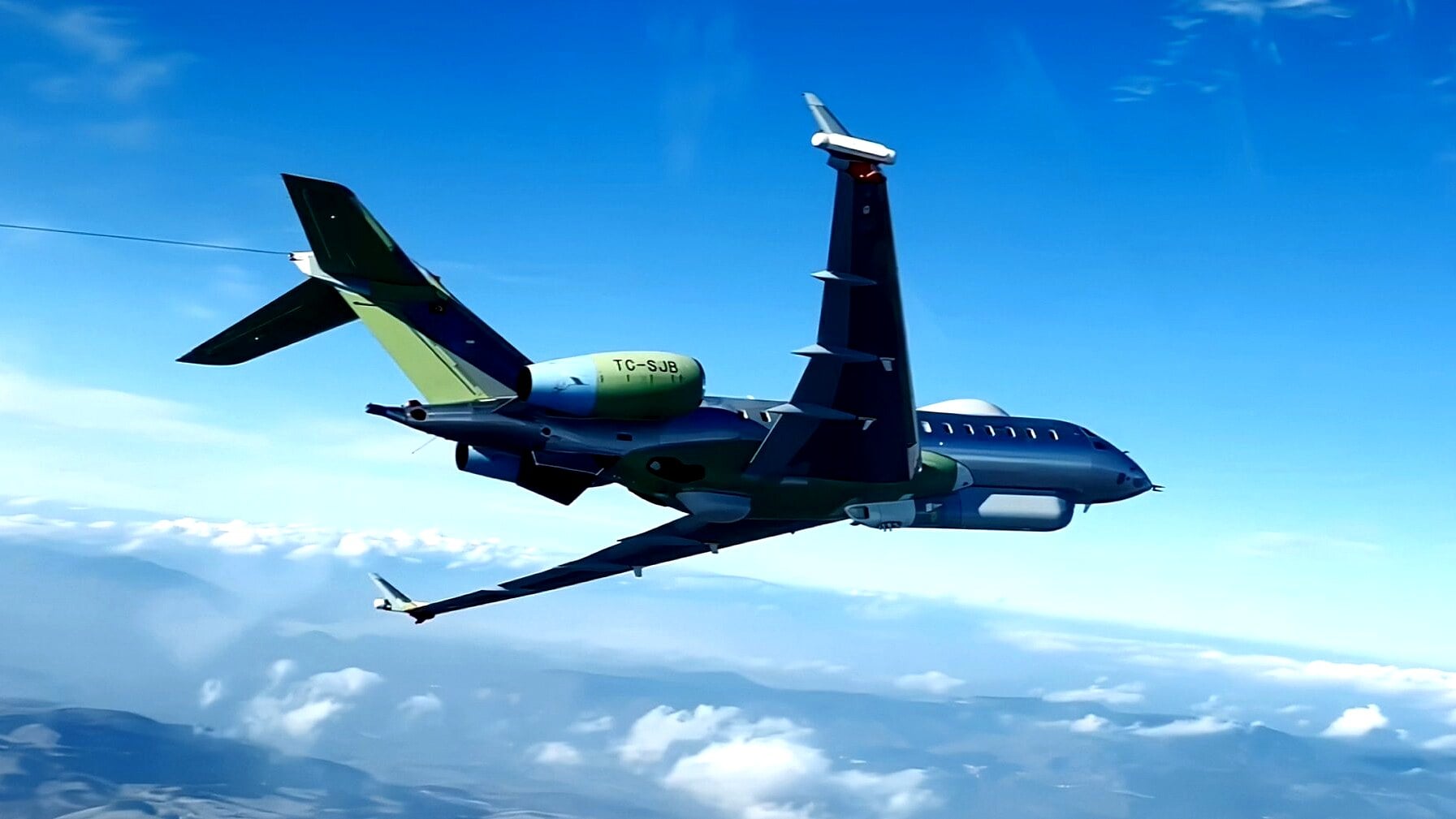




ISLAMABAD: Turkey has released new images of its HAVA SOJ stand-off jamming electronic warfare aircraft, highlighting progress in a program that directly supports Pakistan Air Force modernization efforts.
The aircraft, based on the Bombardier Global 6000 business jet platform, demonstrated integrated mission systems during recent test flights. Turkish Aerospace Industries (TAI) and Aselsan lead development, with the system capable of jamming enemy radars and communications at ranges exceeding 500 kilometers.
Pakistani officials have confirmed cooperation on similar platforms. The Pakistan Air Force (PAF) has already inducted its first upgraded Global 6000 equipped with the HAVA SOJ suite, marking a key milestone in joint defense projects between the two countries.
**Official Statements** Turkish Defence Industries Secretariat (SSB) described the HAVA SOJ as a critical asset for protecting fighter jets and drones by creating electronic corridors in contested airspace. The platform conducts electronic support and electronic attack missions without entering hostile territory.
Pakistani defense sources indicated that the acquisition strengthens PAF’s ability to suppress enemy air defenses (SEAD/DEAD) and disrupt adversary command networks. Cooperation with TAI began in 2024, focusing on converting existing Global 6000 airframes.
**Key Specifications and Capabilities** The HAVA SOJ features advanced jamming systems developed by Aselsan. It targets multiple threat emitters simultaneously, including modern air defense radars and communication links.
The base Global 6000 platform offers a maximum range of approximately 6,000 nautical miles (11,100 km), a service ceiling of 51,000 feet, and endurance of up to 11 hours. It is powered by two Rolls-Royce BR710A2-20 engines, each producing 14,750 lbf thrust.
Turkish program plans call for delivery of four HAVA SOJ aircraft to the Turkish Air Force by the end of 2026. Pakistan’s configuration aligns closely, providing long-range stand-off jamming support for JF-17 and other PAF assets.
The system integrates electronic reconnaissance, noise jamming, and deception techniques. Operational range for effective jamming exceeds 500 km against typical fighter radars and surface-to-air missile guidance systems.
**Background Context** Pakistan-Turkey defense cooperation has deepened significantly over the past decade. Joint projects include F-16 upgrades, drone technology, and now advanced electronic warfare systems.
The PAF initiated conversion of its Bombardier Global 6000 in collaboration with TAI following initial reports in 2024. This builds on earlier technology transfers, including electronic warfare test ranges supplied by Turkish firms.
Turkey’s program, formally known as Airborne Stand-Off Electronic Support/Electronic Attack (HAVA SOJ), aims to equip its forces with indigenous high-value support aircraft. Four platforms are under conversion, supported by new infrastructure including dedicated hangars and training facilities.
For Pakistan, the platform addresses operational requirements in a region with dense air defense networks. It enhances survivability of strike packages by neutralizing enemy sensors from safe distances.
**Market and Operational Impact** Defense analysts estimate the HAVA SOJ integration adds substantial value to existing business jet airframes. Unit costs for similar converted platforms remain classified, but base Global 6000 aircraft historically carried prices around $60 million before military modifications.
The induction supports broader PAF fleet modernization. Pakistan operates a mixed inventory including JF-17 Thunder fighters and various Western-origin platforms, where advanced EW support becomes increasingly vital.
Regional observers note that stand-off jamming capabilities can shift tactical balances in potential high-intensity scenarios by delaying or disrupting integrated air defense systems (IADS).
**Strategic Implications** Acquisition of HAVA SOJ platforms represents a notable step in Pakistan’s efforts to reduce reliance on single suppliers for critical electronic warfare technology. Joint development with Turkey provides technology transfer opportunities and potential for future indigenous enhancements.
The system complements existing PAF airborne assets, including Erieye and ZDK-03 airborne early warning aircraft. Together, they create a layered electronic warfare architecture supporting both defensive and offensive operations.
Future developments may include additional conversions or expanded cooperation on related systems. Turkish officials have signaled openness to further defense industry collaboration with Pakistan across multiple domains.
Operational testing and crew training for the Pakistani variant are expected to continue in coordination with Turkish partners. Full integration into PAF squadrons will enhance overall force projection and deterrence posture in the coming years.
The program underscores growing self-reliance trends within both air forces while leveraging established bilateral ties for rapid capability gains. Further details on exact numbers of platforms for Pakistan remain under official review.