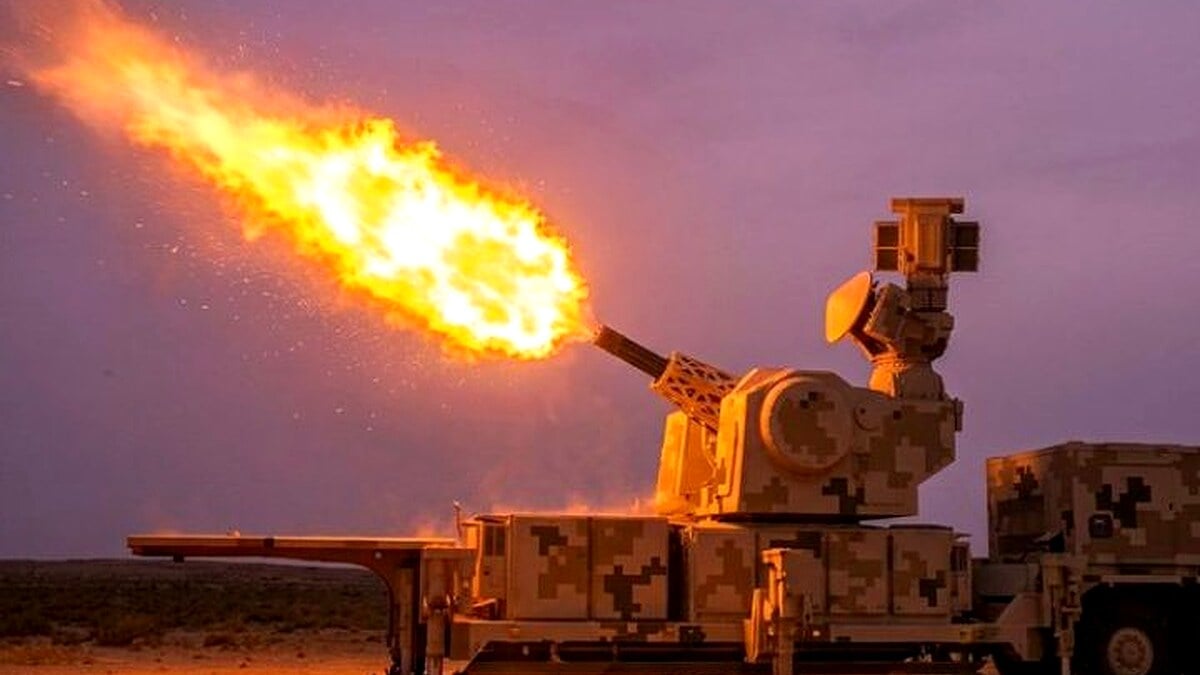




ISLAMABAD: Reports circulating among regional defense observers and military analysts have intensified speculation that Pakistan could become a future recipient of China’s advanced LD-3000 close-in weapon system (CIWS), a high-rate-of-fire air defense platform designed to intercept drones, cruise missiles, guided munitions, and low-flying aircraft.
The discussion has gained attention because the LD-3000 is regarded as one of China’s most capable rapid-fire point-defense systems, capable of firing up to 12,000 rounds per minute. The system is intended to provide the final protective layer for critical military installations, command centers, air bases, strategic infrastructure, and high-value assets against incoming aerial threats.
While neither Beijing nor Islamabad has officially confirmed a procurement agreement, defense analysts note that Pakistan and China have significantly expanded military cooperation in recent years, particularly in air defense, combat aviation, naval modernization, and missile technologies.
The LD-3000 is based on an 11-barrel 30mm Gatling-type cannon integrated with advanced radar and electro-optical tracking systems. The platform is designed to automatically detect, track, and engage multiple aerial threats simultaneously, providing a last line of defense when longer-range missile systems fail to neutralize incoming targets.
According to publicly available defense specifications, the system can engage targets at ranges of approximately 3 kilometers and can respond within seconds after detecting hostile aerial objects. The combination of high firing density and automated targeting allows the platform to counter saturation attacks involving multiple drones or precision-guided weapons.
Military observers say the growing use of armed drones, loitering munitions, and low-cost aerial attack systems in modern conflicts has increased demand for close-range air defense solutions worldwide. Recent conflicts in Eastern Europe and the Middle East have demonstrated the effectiveness of layered air defense networks that combine long-range missiles, medium-range interceptors, and rapid-fire gun systems.
Pakistan has already invested heavily in modernizing its air defense architecture over the past decade. The country operates a range of Chinese-origin systems, including the HQ-series surface-to-air missile family, alongside domestically integrated command-and-control networks designed to improve airspace monitoring and threat response capabilities.
Defense experts believe the LD-3000 could complement existing Pakistani air defense assets by providing terminal protection for strategic facilities, including military airfields, radar stations, ammunition depots, and sensitive national infrastructure. Such systems are increasingly viewed as necessary because modern precision-guided munitions can penetrate conventional defensive layers if not intercepted at close range.
The reported interest in the LD-3000 also comes amid a broader regional focus on air and missile defense modernization. South Asian militaries have accelerated investments in surveillance systems, electronic warfare capabilities, interceptor missiles, and counter-drone technologies following rapid advancements in aerial warfare technologies.
China remains Pakistan’s largest defense supplier and strategic military partner. Bilateral defense cooperation has produced several major projects, including the JF-17 Thunder fighter program, advanced naval platforms, air defense systems, and expanding technology transfer arrangements. According to international defense assessments, China accounts for a significant majority of Pakistan’s major military imports.
Analysts note that if a formal acquisition proceeds, the LD-3000 would likely be integrated into Pakistan’s layered defensive network rather than deployed as a standalone capability. Modern air defense doctrine increasingly emphasizes interconnected systems capable of sharing real-time radar data and engagement information across multiple defensive layers.
Regional security specialists argue that future battlefield environments will place greater emphasis on defending against drone swarms and precision strike weapons rather than traditional aircraft alone. This trend is prompting many countries to invest in high-rate-of-fire systems capable of engaging small and fast-moving aerial targets at short notice.
Neither Pakistan’s defense authorities nor Chinese officials have publicly announced a timeline, contract value, or delivery schedule regarding the LD-3000. However, continued defense cooperation between the two countries and evolving regional security requirements are likely to keep the system under close observation by military planners and defense analysts.
As military technologies continue to evolve, the importance of integrated air defense networks is expected to grow further. Any future deployment of advanced close-in defense platforms such as the LD-3000 would represent another step in the broader modernization of regional air defense capabilities and could influence future procurement decisions across South Asia.