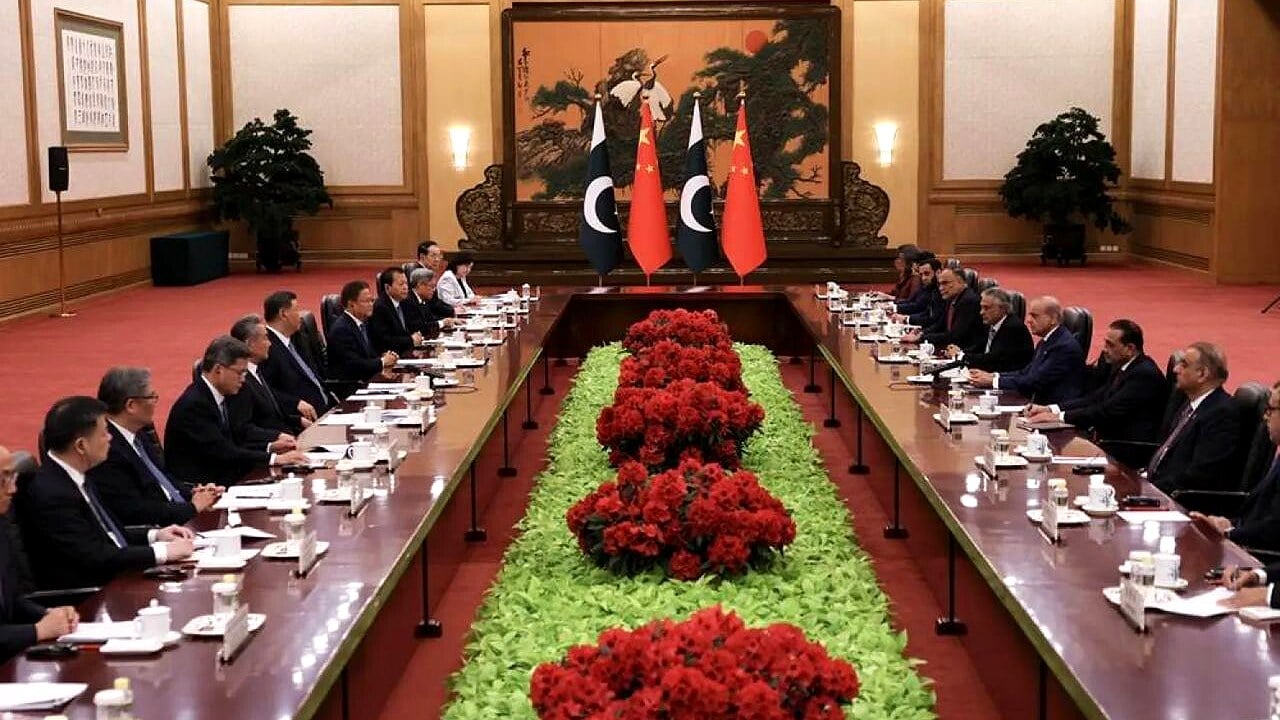




ISLAMABAD: Chinese President Xi Jinping has praised Pakistan’s active mediation efforts to end the ongoing war on Iran, calling for closer coordination between Beijing and Islamabad on regional peace initiatives.
The remarks came during a high-level meeting with Prime Minister Shehbaz Sharif in Beijing on Monday. Sharif was accompanied by Army Chief General Asim Munir, who has played a central role in backchannel diplomacy between Tehran and Washington.
According to Xinhua, Xi highlighted Pakistan’s initiative in restoring peace in the Middle East. He stressed the need to counter “unilateralism and Cold War mentality” through joint diplomatic action.
Sharif told Chinese leaders that Pakistan had played a sincere role in mediation. He described the current global situation as a critical moment, adding that diplomatic efforts between the US and Iran were showing tentative progress.
General Munir had returned from Tehran just days earlier. He visited alongside Interior Minister Mohsin Naqvi as part of Pakistan’s ongoing shuttle diplomacy.
Pakistan previously hosted the only direct talks between US and Iranian officials since the conflict began. Those discussions, held in Islamabad earlier this year, ultimately stalled over differences on security guarantees and sanctions relief.
China has maintained a supportive but lower-profile role. Beijing has coordinated separate engagements with Gulf Cooperation Council states and issued a joint five-point peace proposal with Pakistan in March. The plan calls for immediate ceasefire, restoration of normal shipping through the Strait of Hormuz, and phased diplomatic negotiations.
The Strait of Hormuz handles nearly 21 percent of global seaborne oil trade. Disruptions from the conflict have already pushed international oil prices up by 18 percent since February, according to Bloomberg data.
Gwadar Port, a key CPEC project, has seen increased naval monitoring activity. Pakistan Navy reported 47 escort missions for commercial vessels in the Arabian Sea in the past three months.
During the Beijing meeting, Xi described China-Pakistan friendship as “unbreakable.” He expressed readiness to work closely with Islamabad to restore stability in West Asia.
The meeting lasted over two hours and included discussions on economic cooperation under CPEC Phase II. Both sides reviewed progress on energy, infrastructure, and industrial projects valued at over $65 billion.
Pakistani officials briefed the Chinese side on mediation outcomes. Sources said Munir shared details of recent engagements with Iranian leadership on de-escalation measures.
Foreign Office spokesperson highlighted that Pakistan’s efforts focus on protecting regional trade routes. Over 40 percent of Pakistan’s oil imports pass through the affected Gulf waters.
Trade between China and Pakistan reached $27.8 billion in FY2025, up 12 percent year-on-year. Officials expect further growth if maritime security improves.
Analysts note Pakistan’s unique position. It maintains working relations with both Washington and Tehran while enjoying deep strategic ties with Beijing.
The mediation comes amid rising tensions. The conflict has displaced over 1.2 million people in border regions and caused estimated infrastructure damage exceeding $40 billion in Iran, according to preliminary UN assessments.
Pakistan has hosted more than 80,000 Iranian refugees since the war escalated. Border management authorities reported a 35 percent increase in cross-border movement in April and May.
Chinese Foreign Minister Wang Yi joined parts of the delegation-level talks. Discussions also covered Afghanistan stability and counter-terrorism cooperation along the shared neighbourhood.
PM Sharif is on a three-day official visit to China. The trip includes meetings with Premier Li Qiang and senior Communist Party officials.
Market observers in Karachi noted cautious optimism. The benchmark KSE-100 Index gained 0.8 percent on reports of the positive Xi-Sharif meeting.
Security analysts point to the involvement of General Munir as significant. His presence underscores the military’s role in Pakistan’s foreign policy on sensitive regional crises.
Pakistan’s mediation approach has involved multiple tracks. These include direct facilitation, backchannel messaging, and coordination with neutral actors including Oman and Qatar.
The five-point initiative proposed in March calls for: immediate cessation of hostilities, humanitarian access, protection of shipping lanes, resumption of nuclear talks framework, and reconstruction support.
Regional response has been mixed. Saudi Arabia and UAE have welcomed Pakistan’s efforts while maintaining their own diplomatic channels. India has stayed largely silent on the mediation process.
Economic implications for Pakistan are substantial. A prolonged conflict could affect remittances from Gulf countries, which account for nearly 60 percent of total inflows amounting to $32 billion annually.
Improved stability could also boost CPEC-related investments. Chinese companies have committed $12 billion in new energy and logistics projects pending better regional security outlook.
In the coming weeks, Pakistani diplomats are expected to continue shuttle diplomacy. A potential follow-up round of indirect talks between US and Iranian representatives may be arranged through Islamabad channels.
The Beijing summit reinforces the all-weather strategic partnership between China and Pakistan. It signals both countries’ commitment to an independent foreign policy focused on development and stability rather than bloc confrontation.
Future coordination will likely focus on implementation of confidence-building measures and ensuring safe navigation in international waters. Success in these efforts could reshape diplomatic alignments across West Asia in the coming months.